

Mt. Fuji Climbing
Mt. Fuji Climbing Guide for First-Time Visitors to Japan
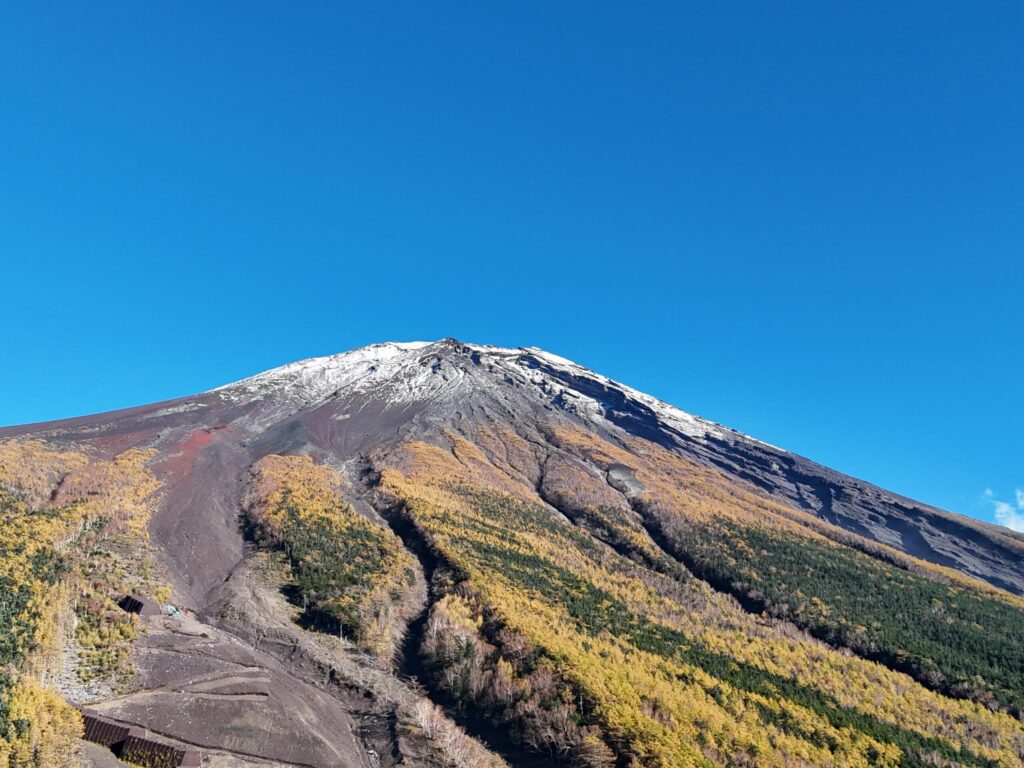
Rising 3,776 meters above sea level, Mt. Fuji is one of the most iconic symbols of Japan. For many international visitors, climbing this sacred volcano is a once-in-a-lifetime experience and a powerful way to connect with Japanese culture and nature. This guide explains when and how to climb, what to expect on the mountain, and how to do it safely and respectfully as a first-time visitor.
Should You Climb Mt. Fuji? Understanding the Experience
Mt. Fuji is beautiful but demanding. It is a serious high-altitude hike rather than a casual walk. The climb involves long, steep sections on loose volcanic rock and can be physically challenging even for people who are normally fit. Weather changes quickly, temperatures drop sharply at night, and there is less oxygen at the summit.
That said, thousands of people of all ages climb Mt. Fuji each year, including many first-time hikers. The main trails are clearly marked, and facilities such as mountain huts and toilets are available during the official climbing season. If you prepare properly and respect the mountain, it is an achievable goal for many visitors.
When to Climb Mt. Fuji
The official climbing season for Mt. Fuji typically runs from early July to early September. Outside this period, snow, ice, and strong winds make the mountain dangerous, and most facilities are closed. For first-timers, climbing only during the official season is strongly recommended.
Best Time Within the Season
Early July: Quieter trails but weather can be less predictable, and some huts may not yet be fully operating at the very start of the season.
Late July to mid-August: Peak season. School holidays and the Japanese Obon holiday period bring big crowds, especially on weekends and around public holidays.
Late August to early September: Slightly cooler and sometimes less crowded, though weather can be more changeable as autumn approaches.
To avoid crowds, aim for weekdays, and try to avoid national holidays and the Obon period (usually around mid-August).
Choosing Your Trail: The Four Main Routes
Most climbers start from one of the four 5th Stations located partway up the mountain: Yoshida, Subashiri, Gotemba, and Fujinomiya. Each trail has its own character. For first-time international visitors, the Yoshida Trail on the Yamanashi side is often the most convenient.
View Mt. Fuji Climbing Route Map →
Yoshida Trail (Yellow)
Best for: First-timers, those relying on public transport, and climbers who want more mountain hut options.
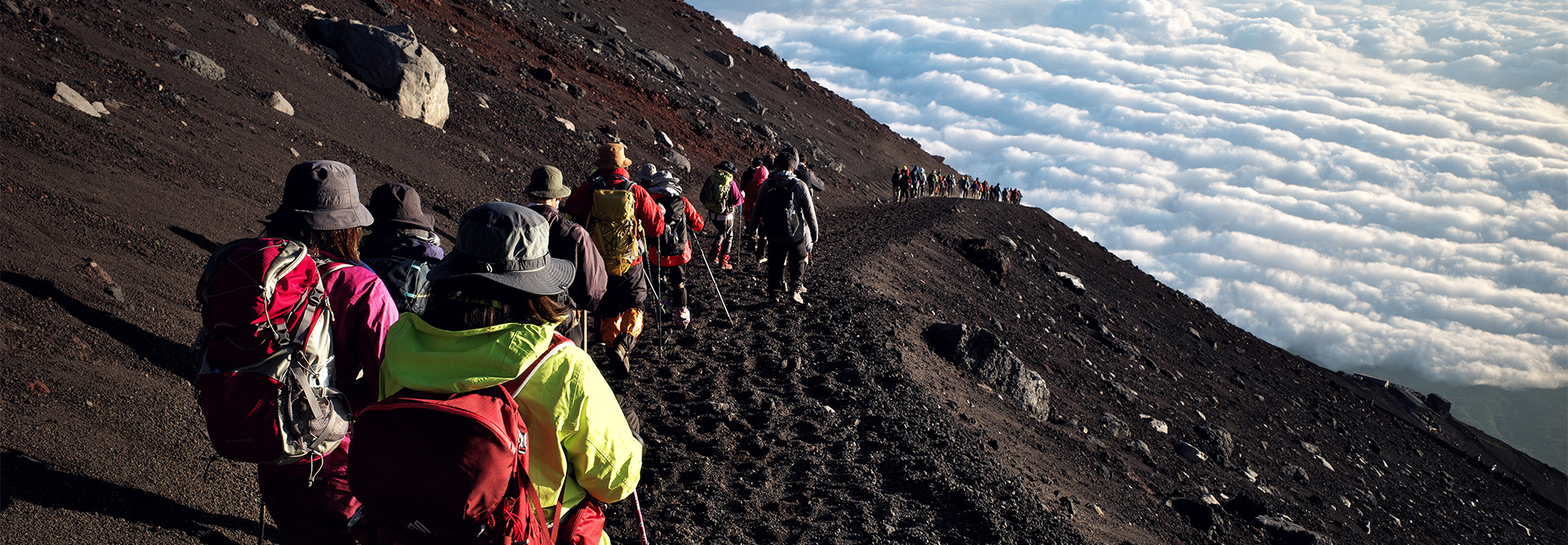
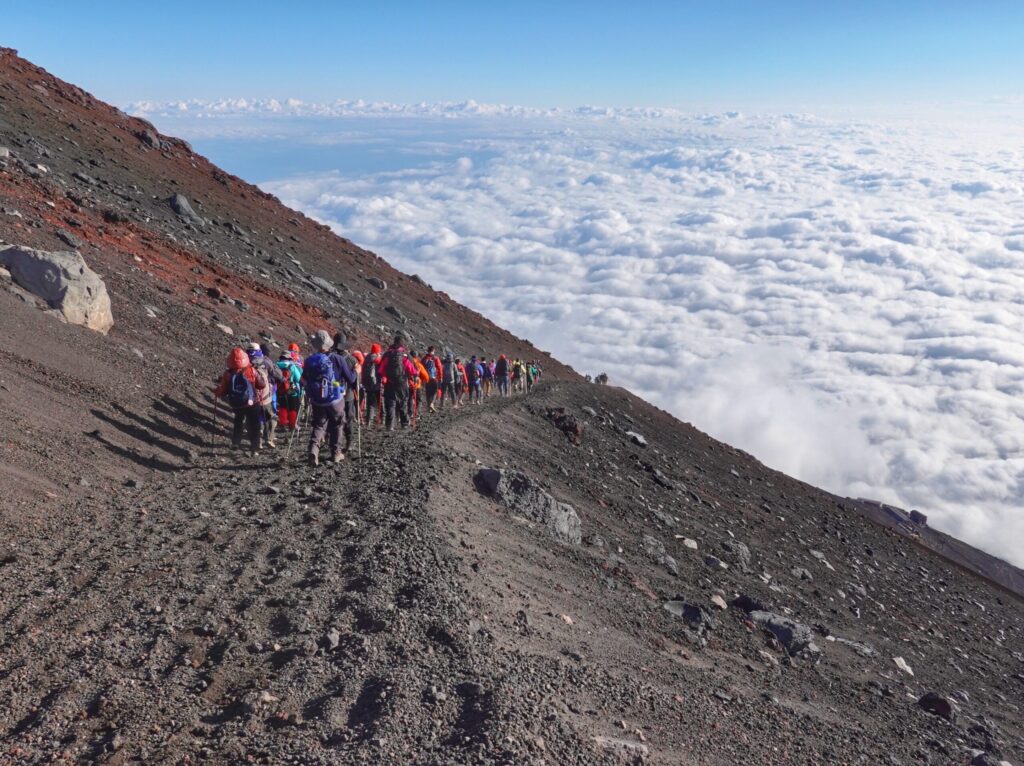
The Yoshida Trail starts from Fuji Subaru Line 5th Station (often simply called “Fuji 5th Station”). It is the most popular route, with well-developed facilities, many huts, and separate paths for ascending and descending on much of the trail. It also offers fantastic sunrise views over a sea of clouds on clear days.
Subashiri Trail (Red)
Best for: Those seeking a quieter ascent and a more natural atmosphere through forested sections.
The Subashiri Trail begins lower down and passes through atmospheric forests before joining the Yoshida Trail near the 8th Station. It is less crowded than Yoshida but has fewer huts and can be foggy at times.
Gotemba Trail (Green)
Best for: Experienced hikers looking for a long, less crowded route.
The Gotemba Trail has the longest elevation gain of all the routes, starting from a much lower altitude. It has fewer facilities, and the terrain can feel monotonous, with long stretches of loose volcanic gravel. The descent includes a fun, fast “sand run” down volcanic scree, but this trail is not recommended for beginners.
Fujinomiya Trail (Blue)
Best for: Shorter ascent with a steeper but more direct route to the summit.
The Fujinomiya Trail is the second most popular. Starting from the Fujinomiya 5th Station, it is the shortest in distance to the top but also quite steep. Facilities are reasonably well developed, and it is convenient if you are staying on the Shizuoka side or traveling from cities like Shizuoka or Nagoya.
How Long Does It Take to Climb Mt. Fuji?
Most first-time climbers follow a two-day itinerary, climbing to a mountain hut in the afternoon, resting, and then making a pre-dawn push to the summit to see the sunrise. Timings vary by trail and individual pace, but the following are typical estimates:
- Yoshida Trail: 5–7 hours up, 3–5 hours down
- Subashiri Trail: 6–8 hours up, 3–5 hours down
- Gotemba Trail: 7–10 hours up, 3–6 hours down
- Fujinomiya Trail: 4–7 hours up, 2–4 hours down
Weather, fitness level, altitude, and crowding can all affect your timings. Allow plenty of margin, and avoid rushing.
Mountain Huts: Sleeping on the Slopes
Staying overnight in a mountain hut is part of the classic Mt. Fuji experience and a practical way to acclimatize. Huts are located along all main trails, usually between the 7th and 9th Stations.
What to Expect in a Mountain Hut
Mountain huts on Mt. Fuji are rustic, communal shelters. Expect shared sleeping areas with futon-style bedding placed closely together on raised platforms. Privacy is limited, and space is tight. Electricity may be available only in common areas, and there are usually no shower facilities. Most huts offer simple meals such as curry rice or bento boxes, and hot drinks are sold at a premium due to the remote location.
Reservations and Costs
Reservations are strongly recommended, especially on weekends and during peak season. International visitors can often book via English websites, email, or through a travel agent. Hut stays are typically charged per person and often include an evening meal and a light breakfast. Payment is usually in cash.
Bring earplugs, an eye mask, and a light sleeping bag liner if you want extra comfort. Climbers usually sleep only a few hours before waking around midnight or 1 a.m. to begin the final ascent to the summit.
Essential Gear and Clothing
Even in midsummer, conditions on Mt. Fuji can be cold, wet, and windy. Proper gear makes the difference between a rewarding adventure and a miserable struggle.
Clothing Checklist
- Base layer: Moisture-wicking T-shirt or long-sleeve top (avoid cotton, which stays wet and cold).
- Mid layer: Fleece or light insulated jacket for warmth.
- Outer layer: Waterproof and windproof jacket and pants. Sudden rain and strong winds are common.
- Lower body: Quick-drying hiking pants; avoid jeans.
- Footwear: Sturdy hiking boots with good ankle support and grip, already broken in.
- Accessories: Warm hat, gloves, neck gaiter or scarf, and extra socks.
Equipment Essentials
- Backpack: 20–30 liter daypack with a hip belt and rain cover.
- Headlamp: Vital for night climbing; bring spare batteries.
- Water: At least 1.5–2 liters; you can buy more on the mountain but at higher prices.
- Snacks: High-energy snacks such as nuts, chocolate, energy bars, and onigiri (rice balls).
- Cash: For toilets, food, drinks, and souvenirs—credit cards are rarely accepted on the mountain.
- Sun protection: Sunglasses, sunscreen, and a brimmed hat; UV exposure is strong at high altitude.
- Rain gear and pack liners: To keep your clothing and electronics dry.
- Small first-aid kit: Include band-aids, blister treatment, pain relievers, and any personal medication.
Many climbers also use a wooden walking stick (kongo-zue), which can be purchased at 5th Stations. Some huts brand the stick with hot-iron stamps at each station as a unique souvenir of your climb.
Altitude, Weather, and Safety
While Mt. Fuji is not technically difficult, it is a high-altitude environment, and safety should be your top priority.
Altitude Sickness
Symptoms of altitude sickness include headache, nausea, dizziness, and fatigue. They can affect anyone, regardless of fitness level. To reduce your risk:
- Spend some time at the 5th Station (1–2 hours) before you start climbing to acclimatize.
- Climb slowly, take regular short breaks, and avoid heavy exertion.
- Stay hydrated and snack regularly.
- Consider a two-day itinerary with an overnight stay around the 7th or 8th Station.
If symptoms become severe or do not improve with rest, descend to a lower altitude immediately.
Weather Conditions
Weather on Mt. Fuji can change rapidly from sunny and mild to cold, wet, and windy. Check the forecast before you go, but be prepared for sudden changes. Nighttime temperatures near the summit can drop close to or below freezing, even in August.
Thunderstorms are particularly dangerous. If lightning is forecast or conditions deteriorate suddenly, do not push for the summit. Turning back is sometimes the safest and wisest choice.
Trail Etiquette and Cultural Respect
Mt. Fuji is not just a popular hiking destination; it is a sacred mountain in Japanese culture, associated with centuries of pilgrimage and worship. Climbing with respect for both nature and local customs is important.
On the Trail
- Stay on marked paths: Do not cut across switchbacks or step off the trail; this causes erosion and damages fragile alpine environments.
- Keep right, pass on the left: In general, slower climbers stay to one side; let faster climbers pass safely.
- Be quiet and considerate: Many climbers treat the experience as a spiritual journey. Keep loud music and shouting to a minimum.
- Toilet manners: Use designated toilets, which often charge a small fee. Carry small change.
- Carry out your trash: There are no public rubbish bins on the mountain. Pack out everything you bring in.
Respecting a Sacred Mountain
Historically, Mt. Fuji has been worshipped as a deity, and Shinto shrines dot the mountain and its foothills. You will pass torii gates, small shrines, and stone markers along the way. Many climbers bow or clap quietly at shrines, following Shinto customs, although this is optional for visitors.
At the summit, a small shrine marks the highest point. Take your time there, be respectful in photos, and avoid climbing on sacred structures or markers.
Reaching the 5th Stations
Public transport access is best during the official season, when special buses connect major rail stations with Mt. Fuji’s 5th Stations.
- From Tokyo to Yoshida 5th Station: Trains from Shinjuku to Kawaguchiko Station, then a direct bus to Fuji Subaru Line 5th Station.
- From Tokyo to Fujinomiya 5th Station: Shinkansen to Shin-Fuji Station or Mishima Station, then a seasonal bus to the 5th Station.
- To Subashiri or Gotemba 5th Stations: Trains or buses to Gotemba Station followed by local buses to the respective 5th Stations.
Bus schedules change each year, so check current timetables before your trip and consider reserving seats during busy periods. If you drive, be aware that personal vehicles may be restricted near some 5th Stations during peak season, with park-and-ride systems in place.
Permits, Fees, and Regulations
As of recent seasons, there is no formal national permit system to climb Mt. Fuji during the official season, but local authorities request a voluntary conservation contribution at certain trailheads. Paying this small fee helps support trail maintenance, toilets, and environmental protection.
Some routes or prefectures may introduce new measures such as crowd control, reservation systems, or additional fees over time to protect the environment and improve safety. Always check the latest official information for your chosen trail before you go.
Planning Your Itinerary in Japan Around Mt. Fuji
Climbing Mt. Fuji can fit into a broader Japan itinerary that may include Tokyo, Kyoto, and other popular destinations. Because the climb is physically demanding, consider scheduling it in the middle of your trip rather than immediately after a long international flight.
Many visitors stay 1–2 nights in nearby areas such as Kawaguchiko (for Yoshida and Subashiri Trails) or Fujinomiya and Gotemba (for Fujinomiya and Gotemba Trails). These towns offer onsen (hot springs) where you can soak tired muscles and enjoy views of Mt. Fuji from below—sometimes even more memorable than the climb itself.
Is Climbing Mt. Fuji Right for You?
Think carefully about your fitness level, hiking experience, and comfort with long, strenuous days at altitude before deciding to climb. If you are unsure, you can still enjoy Mt. Fuji from the foothills: take ropeways to scenic viewpoints, walk lakeside paths, or visit shrines and museums dedicated to the mountain’s history and mythology.
For those who are prepared, however, watching the sunrise from Japan’s highest peak can be a powerful and unforgettable highlight of a trip. With the right preparation, respect for the environment, and an open mind, climbing Mt. Fuji offers a unique window into Japan’s natural beauty and spiritual heritage.
Whether you choose to stand on the summit or admire its perfect cone from below, Mt. Fuji has a way of staying with you long after you leave Japan.
Every year, around 50 people are reported to have become lost while climbing Mount Fuji, and several people have died due to falling. It is by no means an easy climb, so please be sure to be well equipped and prepared.

Access Map
Recommended spots in Mt. Fuji
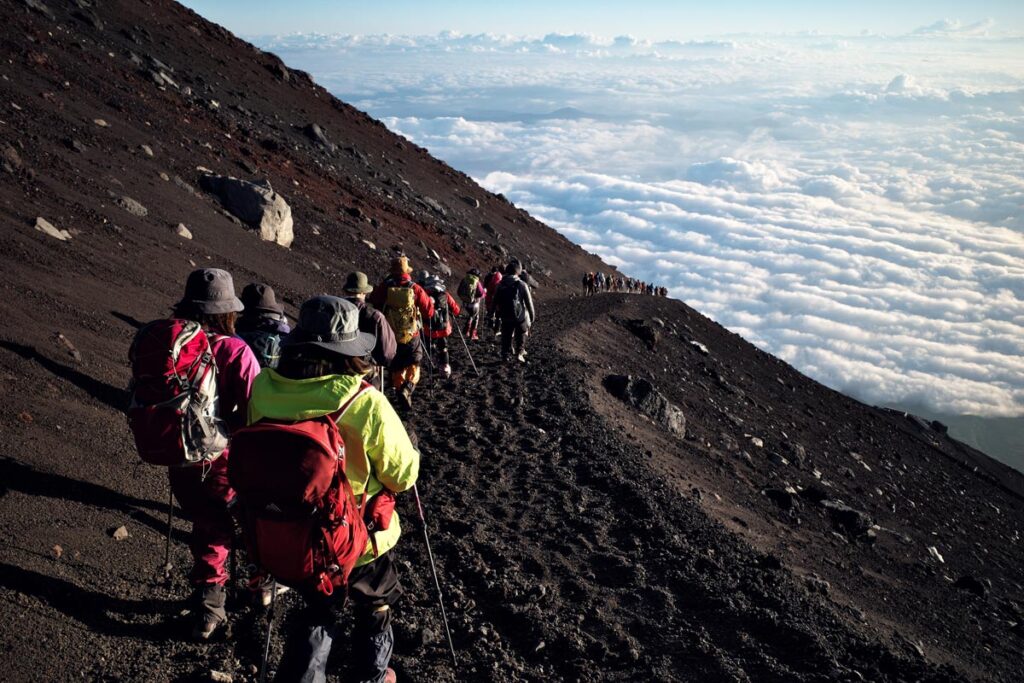
Mt. Fuji Climbing
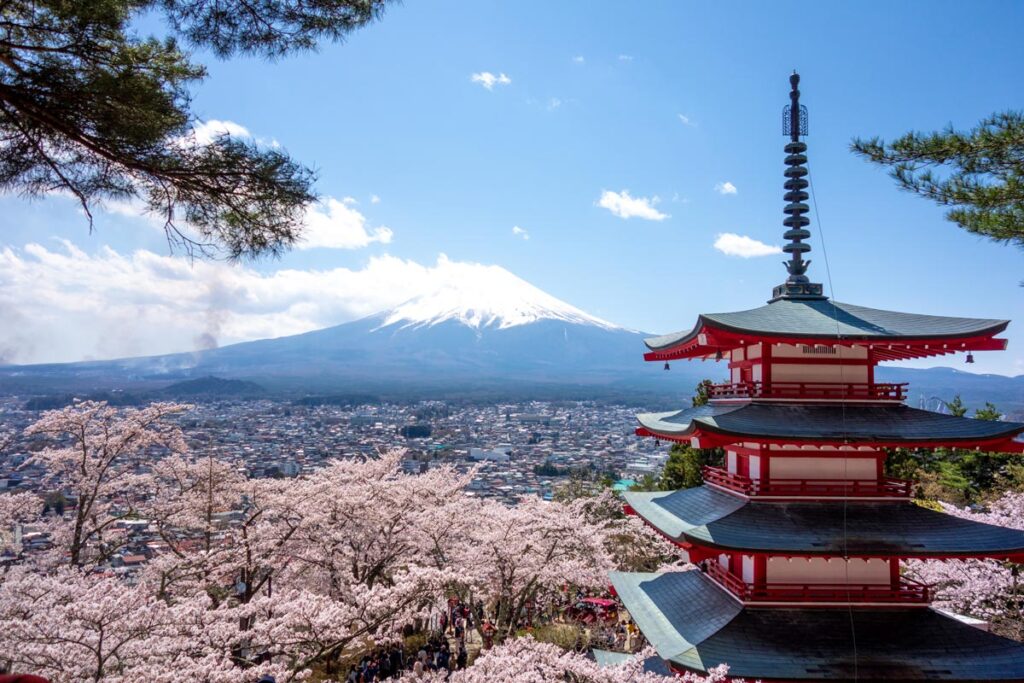
Arakurayama Sengen Park
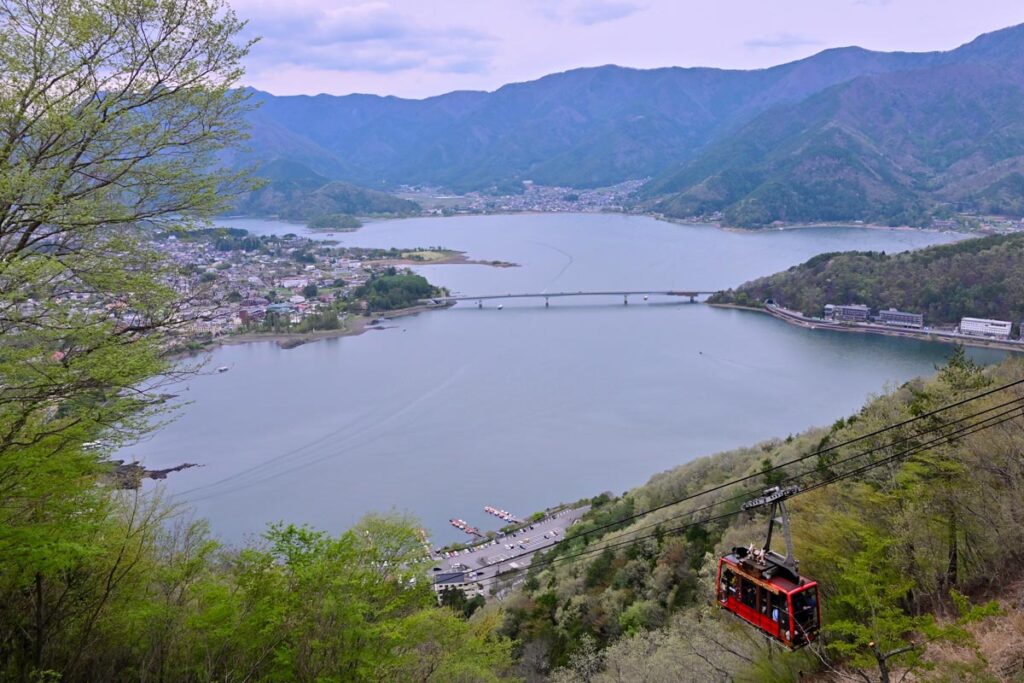
Mt. Fuji Panoramic Ropeway
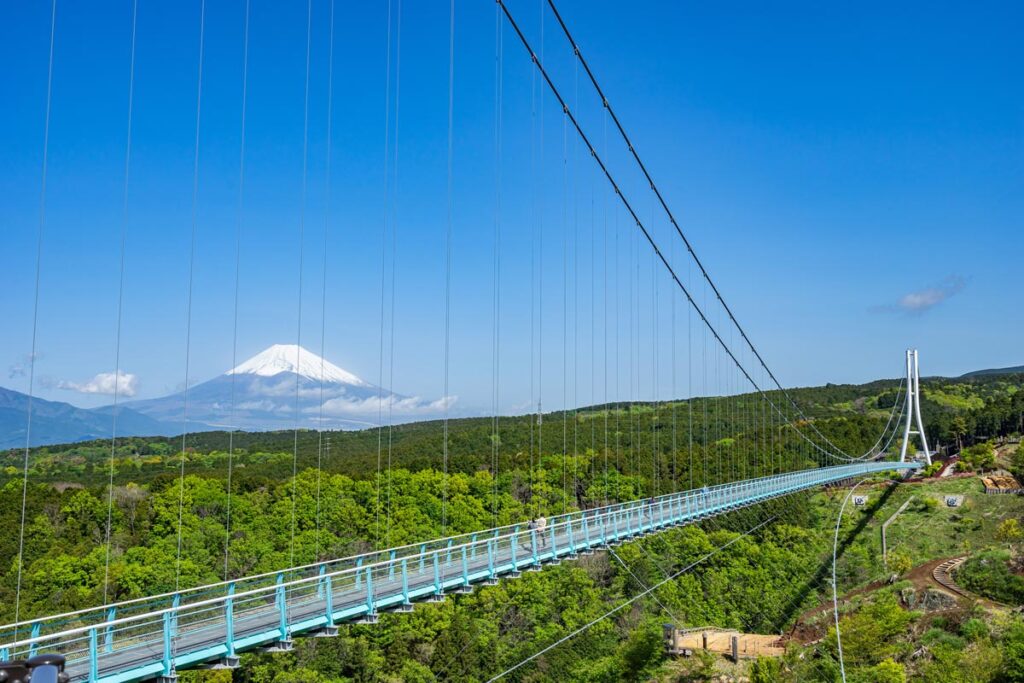
Mishima Skywalk