


Mitsumine Shrine
Mitsumine Shrine Travel Guide: Mystical Mountain Sanctuary in Japan
Photos are for illustrative purposes only.
High in the mountains of Saitama Prefecture, Mitsumine Shrine offers one of Japan’s most atmospheric spiritual experiences. Wrapped in mist and ancient forest, this mountaintop shrine has long been a place of pilgrimage, famous for its wolf guardians, dramatic views, and cool, refreshing air. For first-time visitors to Japan seeking something beyond the usual Tokyo–Kyoto route, Mitsumine Shrine delivers a deeply memorable day trip or overnight escape.
Why Visit Mitsumine Shrine?
Mitsumine Shrine (Mitsumine Jinja) stands at around 1,100 meters above sea level in the Chichibu region, west of Tokyo. It is dedicated to powerful kami (deities) associated with protection, safe travel, and strength, and it is especially known for reverence toward wolves, which were once believed to guard these mountains.
Compared with crowded urban temples and shrines, Mitsumine feels remote and almost otherworldly. The air is cooler, even in midsummer, the approach is lined with towering cedar trees, and low clouds often drift across the shrine grounds, creating a mysterious, cinematic atmosphere. It is an ideal destination if you want to combine cultural insight with nature, and it is accessible enough for a long day trip from Tokyo.
Getting to Mitsumine Shrine from Tokyo
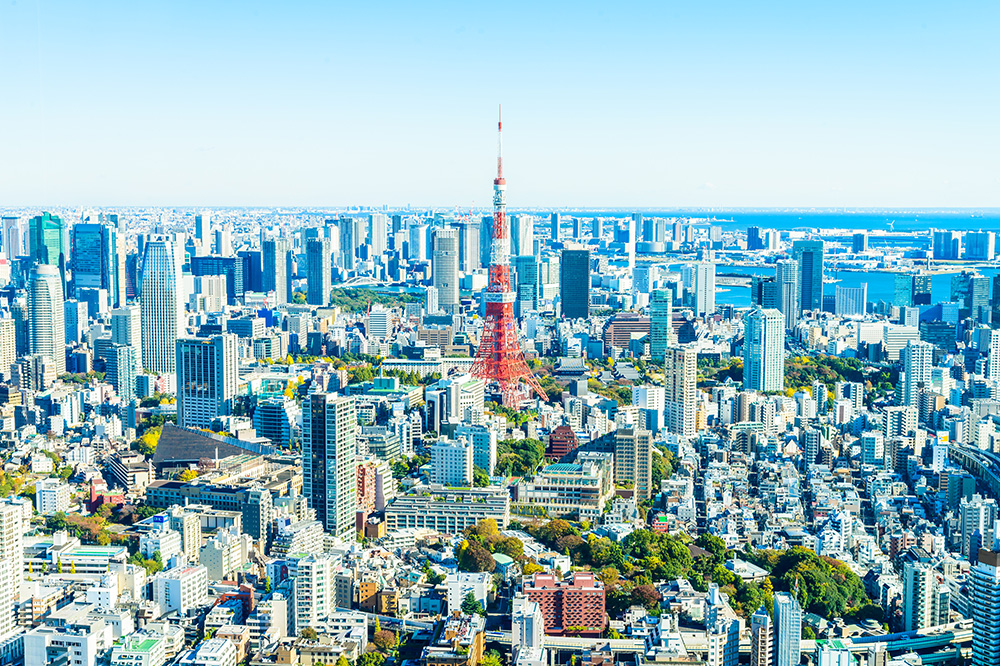
Reaching Mitsumine Shrine requires a little planning, but the journey itself is part of the experience. You will travel from the skyscrapers of Tokyo into progressively more rural scenery, then up a winding mountain road.
By Train and Bus via Seibu Railway
The most common route starts from Ikebukuro Station in Tokyo:
- Take a Seibu Railway limited express train from Ikebukuro to Seibu-Chichibu Station (about 80 minutes on the fastest services, with seat reservations).
- From Seibu-Chichibu Station, transfer to a local bus bound for Mitsumineguchi or Mitsumine Shrine. Buses typically take 1–1.5 hours depending on the final stop and road conditions.
Bus schedules are less frequent than city services, especially on weekdays and in winter. Check the latest timetable in advance and allow buffer time for transfers. Many visitors catch a morning train from Tokyo to maximize their time at the shrine.
By Car or Rental Car
If you are comfortable driving in Japan, reaching Mitsumine Shrine by car offers more flexibility. The mountain roads are paved and generally well maintained, but they are narrow and winding, so drive carefully. There is paid and sometimes free parking near the shrine area, depending on season and time of day.
Be mindful of snow and ice in winter and early spring. Always check weather and road conditions before setting out.
First Impressions: Arriving at the Shrine
As you approach the shrine from the bus stop or parking area, you will pass souvenir shops, simple eateries, and small lodgings, then enter a world of towering cedars and stone lanterns.
The Torii Gates and Sacred Approach
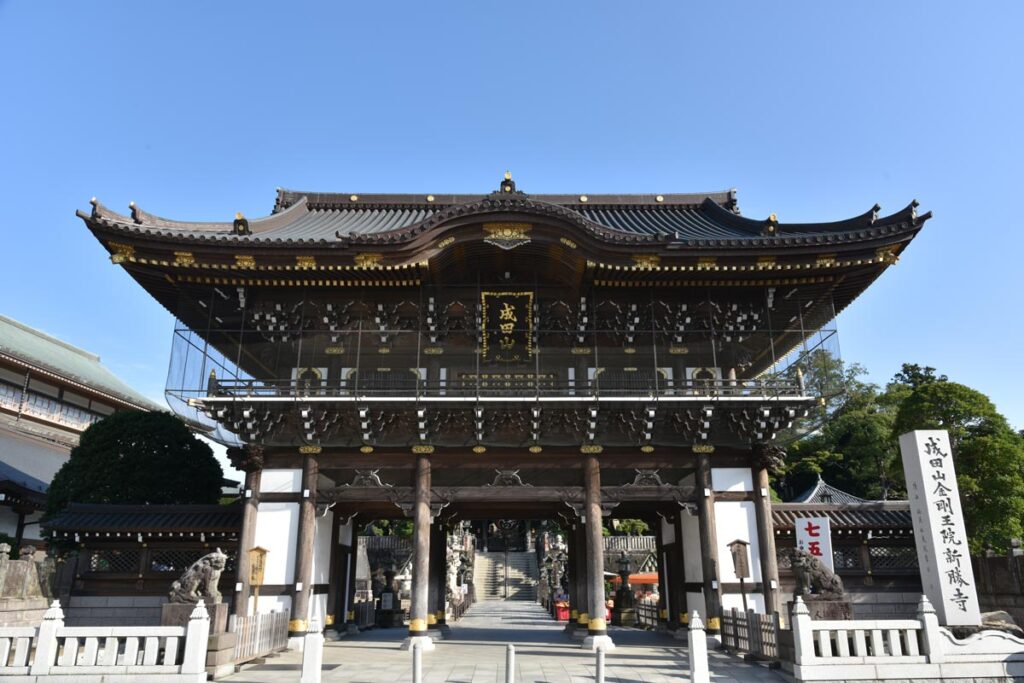
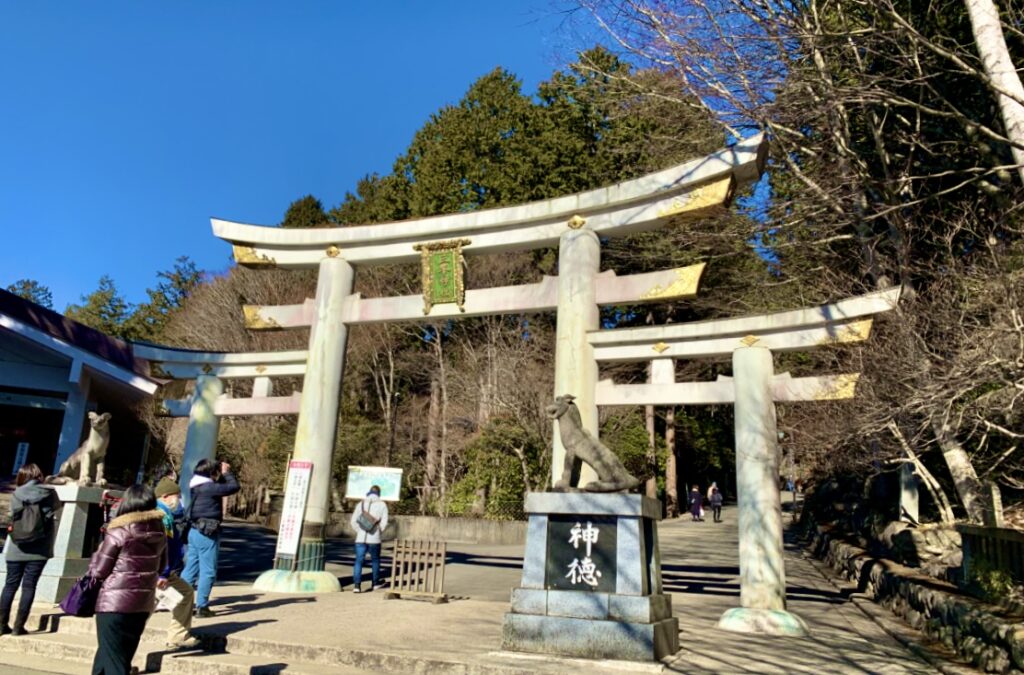
Traditional Shinto shrines are marked by a torii, a gate that symbolically separates the everyday world from sacred space. Mitsumine Shrine’s entrance sequence can include multiple torii and stone steps that lead gradually into deep forest. Take your time walking this approach, noticing how the sounds of traffic fade, replaced by wind in the trees and the echo of distant bells.
Japanese visitors will often bow lightly before passing under a torii and may walk slightly to the side of the center line, leaving the middle for the kami. You can quietly follow this custom as a gesture of respect, even if you are not religious.
Wolf Guardians Instead of Lion-Dogs
Most Shinto shrines in Japan are guarded by a pair of stone komainu (lion-dog) statues. Mitsumine Shrine is unique in that it features wolf guardians instead. Historically, Japanese wolves roamed these mountains and were seen as protectors who guided travelers and kept harmful animals away.
Today, visitors often come to pray for protection, safe journeys, and to ward off misfortune. You will see wolf motifs carved into stone, depicted on wooden prayer plaques, and featured on charms. This theme gives Mitsumine a distinctive character and a powerful sense of regional identity.
Exploring the Shrine Grounds
Mitsumine Shrine’s complex is spread across a spacious plateau, with multiple buildings, smaller auxiliary shrines, and viewpoints over the surrounding mountains. Allow at least two to three hours to wander, take photos, and enjoy the atmosphere.
Main Shrine Buildings
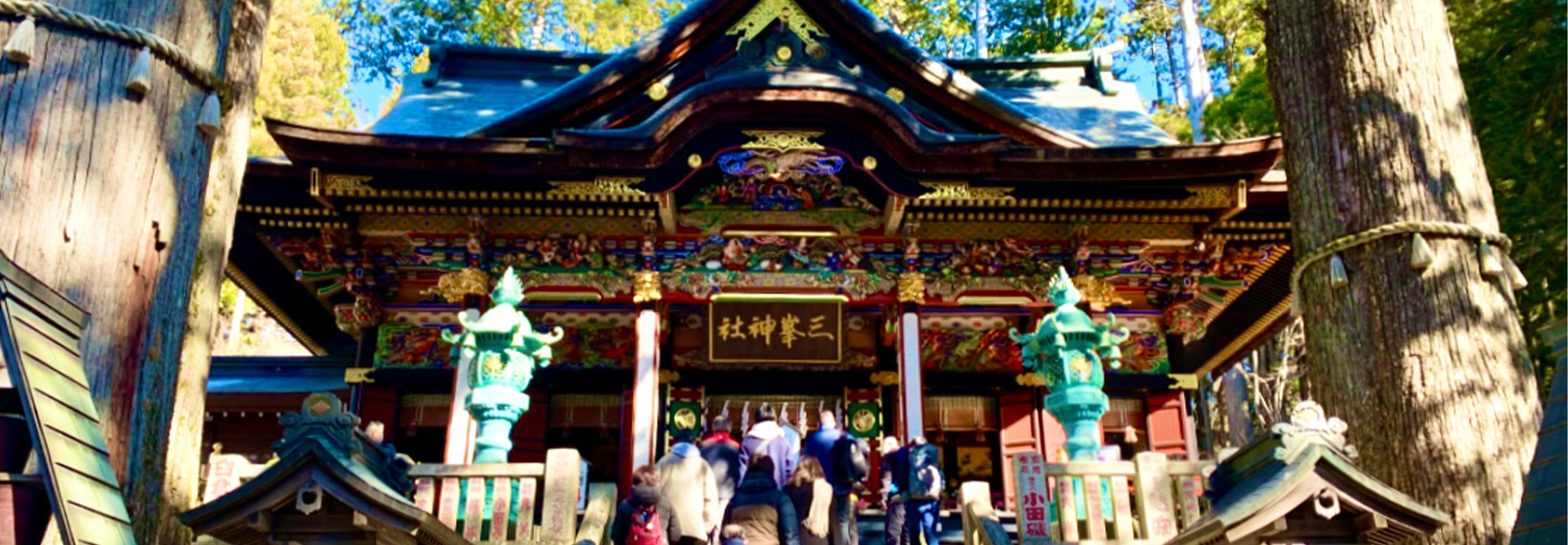
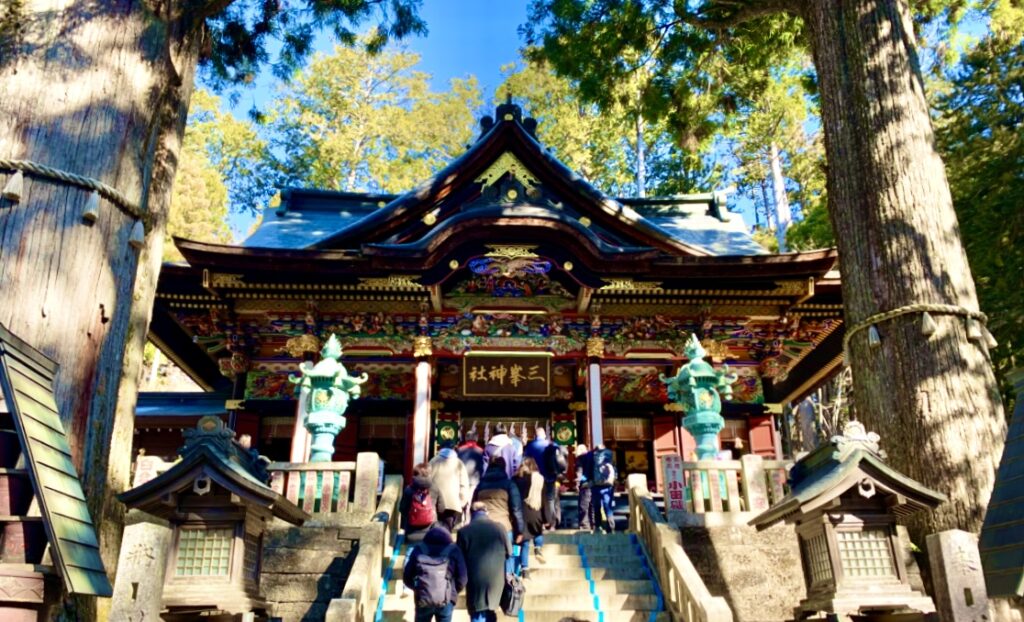
The main hall (honden) and worship hall (haiden) feature richly decorated wooden carvings and colorful details that reward close inspection. Look up to see elaborate motifs of dragons, flowers, and mythical creatures. The style is ornate yet harmonizes with the surrounding forest, making the buildings feel like they have grown out of the mountain itself.
In front of the main hall you can observe the standard Shinto prayer practice:
- Gently toss a coin into the offering box.
- Bow twice.
- Clap your hands twice to draw the attention of the kami.
- Silently make your wish or express gratitude.
- Bow once more.
Visitors are not required to pray, but following these steps respectfully is welcome and offers insight into everyday Japanese spirituality.
Sub-Shrines and Forest Paths
Beyond the main structures, small sub-shrines dot the grounds, often reached by stone steps and mossy paths under old trees. Some are dedicated to specific aspects of protection or fortune. Walking these quieter corners is part of Mitsumine’s charm; you may find yourself alone with the sound of your own footsteps and birdsong.
Wear comfortable shoes with good grip, as some paths and stairs can be damp, especially in rainy or misty weather. The combination of stone and moss is beautiful but can be slippery.
Observation Decks and Mountain Views
On clear days, viewing platforms near the shrine offer expansive views over rolling mountains and deep valleys. In autumn, the hillsides blaze with red and gold leaves, while in winter powdered snow turns the landscape monochrome. Even in summer, when haze softens the horizon, the view is relaxing and provides a strong sense of escape from the city.
Clouds and fog are common and can quickly shift, so be patient. Moments when the mist lifts to reveal a sudden panorama are unforgettable and give Mitsumine its famously mystical mood.
Cultural Highlights and Local Traditions
Wolf Amulets and Ema Prayer Plaques
Inside the shrine’s office or shop, you will find a variety of omamori (amulets) and ema (wooden prayer plaques). Because of Mitsumine’s wolf heritage, many of these items feature wolf imagery. Locals and pilgrims often purchase them for protection against accidents, illness, or bad luck.
You can buy an ema, write your wish or message on the back, and hang it on the dedicated racks. Wishes range from exam success to safe childbirth, business prosperity, or simply a healthy, happy life. Writing in English is perfectly fine; staff are accustomed to international visitors.
Seasonal Festivals and Events
Like many shrines in Japan, Mitsumine hosts festivals throughout the year, which may include ritual dances, processions, and special ceremonies. While exact dates vary, peak times often coincide with traditional seasonal markers:
- New Year (early January): Crowds visit to make their first shrine visit of the year, seeking a fresh start and good fortune.
- Summer: Ceremonies may focus on purification and protection from illness or disasters.
- Autumn: Harvest-related observances and gratitude rituals for nature’s bounty.
If your trip overlaps with a festival, expect a livelier atmosphere, food stalls, and more visitors in traditional dress. However, transportation and accommodation will also be busier, so plan ahead.
When to Visit Mitsumine Shrine
Each season at Mitsumine offers a different experience, shaped by climate and scenery.
Spring: Fresh Green and Late Blossoms
Spring in the mountains arrives later than in Tokyo. While the city’s cherry blossoms may be over by early April, Mitsumine’s higher altitude can mean cooler temperatures and later budding. The highlight is the emergence of fresh green leaves, with soft light filtering through new foliage and clear mountain air still crisp from winter.
Summer: Cool Escape from the Heat
Tokyo summers are hot and humid, but Mitsumine is significantly cooler thanks to its elevation and dense forest cover. Summer is ideal if you want a day trip that combines a break from city heat with scenic hiking and spiritual exploration. Afternoon clouds and passing showers are common, so a light rain jacket is useful.
Autumn: Brilliant Foliage
Late October to mid-November typically brings spectacular autumn colors to the Chichibu mountains. Reds, oranges, and yellows transform the forest around the shrine into a painterly landscape. This is one of the most popular times to visit, so expect weekend crowds, but the rich colors and crisp air make it worthwhile.
Winter: Snow, Silence, and Serenity
In winter, Mitsumine can receive snow, turning the shrine grounds into a quiet white world. Statues, torii, and trees dusted with snow feel straight out of a folktale. Temperatures can be very cold, and some paths may be icy, so proper footwear and warm layers are essential. Winter rewards those willing to brave the elements with deep tranquility and minimal crowds.
Combining Mitsumine Shrine with Hiking and Nature
The Chichibu region around Mitsumine is known for hiking trails ranging from gentle walks to demanding mountain routes. Some visitors treat the shrine as a base or endpoint for longer treks, following in the footsteps of older pilgrimage paths that once linked multiple sacred sites across the mountains.
If you are new to hiking in Japan, consider shorter marked trails near the shrine rather than long-distance routes. Always check map information, daylight hours, and weather before setting off, and carry water, snacks, and a charged phone. Mobile reception can be patchy in deep valleys or on certain slopes.
Practical Tips for International Visitors
Language and Signage
Some basic information boards at Mitsumine Shrine may have English explanations, but many signs are primarily in Japanese. Staff are generally helpful and may know some English, especially at the main office, but you should not rely on it. A translation app on your smartphone is very handy for interpreting signage and omamori descriptions.
Etiquette at the Shrine
Observing basic shrine etiquette will help you feel more at ease and show respect for local customs:
- At the purification fountain (temizuya), rinse your hands and mouth before approaching the main hall.
- Keep voices low within the inner shrine areas; many visitors are there to pray.
- Photography is generally allowed outdoors, but avoid taking pictures where signs prohibit it, and never during active prayer or private ceremonies.
- Do not touch sacred ropes, bells, or objects unless it is clearly part of the offering custom.
Food, Drinks, and Facilities
Small restaurants and cafés around the entrance serve simple meals such as soba noodles, udon, and local specialties. Menus may feature regional ingredients from Chichibu, like seasonal vegetables and mountain herbs. Vending machines provide drinks, but options can be limited, especially off-season, so bringing a water bottle and some snacks is wise.
Public toilets are available near the bus stop and within or around the shrine grounds. These may be basic but are usually clean and well maintained.
What to Wear and Bring
Because Mitsumine is at higher elevation, temperatures are cooler than Tokyo year-round. Even in summer, a light layer is useful, and in shoulder seasons or winter you will need proper warm clothing. Comfortable walking shoes with good traction are essential due to stone steps and potentially slippery paths.
An umbrella or compact raincoat, portable battery charger, and cash (for bus fares, donations, and small purchases) will make your visit smoother. Many small shops do not accept credit cards or mobile payments.
Planning Your Itinerary
Mitsumine Shrine works well as:
- A long day trip from Tokyo: Depart early, explore the shrine and viewpoints, have a leisurely lunch, and return in the late afternoon or evening.
- An overnight stay in Chichibu: Combine Mitsumine with nearby attractions such as Chichibu’s downtown shrines, rivers, and onsen, staying at a local ryokan or guesthouse.
If you are building a first-time Japan itinerary, Mitsumine fits nicely after a few days in Tokyo, offering a contrast to neon streets and modern architecture. It shows a slower, quieter side of the country where nature and spirituality intertwine.
Experiencing Japan’s Sacred Mountains
Visiting Mitsumine Shrine introduces you to Japan’s long tradition of mountain worship, where peaks, forests, and waterfalls are seen not just as scenery, but as dwelling places of powerful spirits. Walking beneath ancient cedars and wolf guardians, you sense how deeply connected Japanese culture is to its landscapes.
Whether you come as a hiker, photographer, history lover, or simply a curious traveler, Mitsumine offers space to breathe, reflect, and see a more mystical side of Japan—one that lingers in memory long after you descend from the mountain.

Access Map
Recommended spots in Saitama
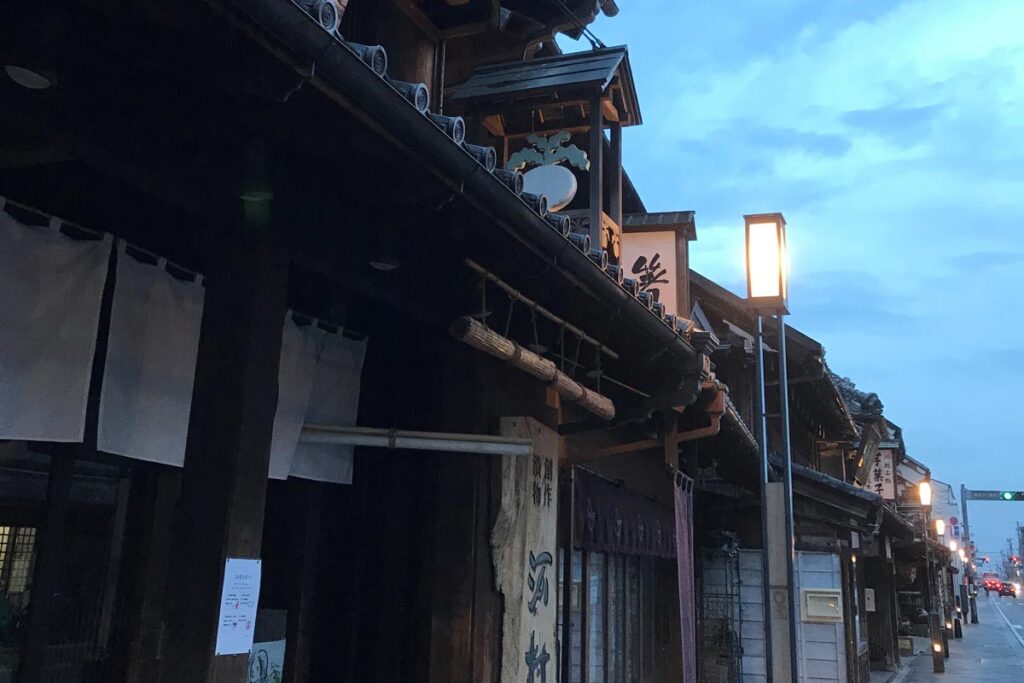
Kawagoe Ichibangai
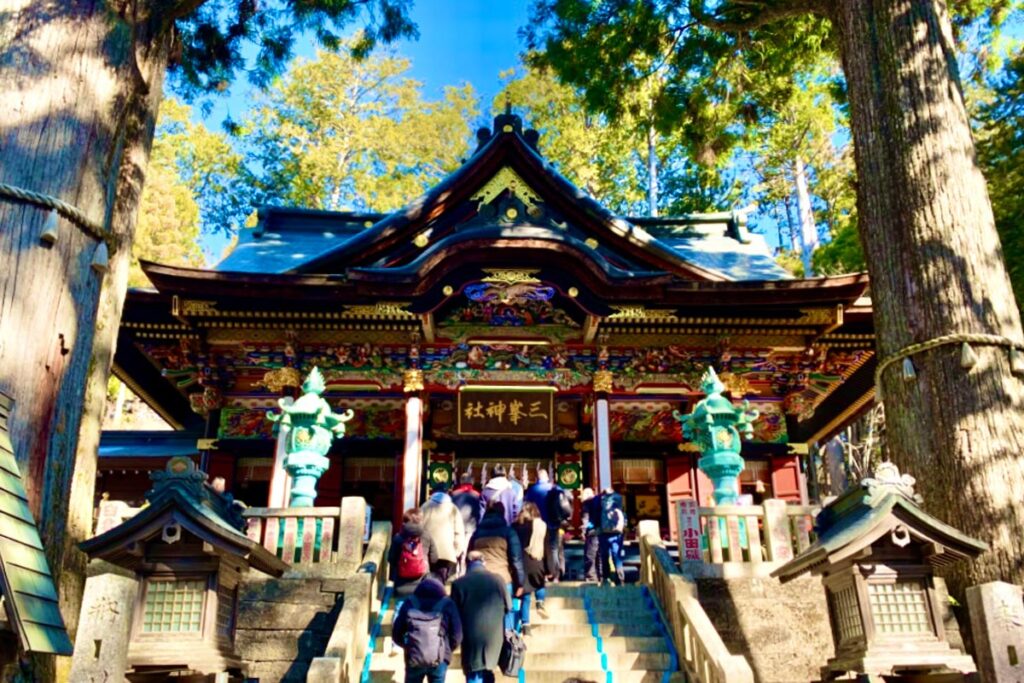
Mitsumine Shrine
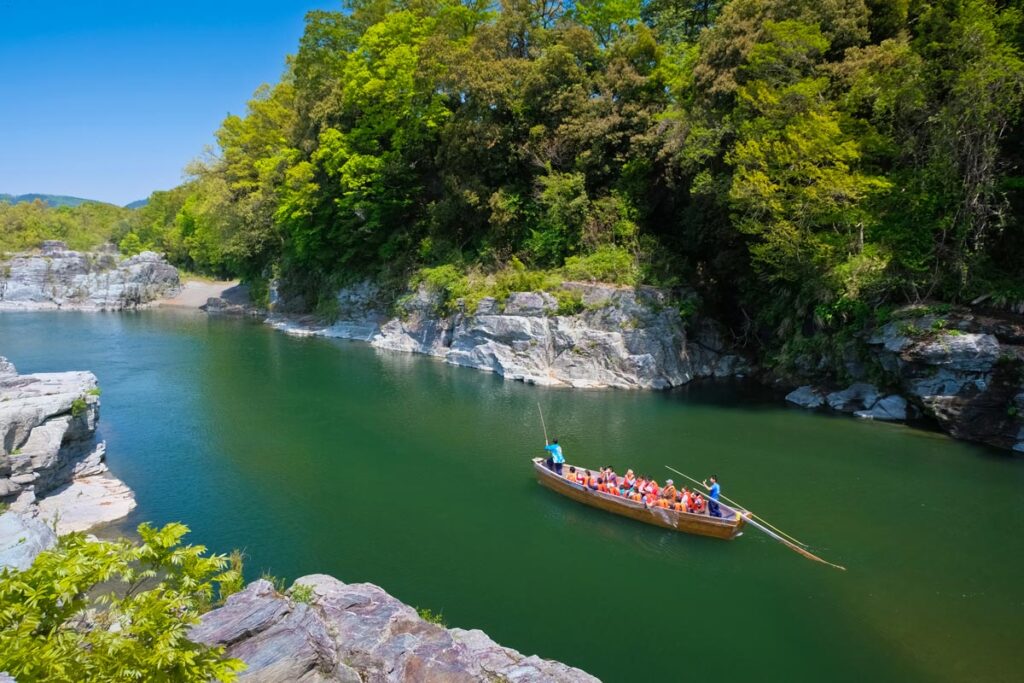
Nagatoro
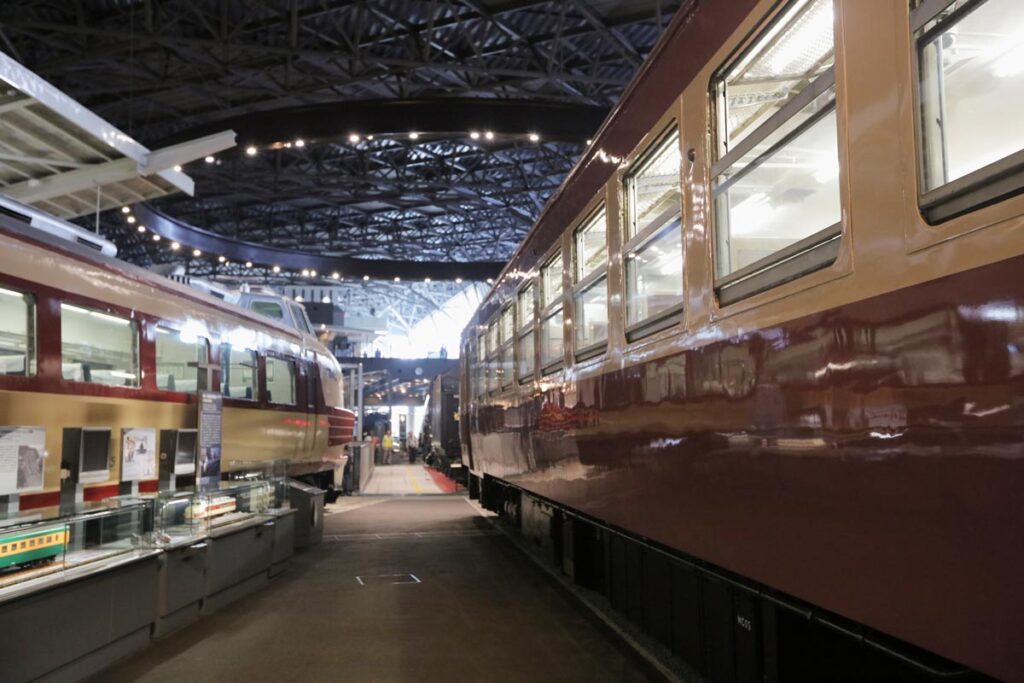
Railway Museum
Top destinations in Kanto Region
Tochigi
Kanagawa