


Zenkō-ji Temple
Zenkō-ji Temple Japan Travel Guide for First-Time Visitors
Photos are for illustrative purposes only.
Zenkō-ji Temple in Nagano is one of Japan’s most important and welcoming Buddhist temples. For many Japanese, visiting Zenkō-ji at least once in a lifetime is a spiritual milestone. For international travelers, it offers a rare mix of living tradition, approachable rituals, and an atmospheric temple town that is easy to explore on foot.
If you are planning your first trip to Japan and want a destination that combines history, culture, food, and scenic walks in the mountains, Zenkō-ji is a rewarding stop that fits perfectly into an itinerary including Tokyo, Matsumoto, or the Japanese Alps.
Why Zenkō-ji Belongs on Your Japan Itinerary
Founded over 1,400 years ago, Zenkō-ji is one of Japan’s oldest Buddhist temples and is unique in several ways:
- Non-sectarian temple: It is jointly managed by both Tendai and Jōdo schools of Buddhism and welcomes people of all beliefs.
- Spiritual focus: The temple enshrines what is said to be the first Buddhist image ever brought to Japan, making it a major pilgrimage site.
- Walkable temple town: The surrounding streets are lined with traditional inns, shops, and cafes, offering a relaxed, historic atmosphere.
- Easy access from Tokyo: Just around 90 minutes by shinkansen, it works as a day trip or as a base for exploring Nagano Prefecture.
Unlike some famous temples that feel like museums, Zenkō-ji is a living religious center. You will see locals coming to pray before work, monks chanting, and families on quiet pilgrimages. This gives first-time visitors an authentic glimpse of everyday Japanese spirituality.
Understanding the Temple’s History and Legends
Zenkō-ji’s history is woven from legend and faith. According to tradition, the temple houses a hidden statue of Amida Buddha, believed to be the first Buddhist image brought to Japan in the 6th century. The statue is so sacred it has not been shown to the public for centuries.
Over time, the temple became a major pilgrimage site. During the Edo period, when long-distance travel was strictly regulated, Zenkō-ji was one of the rare places people were permitted to visit. Pilgrims would travel on foot for days or weeks, staying in temple lodgings along the way. Many of the old inns lining the approach road today are the heirs of that tradition.
The temple’s name is often translated as “Temple of Virtuous Light.” It has long been known as a place open to everyone—regardless of gender, social status, or sect—which was not always the case in Japan’s religious history.
Navigating the Temple Grounds
Zenkō-ji is laid out along a gentle slope, with the main hall at the top and a long approach road stretching downhill. Exploring on foot is straightforward, and most signs include at least some English.
Niōmon Gate and the Temple Approach
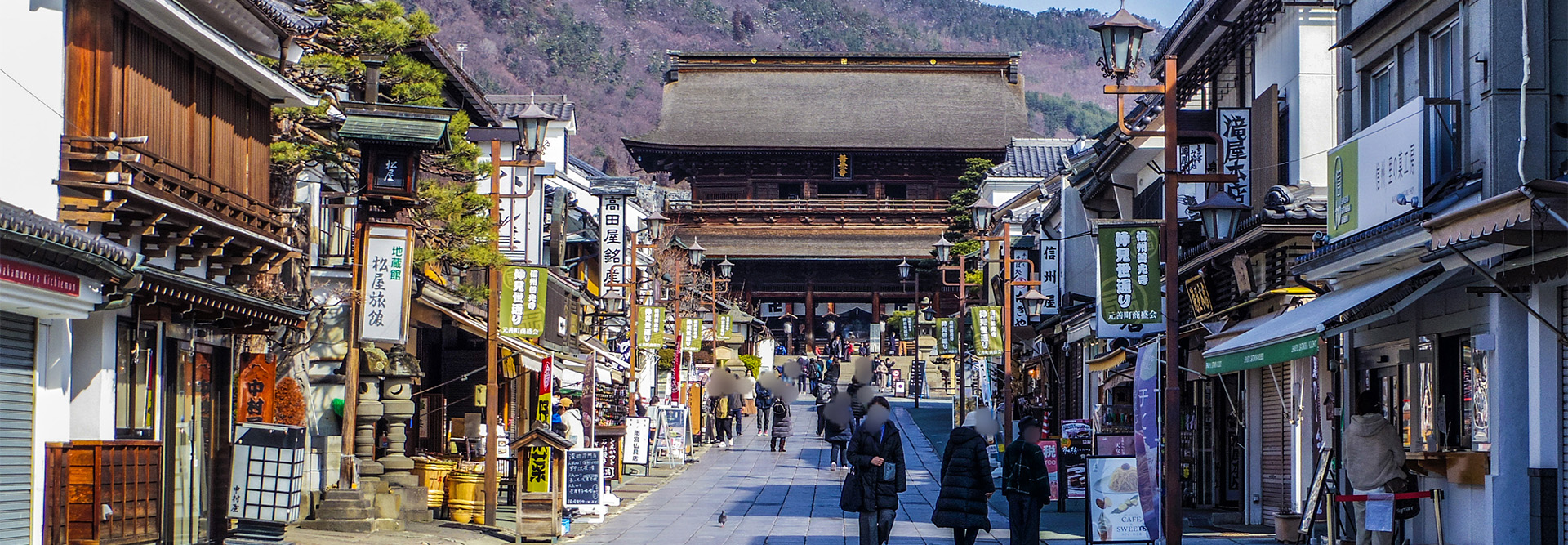
Your visit will usually begin at the Niōmon Gate, a large wooden gate guarded by fierce-looking guardian statues (Niō). These muscular deities represent the power that protects the Buddha’s teachings. Passing under them symbolically marks your entrance into sacred space.
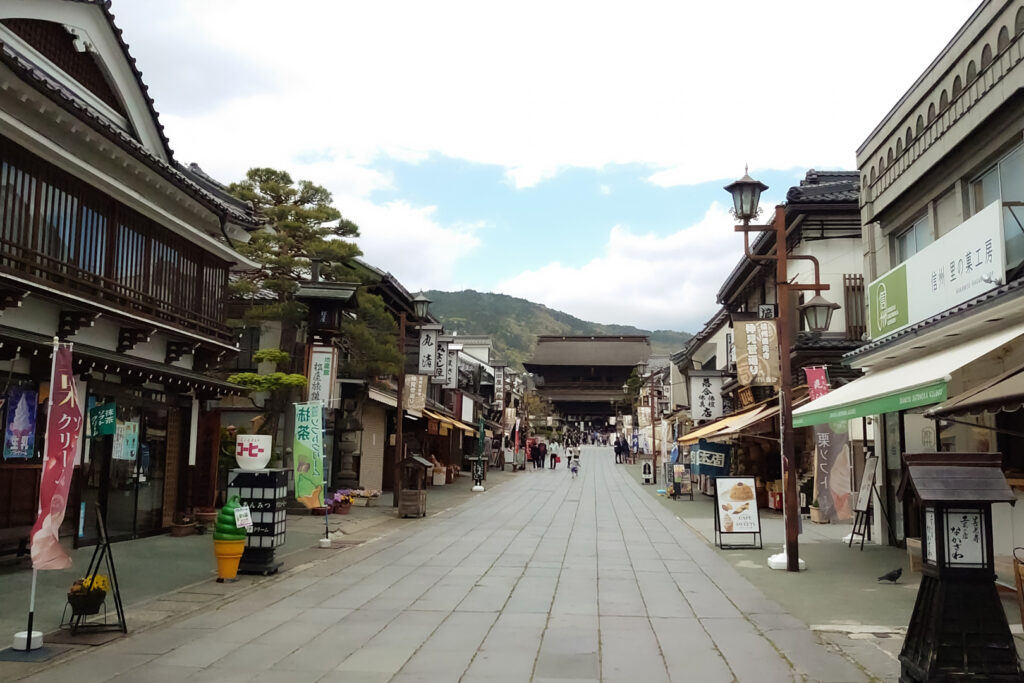
From here, the approach road (Omotesandō) is flanked by souvenir shops, traditional confectioners, soba noodle restaurants, and small guesthouses. This is a good place to sample Nagano specialties such as:
- Shinshū soba – buckwheat noodles served hot or cold, often with mountain vegetables.
- Oyaki – rustic dumplings filled with seasonal ingredients like pumpkin, nozawana greens, or sweet bean paste.
- Miso products – Nagano is famous for miso, and you will find miso-flavored snacks, soups, and pickles.
Sanmon Gate
Approaching the main precinct, you will pass under the Sanmon Gate, a tall, elegant gate often photographed with the mountains in the background. From here, lanterns, incense smoke, and the rhythm of temple bells help create a calm, almost timeless atmosphere.
Main Hall (Hondō)
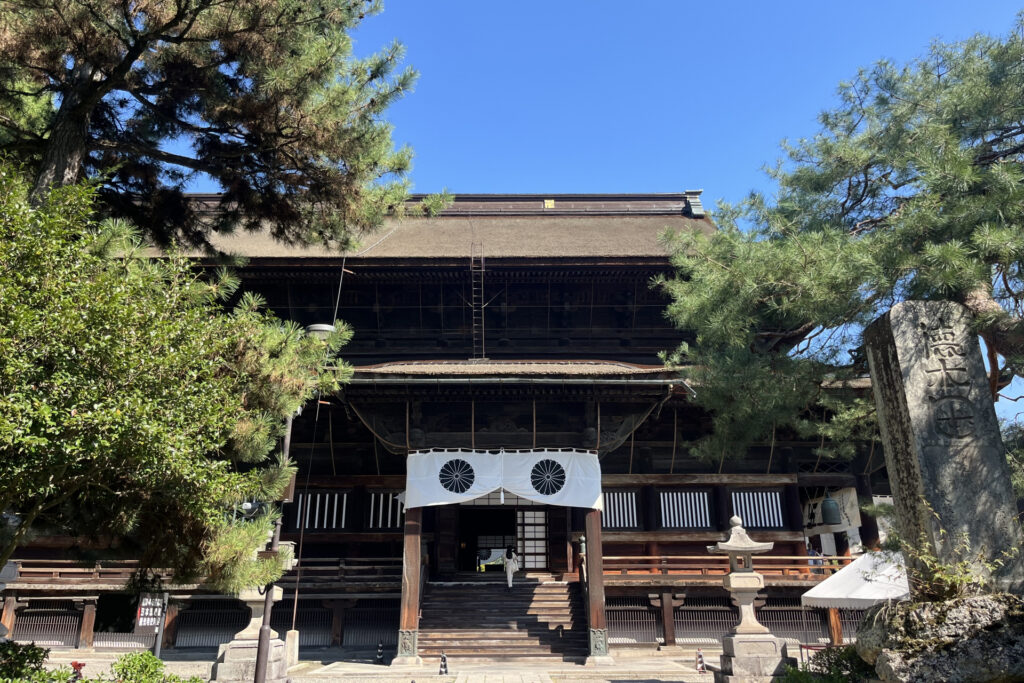
The heart of the complex is the imposing Hondō, or main hall. Built mainly of dark wood, it is one of the largest wooden temple buildings in eastern Japan. Step up, remove your shoes at the entrance, and enter quietly.
Inside, you will find:
- A broad, dimly lit hall with tatami flooring.
- Intricate altar spaces filled with statues, candles, and offerings.
- The sound of chanting or the low hum of visitors praying.
The temple’s most sacred image, the original Amida statue, is never displayed. Instead, a Maedachi Honzon—a “substitute” statue—is occasionally shown to the public during special events known as Gokaichō (these only occur about once every seven years). Even at other times, visitors feel the presence of something deeply revered.
The Famous Underground Passage of Darkness
One of the most memorable experiences at Zenkō-ji is the Okaidan Meguri, an underground pilgrimage route beneath the main hall.
After paying a small fee, you descend a set of stairs into total darkness. The corridor is pitch black; you cannot see your own hand, and you must move slowly along the wall. Somewhere along the passage is a hidden metal key attached to the wall, representing a connection to salvation. The goal is to find and touch it as you walk.
This ritual is not about sightseeing—it is an embodied experience of trust and faith. Even for non-Buddhist visitors, it can be surprisingly powerful. Children are allowed, but travelers who are claustrophobic or uneasy in the dark may want to skip it.
Morning Rituals: O-Asaji and O-Juzu Chōdai
If you stay near the temple, aim to experience the early morning atmosphere. At dawn, the temple comes alive with daily rituals that are open to the public.
O-Asaji Morning Service
The O-Asaji is a morning Buddhist service held in the main hall. Monks and nuns chant sutras, offer incense, and perform ritual movements in front of the altar. The service time changes slightly with the seasons but typically takes place shortly after sunrise.
Visitors are welcome to sit quietly at the back, observe, and participate respectfully. Arrive a little early, dress modestly, and silence your phone. Even if you do not understand the chants, the deep, resonant sound of the sutras and the fragrance of incense can be moving.
O-Juzu Chōdai: Receiving the Rosary Blessing
A highlight of the early morning is O-Juzu Chōdai, the rosary blessing. The head priest (and in Zenkō-ji’s unique system, there are both male and female chief priests) walks along the approach to the main hall, accompanied by attendants carrying long Buddhist rosaries.
Visitors kneel along the path, and the rosary is lightly tapped or brushed over each person’s head as the priest passes. This simple act is believed to confer blessings and good fortune. There is no fee, and participation is open to everyone. You do not need to be Buddhist to receive the blessing—just bow your head slightly, join your hands if you wish, and remain quiet.
Temple Lodging: Staying in a Shukubō
For a deeper experience, consider staying in a shukubō, a Buddhist temple lodging. Zenkō-ji and its surroundings still maintain several of these traditional accommodations, many of which were originally built for pilgrims.
Staying in a shukubō typically includes:
- Tatami-matted rooms with futon bedding.
- Vegetarian shōjin ryōri meals, beautifully arranged and often featuring local mountain vegetables and tofu.
- The option to join morning prayers or meditation sessions.
While some lodgings are simple and traditional, others have modern comforts such as heating, Wi-Fi, and Western-style bathrooms. Advance reservations are recommended, especially during weekends and holidays.
Cultural Etiquette and Practical Tips
Zenkō-ji is an active religious site, so modest behavior and basic temple etiquette are important.
At the Purification Basin
Near the entrance to the main hall you will find a stone basin of water with ladles. This is for ritual purification:
- Pick up the ladle with your right hand and pour water over your left hand.
- Switch hands and pour water over your right hand.
- Pour a small amount into your left hand, rinse your mouth lightly (do not touch the ladle directly to your lips), then spit beside the basin—not back into it.
- Hold the ladle vertically so remaining water cleans the handle, then return it.
You can perform the full ritual or a simplified version; the key is to act calmly and avoid making a mess.
Inside the Halls
- Remove shoes where indicated; store them neatly in provided shelves.
- Keep your voice low and avoid blocking pathways.
- Photography may be restricted inside some areas—check signs and follow staff instructions.
- If you wish to pray, you can bow once, place your hands together, and offer a quiet wish or expression of thanks.
Shopping for Charms and Souvenirs
Zenkō-ji’s shops sell numerous religious items and local specialties. Popular choices include:
- Omamori – small cloth amulets for safe travel, health, study, or general good luck.
- Ofuda – paper or wooden talismans for home altars or room protection.
- Goshuin – calligraphed temple stamps collected in a dedicated stamp book, a beautiful way to record your temple visits across Japan.
- Wooden crafts and local sweets – many are easy to pack and make understated gifts.
If you buy a temple-related item, treat it respectfully—even if you view it as a souvenir, it is also a religious object for many people.
Best Seasons and Times to Visit
Zenkō-ji can be visited year-round, but each season offers a different mood.
- Spring: Cherry blossoms bloom along the temple approach and nearby streets, usually in April. The contrast between the dark wooden buildings and soft pink blossoms is especially photogenic.
- Summer: Lush greenery surrounds the temple, and evenings are pleasantly cool compared to Tokyo. Afternoon thunderstorms are possible, so carry an umbrella.
- Autumn: From late October to mid-November, the surrounding hills blaze with red and yellow leaves. Nighttime illuminations may be held, adding a magical atmosphere.
- Winter: Snow often blankets the temple roofs and stone lanterns, creating a quiet, almost monochrome beauty. Dress warmly; Nagano winters are cold.
For a quieter visit, come early in the morning or late in the afternoon. Midday can be busy with tour groups, especially on weekends and holidays.
Access and Suggested Itinerary
Getting to Zenkō-ji from Tokyo
Nagano is well connected by rail:
- By shinkansen: Take the Hokuriku Shinkansen from Tokyo Station to Nagano Station. The journey takes around 90 minutes.
- From Nagano Station to Zenkō-ji: It is about 2 km. You can walk in roughly 20–30 minutes, following signs for the temple, or take a short bus or taxi ride.
Combining Zenkō-ji with Other Destinations
Zenkō-ji fits naturally into a wider exploration of central Japan. Possible combinations include:
- Snow Monkeys in Jigokudani: Visit the famous hot-spring-bathing monkeys and stay overnight in Nagano to enjoy Zenkō-ji’s morning rituals the next day.
- Matsumoto: Combine the temple with a visit to Matsumoto Castle, one of Japan’s most beautiful original castles, reachable by train from Nagano.
- Japanese Alps: Use Nagano as a gateway to hiking areas such as Kamikōchi or ski resorts like Hakuba in winter.
If time is limited, you can still visit Zenkō-ji as a long half-day trip from Tokyo, but staying one night in Nagano allows you to experience the temple without rushing.
Experiencing Living Tradition at Zenkō-ji
For first-time visitors to Japan, Zenkō-ji offers an accessible window into the country’s spiritual life. You can wander historic streets, share space with pilgrims, join morning services, and walk through the underground darkness, all within a compact, manageable area.
By approaching the temple with curiosity and respect, you will gain more than just beautiful photographs. Zenkō-ji offers a chance to slow down, listen to the rhythm of chanting and bells, and feel the continuity of a tradition that has guided travelers and pilgrims for over a millennium.
Whether you come for a brief visit or stay overnight in a temple lodging, Zenkō-ji is likely to become one of the most memorable stops on your journey through Japan.

Access Map
Recommended spots in Nagano
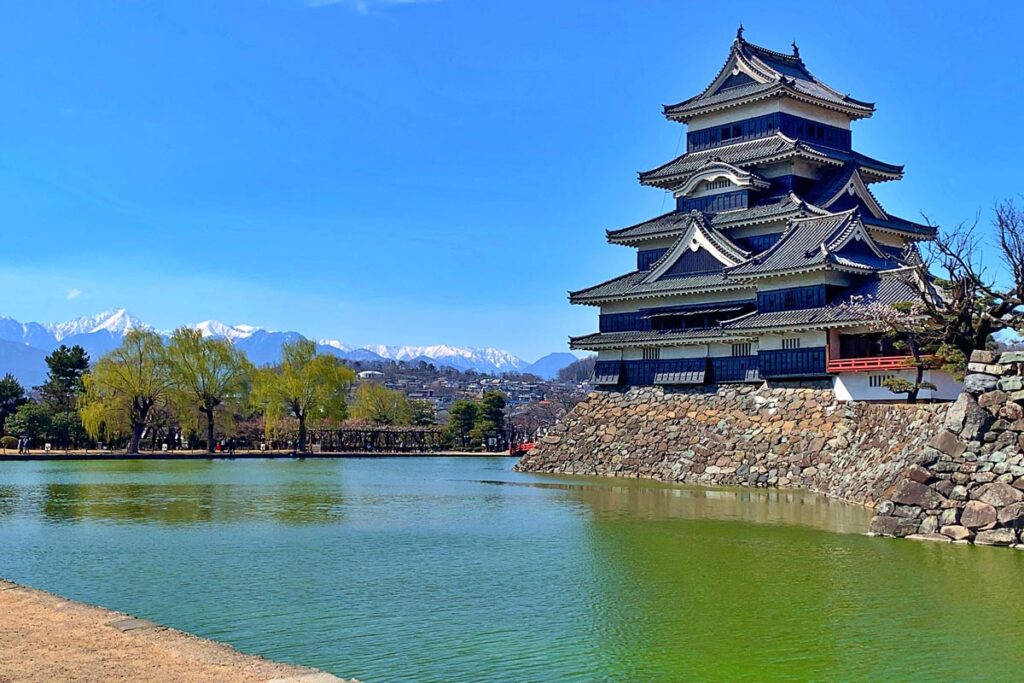
Matsumoto Castle
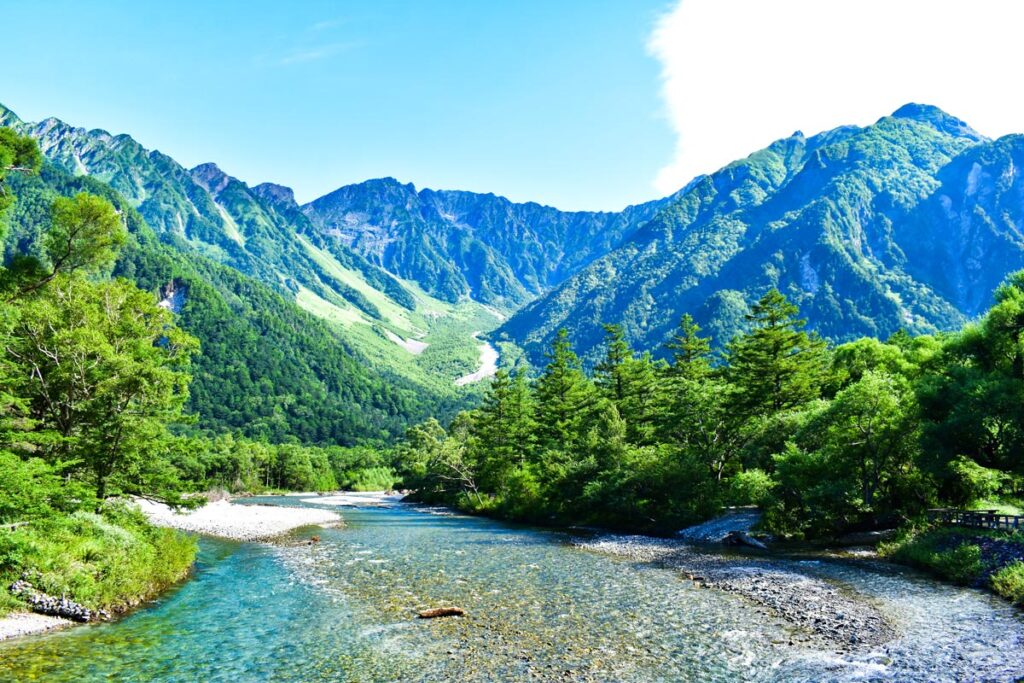
Kamikochi
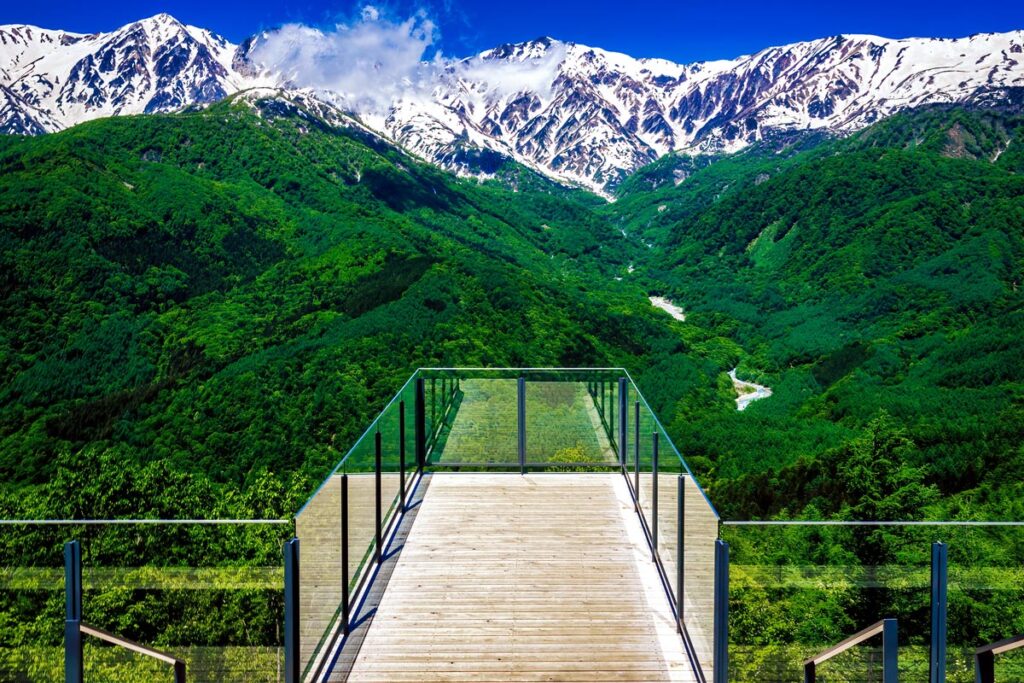
Hakuba Mountain Resort
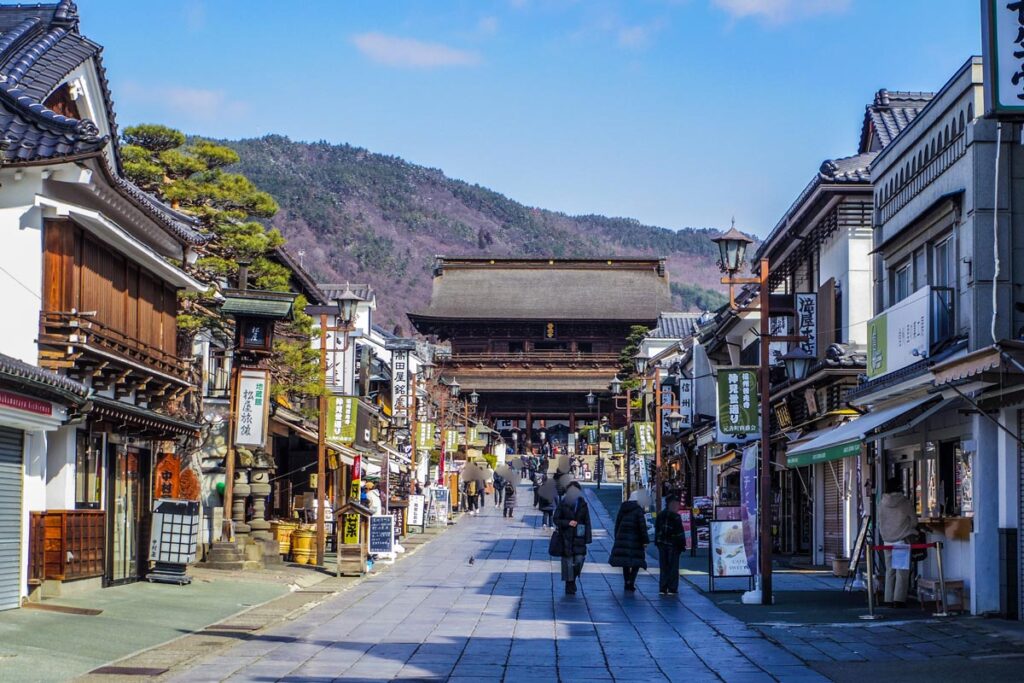
Zenkō-ji Temple
Karuizawa Town
Top destinations in Chubu/Hokuriku
Gifu
Ishikawa
Aichi