


Kyushu/Okinawa
Kyushu & Okinawa: Japan’s Warm South for First-Time Visitors
Photos are for illustrative purposes only.
For many first-time visitors, Japan means Tokyo’s neon streets or Kyoto’s temples. Yet Japan’s warm southern regions, Kyushu and Okinawa, offer a very different side of the country: steaming hot springs, tropical beaches, active volcanoes, samurai history, and laid-back island culture. If you want a gentler pace, more nature, and fewer crowds while still enjoying the comfort and safety Japan is famous for, this is where to go.
Why Visit Kyushu and Okinawa on Your First Trip
Kyushu is Japan’s third-largest island, located southwest of Honshu (where Tokyo and Osaka are). Okinawa is an archipelago stretching even farther south toward Taiwan, wrapped in clear blue seas. Together, they are ideal for travelers who want both culture and outdoor experiences.
Kyushu at a Glance
Kyushu is known for its volcanic landscapes, rich hot spring culture, and historic trading ports that first opened Japan to the outside world. You will find:
- Lively cities like Fukuoka with great food and shopping
- Historic sites tied to samurai, Christianity, and early foreign trade
- Some of Japan’s best hot spring towns
- National parks, volcanoes, and coastal scenery
Okinawa at a Glance
Okinawa feels different from mainland Japan. It was once the independent Ryukyu Kingdom, and its culture, language roots, and architecture reflect this history. You will find:
- Tropical beaches and coral reefs perfect for snorkeling and diving
- Unique Ryukyuan castles and World Heritage sites
- A slower, island pace with friendly local communities
- Mild winters and a resort-like atmosphere
Top Destinations in Kyushu
Fukuoka: Gateway to Kyushu
Most visitors enter Kyushu via Fukuoka, the region’s largest city and a major transport hub. It is an excellent base for your first few nights in the south.
Fukuoka has a relaxed, coastal feel and is easy to explore on foot or by subway. In the evening, follow locals to the riverside yatai (street food stalls), where you can perch on a stool and enjoy ramen, skewers, and beer in a lively but friendly atmosphere.
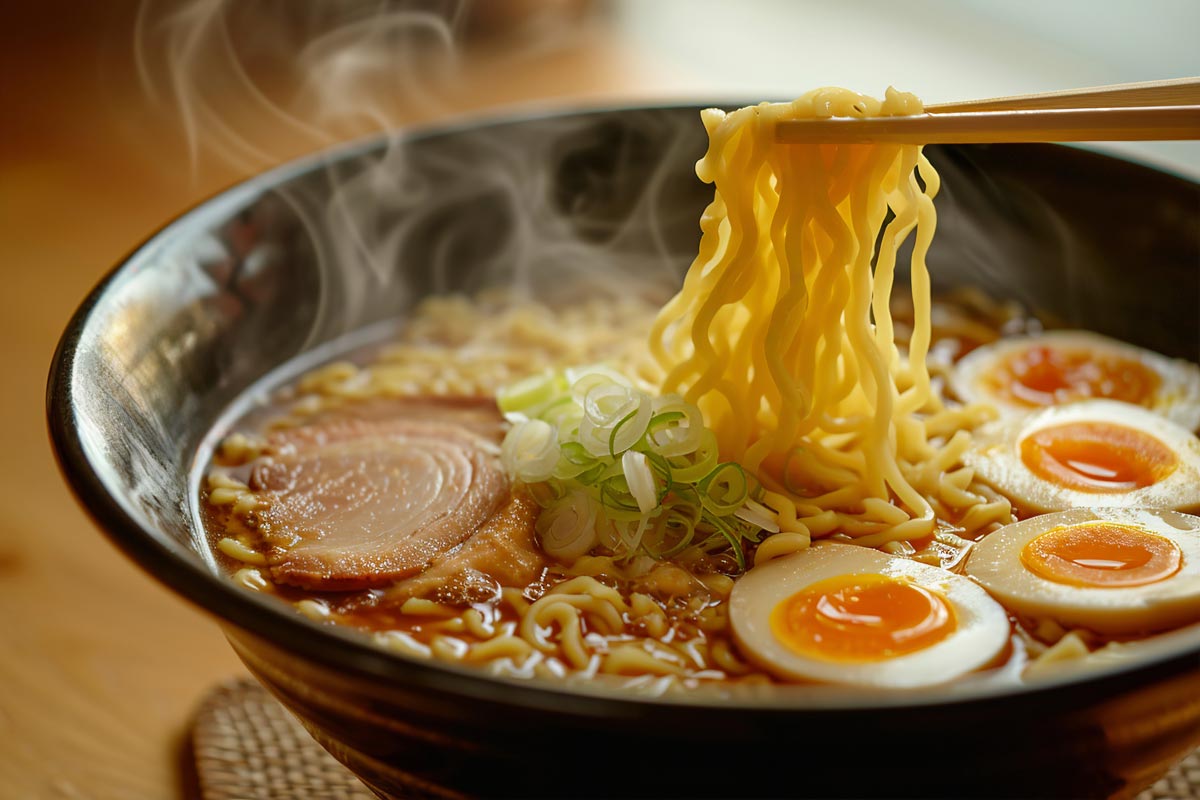
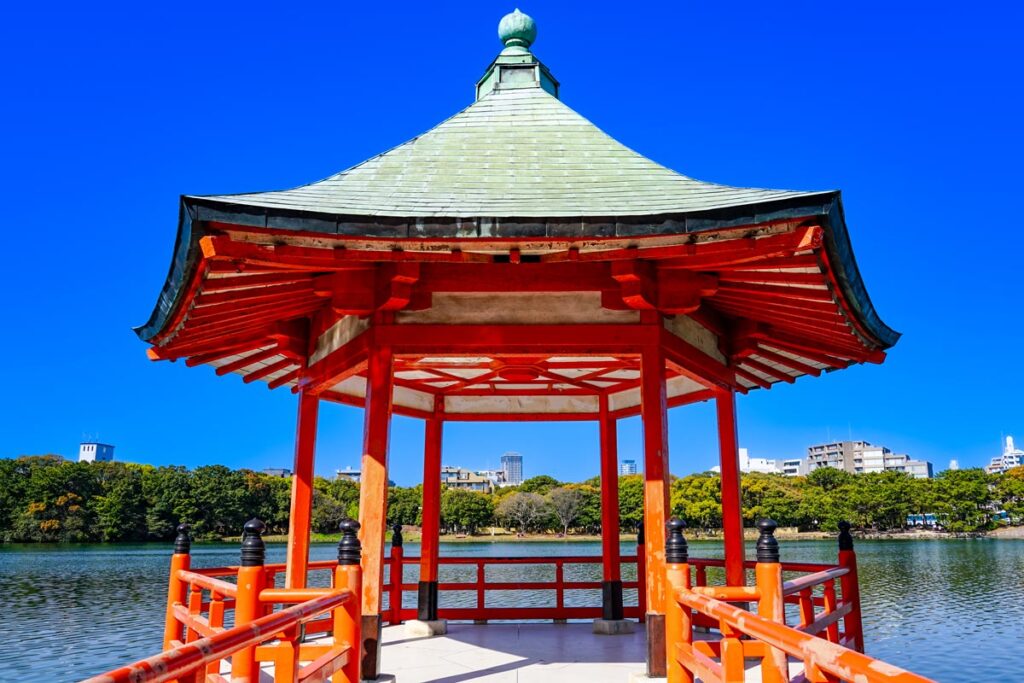
Food is the star here. Fukuoka is the birthplace of rich, pork-based tonkotsu ramen (often labeled “Hakata ramen”), and you will also find fresh seafood, mentaiko (spicy cod roe), and local izakaya pubs. If you enjoy shopping, explore Tenjin’s underground arcades or the Canal City complex, then unwind at Ohori Park, a large lakeside park ideal for a stroll.
Nagasaki: Port City with Layered History
Nagasaki is one of Japan’s most atmospheric cities, shaped by centuries of contact with Portugal, the Netherlands, and China, as well as by the tragedy of the atomic bombing in 1945. As a first-time visitor, the contrast between its European-style churches, Chinese temples, and Japanese neighborhoods is especially striking.
The Peace Park and Atomic Bomb Museum are sobering but important sites for understanding modern Japanese history. Nearby, the Urakami Cathedral and various memorials reflect the city’s sizable Christian community, which survived centuries of persecution during the Edo period.
For a lighter side, walk through the Dutch Slope, Glover Garden’s Western-style mansions, and Nagasaki’s Chinatown, one of the oldest in Japan. In the evening, take the ropeway up Mount Inasa for a famous panoramic night view over the bay, often ranked among Japan’s best.
Beppu & Yufuin: Hot Spring Heaven
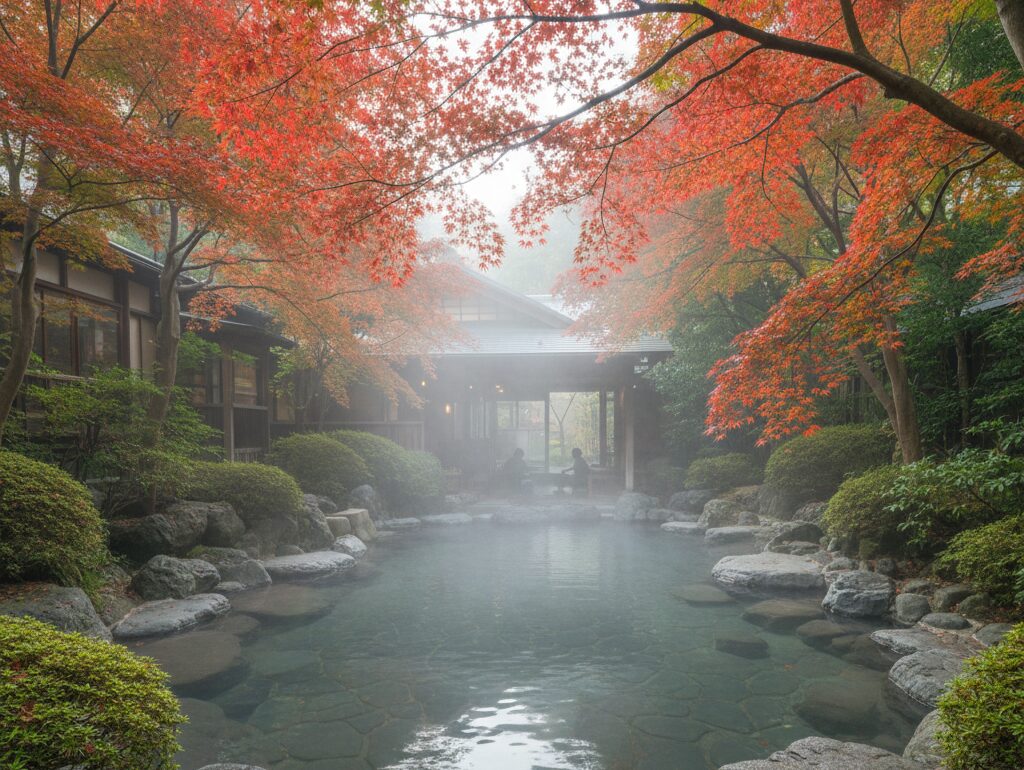
Kyushu is synonymous with hot springs, and nowhere is this more obvious than Beppu, one of the country’s top onsen resorts. Plumes of steam rise from the ground across town, and you can soak in everything from simple public baths to luxury ryokan (traditional inns).
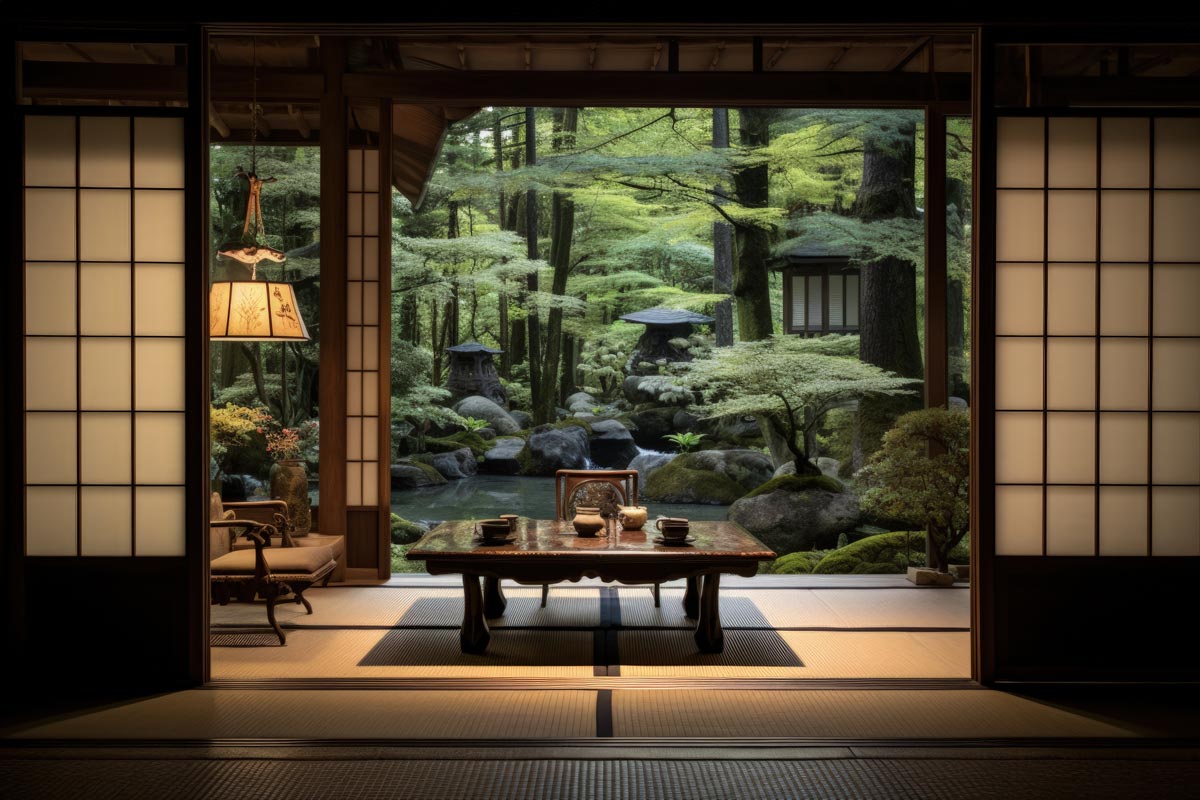
First-timers should experience both a day-use onsen and, if budget allows, an overnight stay at a ryokan including dinner and breakfast. Expect to change into a yukata robe, walk the tatami corridors in slippers, and enjoy a multi-course Japanese meal featuring local seafood and vegetables.
Nearby Yufuin offers a calmer, more boutique atmosphere, with art galleries, cafes, and views of Mt. Yufu. It is ideal if you like a small-town feel with stylish shops and quiet streets.
Mount Aso and the Kumamoto Area
Central Kyushu is dominated by Mount Aso, one of the world’s largest volcanic calderas. The surrounding countryside is a patchwork of fields, small villages, and grazing land, offering a very different Japan from the big cities.
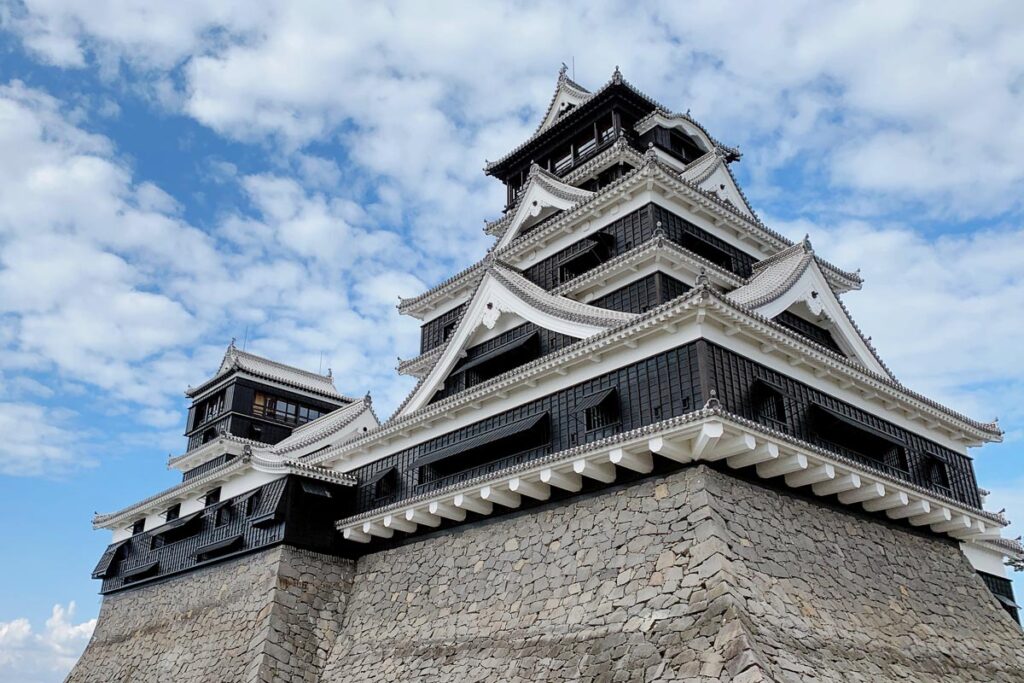
Kumamoto City, with its impressive castle reconstruction and samurai history, is often used as a base for exploring Aso. The castle grounds reveal how feudal lords once fortified their power, while nearby gardens and shrines offer quieter corners to explore.
Depending on volcanic activity and safety regulations, visitors can sometimes approach the crater area by bus or ropeway for dramatic views of the smoking caldera. Even when access to the crater is restricted, there are scenic viewpoints, hiking routes, and riding stables around the caldera rim.
Southern Kyushu: Kagoshima and Beyond
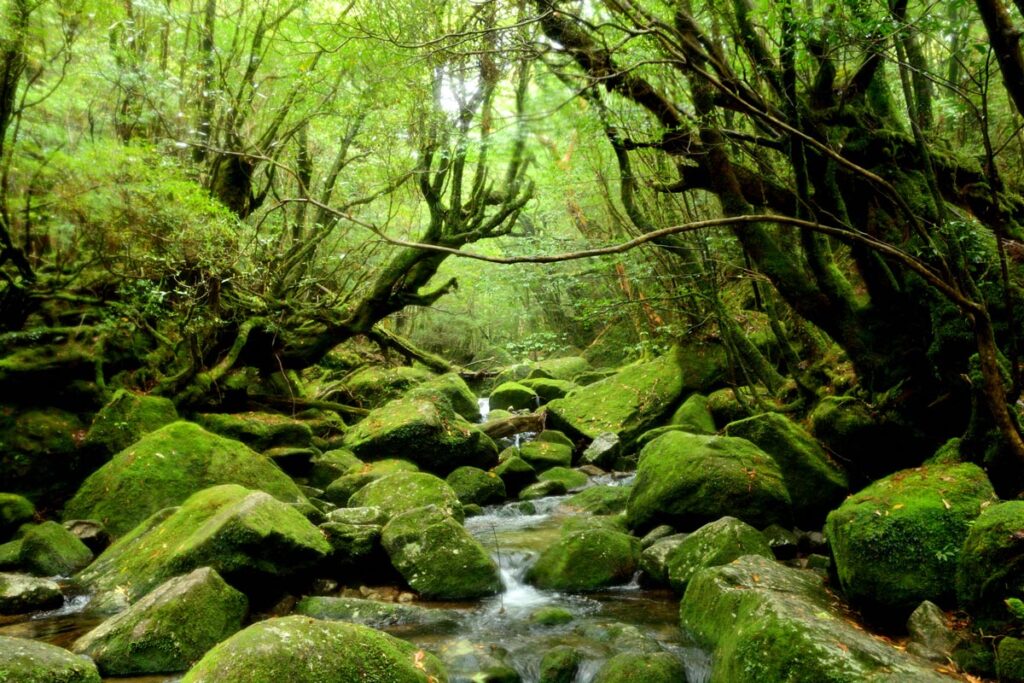
Further south, Kagoshima faces a smoking volcano across the bay: Sakurajima. The volcano is an everyday presence for locals, and you can take a short ferry ride to explore its hiking paths, hot springs, and observation points.
The region has a subtropical feel, with palm trees, gardens, and excellent seaside hot springs. Kagoshima was also a key center for samurai loyal to the last shogunate era, and museums here explain how Japan moved from feudalism to modernity in the 19th century.
Highlights of Okinawa for First-Time Visitors
Naha: Prefectural capital of Okinawa
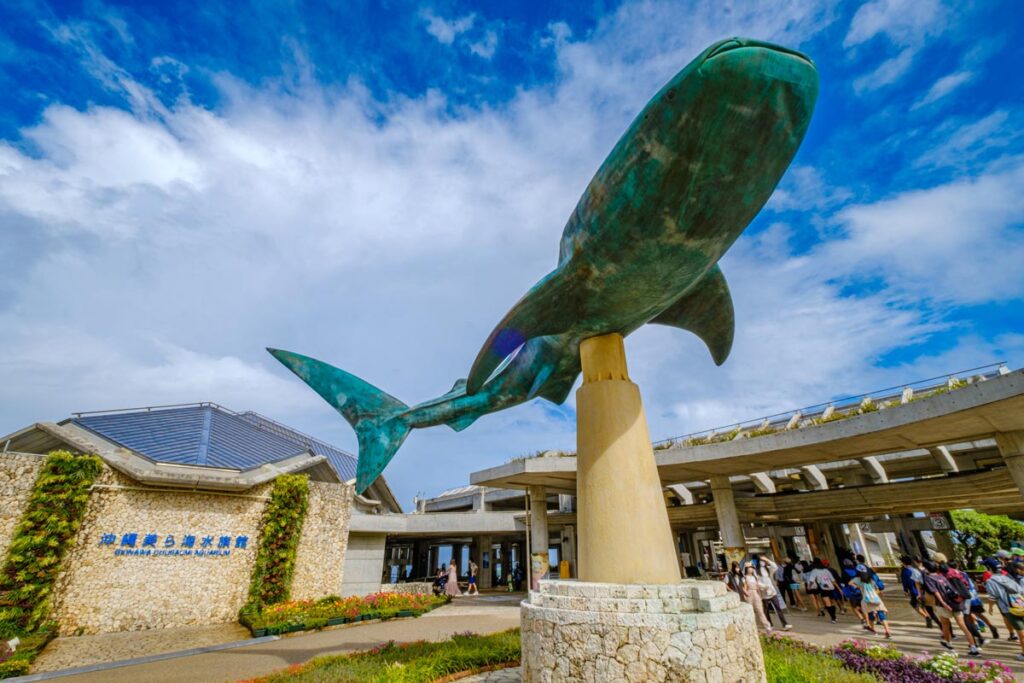
Naha, Okinawa’s main city, is your most likely arrival point by air. Kokusai-dori, the central shopping street, is lined with souvenir shops, market halls, and restaurants serving goya champuru (stir-fried bitter melon), Okinawan soba noodles, and local pork dishes. The atmosphere is more informal than in many mainland cities, with live music bars and crafts stalls.
From Naha, it is easy to reach nearby beaches or take ferries to smaller islands such as Tokashiki and Zamami in the Kerama Islands, known for their clear turquoise water and sea turtles.
Ryukyu Heritage and Castles
Okinawa’s history as the Ryukyu Kingdom sets it apart. Its former castles, or gusuku, are UNESCO World Heritage sites with distinctive stonework and hilltop locations. While some were heavily damaged during World War II, their remains and reconstructions still give a sense of the old kingdom.
Exploring these sites introduces you to a different strain of Japanese culture, influenced by trade with China and Southeast Asia. Traditional music, using the three-stringed sanshin, and vibrant textile patterns reflect these wider connections.
Beaches, Diving, and Island Life
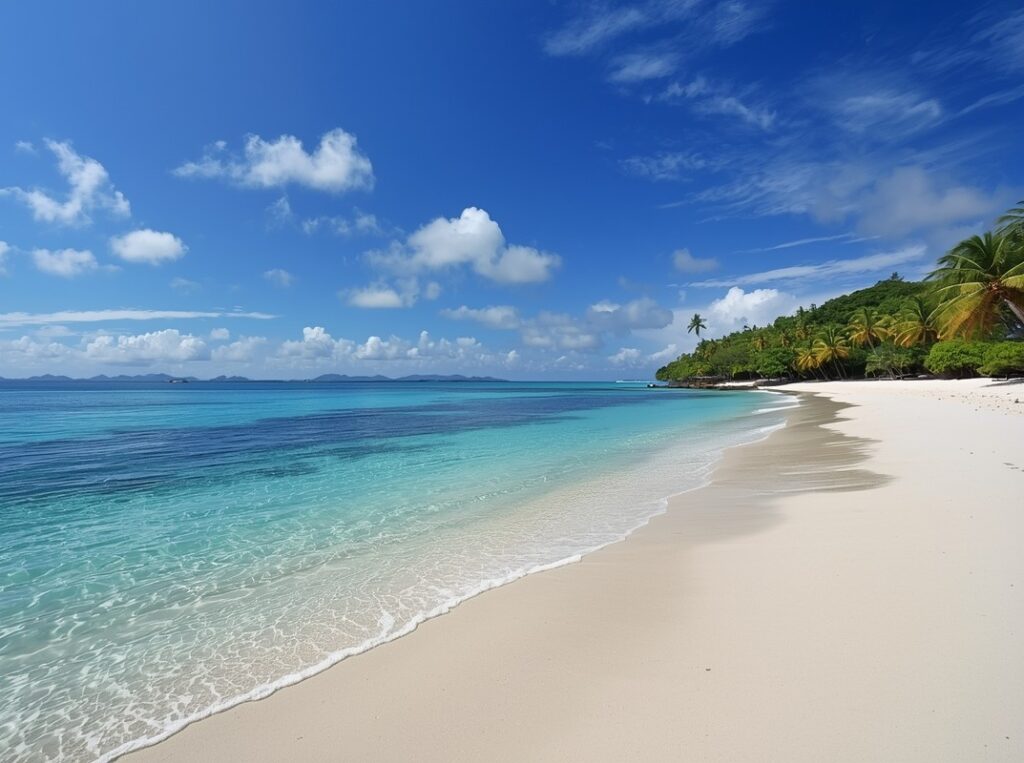
The main draw of Okinawa for many visitors is the sea. The islands offer soft, white-sand beaches, coral reefs, and clear water ideal for snorkeling, diving, and stand-up paddleboarding. Resorts range from family-focused hotels to quiet guesthouses on smaller islands.
Compared to much of mainland Japan, life moves slowly here. You may spend your days swimming, cycling around small islands, or simply relaxing at a seaside cafe with local beni-imo (purple sweet potato) sweets or tropical fruit.
Cultural Experiences You Should Not Miss
Onsen Etiquette in Kyushu
Hot springs are an essential part of Japanese daily life, and Kyushu is an ideal region to try them for the first time. Public baths are usually divided by gender, and bathing is done naked. Before entering the shared baths, you will wash thoroughly at a small stool and shower area. Towels stay outside the water, and you should avoid splashing or swimming.
Many facilities provide simple instructions in English, and staff are used to welcoming overseas visitors. After your bath, sip a bottle of cold milk or a local drink in the rest area, a classic post-onsen ritual.
Local Food and Regional Specialties
Food in Kyushu and Okinawa showcases Japan’s regional diversity:
- Hakata ramen (Fukuoka): Rich pork broth with thin noodles, often topped with green onions and sliced pork.
- Champon (Nagasaki): A hearty noodle soup with seafood and vegetables, reflecting Chinese influence.
- Satsuma-age (Kagoshima): Fried fish cakes, great as a snack with local shochu spirits.
- Okinawa soba: Thick wheat noodles in a light broth, usually with pork and seaweed.
- Goya champuru: Stir-fry with bitter melon, tofu, and egg, a symbol of Okinawan home cooking.
Both regions are known for long-lived residents. In Okinawa, simple, vegetable-rich meals and an outdoor lifestyle are often credited as part of the secret to longevity.
Practical Travel Tips for Kyushu & Okinawa
Getting There and Getting Around
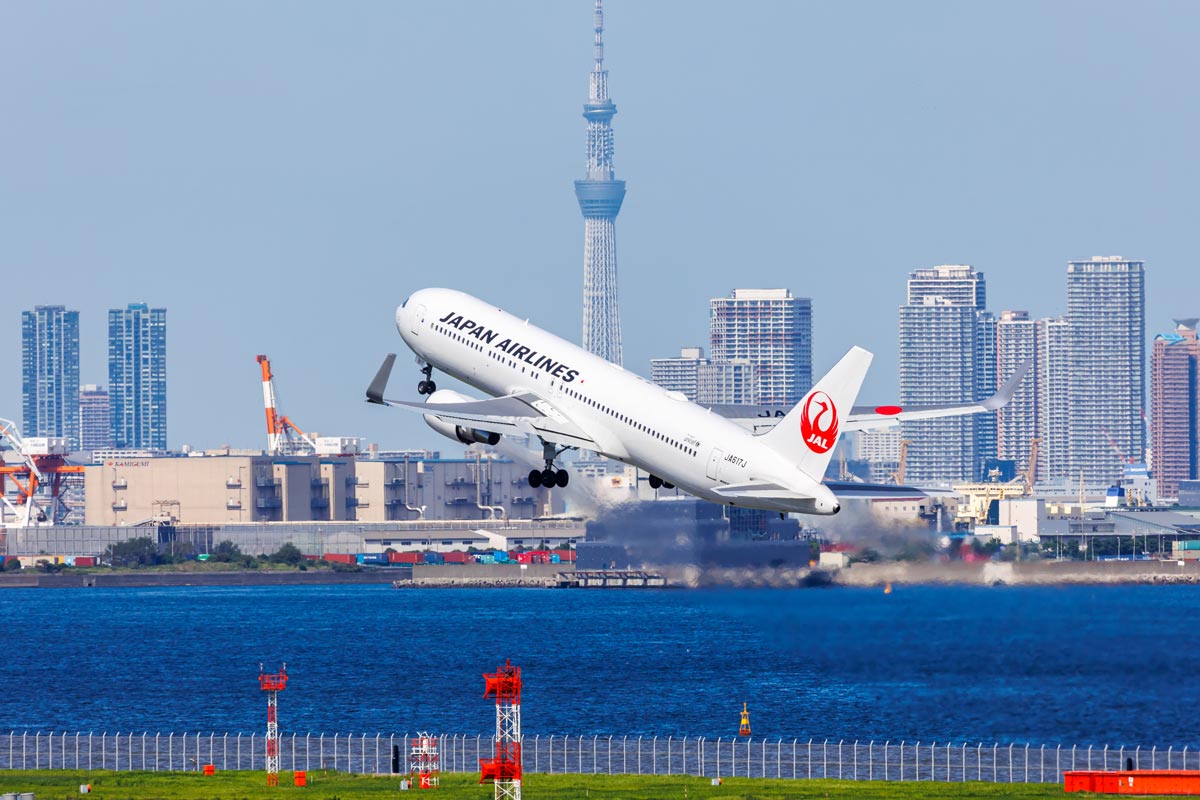
From Tokyo or Osaka, you can reach Kyushu quickly by domestic flight or by Shinkansen (bullet train). Fukuoka’s Hakata Station is connected to major cities by fast trains, making it easy to include Kyushu in a longer Japan itinerary.
Within Kyushu, trains connect main cities, while buses reach more rural areas and hot spring towns. For maximum flexibility in the countryside or around Mount Aso, renting a car is useful, but not essential if you plan carefully.
Okinawa is accessible by domestic flights from major cities in Japan, as well as from several international cities in Asia. On the main island, buses and monorail cover Naha and nearby areas, but many visitors rent a car to access beaches and smaller towns. For island-hopping, check ferry and domestic flight schedules, as services can be weather dependent.
When to Visit
Kyushu has four distinct seasons, similar to the rest of Japan, but generally enjoys milder winters. Spring (March to May) brings cherry blossoms to parks and castle grounds, while autumn (October to November) offers colorful foliage in mountain areas. Summer is warm and humid, good for beach trips but hotter in cities.
Okinawa is pleasantly warm from around late spring to autumn, with a true tropical feel in summer. However, this period can also bring typhoons, so consider travel insurance and some flexibility in your schedule. Winter is cooler but still milder than mainland Japan, making it a good choice if you want to escape northern cold.
Language and Ease for First-Time Travelers
English is less widely spoken in some rural parts of Kyushu and Okinawa compared with Tokyo, but signs in train stations, airports, and main tourist areas are usually bilingual. Staff are often patient and used to helping visitors with simple questions.
Download an offline translation app and consider learning a few basic Japanese phrases such as greetings and how to ask for help. In many situations, a combination of keywords, gestures, and a smile goes a long way.
Suggested Itinerary Ideas
If you have 10–14 days in Japan, you might combine a few days in the Tokyo or Osaka area with time in Kyushu or Okinawa:
- Kyushu-focused: Fly or take the Shinkansen to Fukuoka (2–3 nights), then visit Nagasaki (1–2 nights), Beppu or Yufuin (2 nights), and finish with Kumamoto or Kagoshima (1–2 nights).
- Okinawa escape: Spend a few nights in Naha, then transfer to a beach resort or a smaller island for 3–4 nights of relaxation and water activities.
Experiencing Japan’s Southern Personality
Kyushu and Okinawa reveal a different personality of Japan: warmer in climate and, many say, in temperament. From chatting with ramen chefs at a Fukuoka food stall to watching the sunset from a quiet Okinawan beach, these regions offer vivid memories that balance the energy of Tokyo and Kyoto.
For first-time travelers who want both classic Japanese comfort and something a little more off the beaten path, heading south to Kyushu and Okinawa is a rewarding choice that can redefine how you think about Japan.
Access Map
Top destinations in Kyushu/Okinawa
Okinawa
Fukuoka
Kumamoto
Kagoshima