
Osaka - Tenjin Matsuri
Osaka Tenjin Matsuri: A Complete Festival Guide for First-Time Visitors
Photos are for illustrative purposes only.
Every summer, Osaka explodes into color, sound, and river-side fireworks for Tenjin Matsuri, one of Japan’s most spectacular festivals. If you want to experience Japan’s lively local spirit – not just temples and quiet gardens – this is the festival to plan your trip around.
Held around Osaka Tenmangu Shrine, Tenjin Matsuri (literally “Festival of the God of Learning”) has over 1,000 years of history. It combines traditional processions, Shinto rituals, costumed performers, floating boats, and dramatic fireworks over the Okawa River. It is also very busy, very hot, and absolutely unforgettable.
This guide explains what Tenjin Matsuri is, when and where it happens, what you will see, and practical tips to help first-time visitors enjoy the festival like a local.
What Is Tenjin Matsuri?
Tenjin Matsuri is the annual summer festival of Osaka Tenmangu Shrine, dedicated to Sugawara no Michizane – a Heian-period scholar and politician later deified as Tenjin, the Shinto god of learning, culture, and the arts. Students across Japan still pray to Tenjin for help with exams, but in Osaka he is also celebrated as a powerful protector of the city.
The festival dates back to the 10th century and is considered one of Japan’s “three great festivals,” alongside Kyoto’s Gion Matsuri and Tokyo’s Kanda Matsuri. Yet it feels very different from those: Tenjin Matsuri is energetic, smoky, and full of Osaka’s famously outgoing personality.
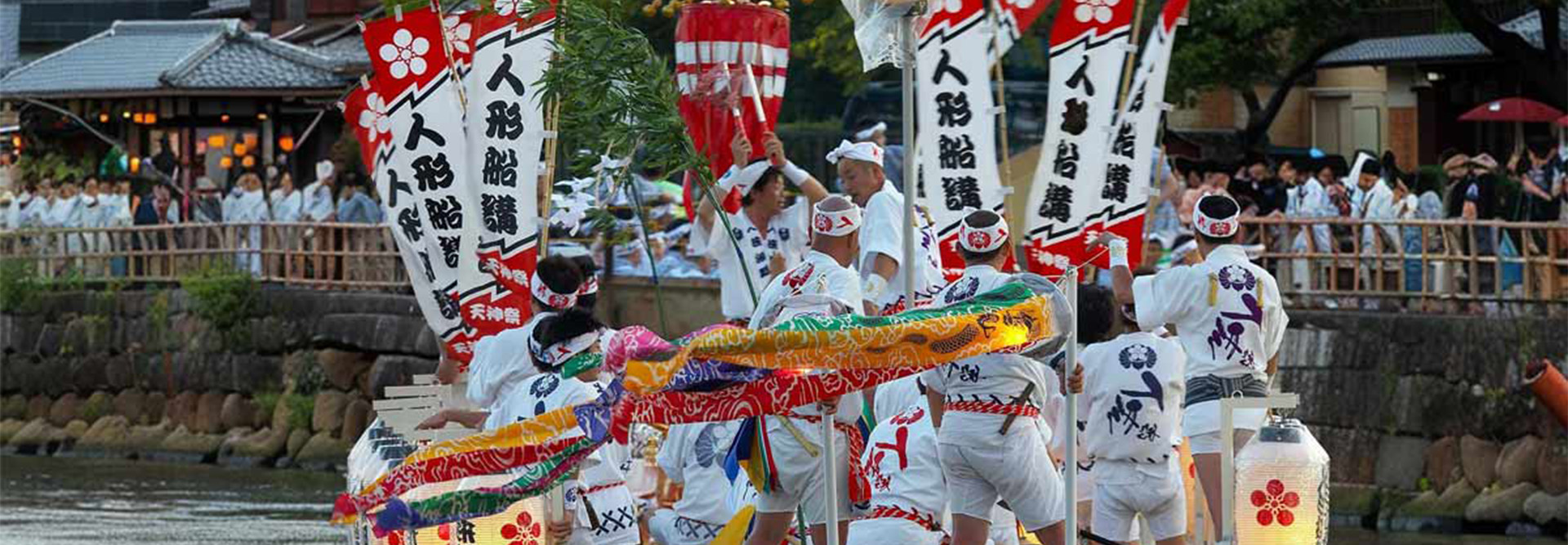
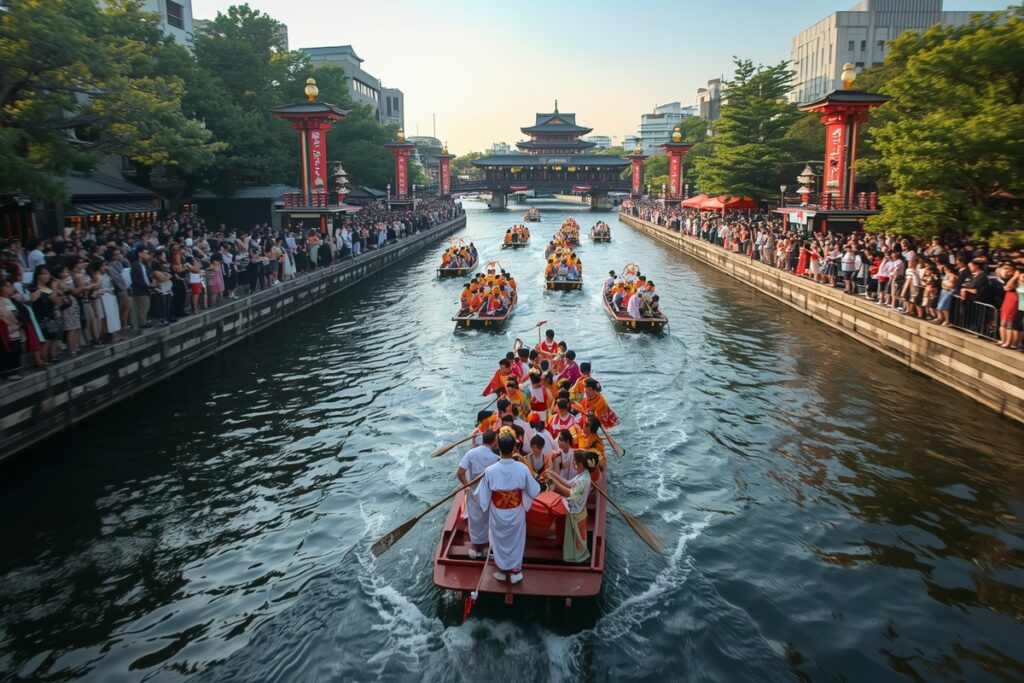
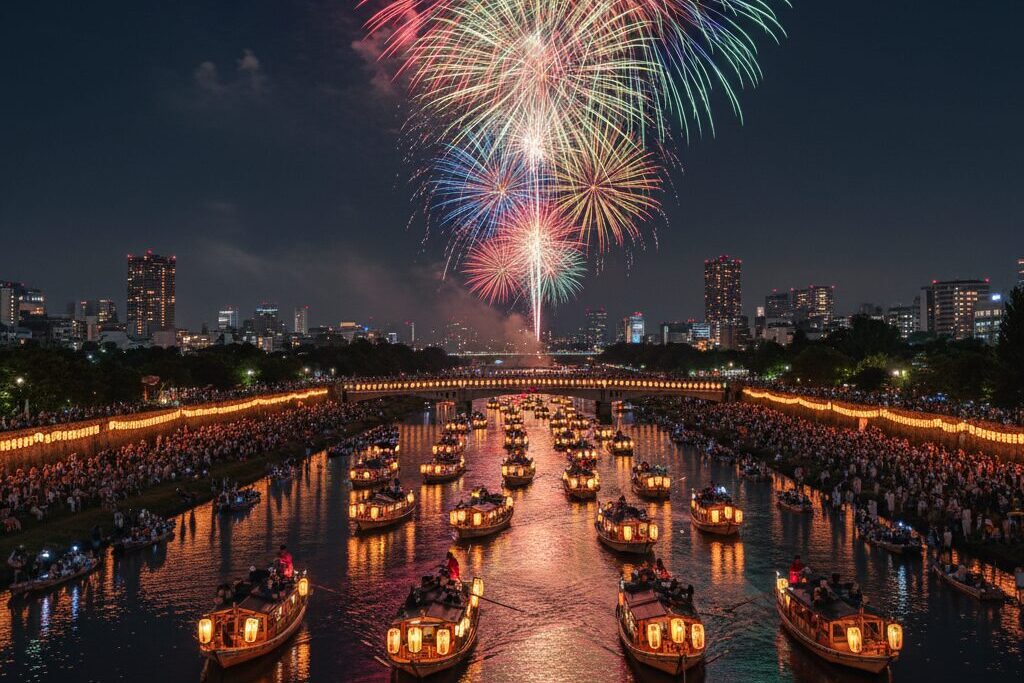
The heart of the festival is a grand procession on land and by boat. Priests carry a portable shrine (mikoshi) that symbolically transports the deity from Osaka Tenmangu Shrine to the Okawa River and back, accompanied by hundreds of participants in traditional dress, musicians, drummers, and blazing torches. On the river, dozens of boats drift under a sky filled with fireworks, reflecting in the water for a quintessential summer-in-Japan scene.
When Does Tenjin Matsuri Take Place?
Tenjin Matsuri is officially a one-month event in July, with various religious ceremonies, but the main action happens on two key days:
July 24: Yoimiya (Festival Eve)
The first main day is called Yoimiya. It focuses on Shinto rituals at Osaka Tenmangu Shrine and smaller events in the surrounding streets. Compared with the second day, it is quieter and more atmospheric.
On the 24th you can expect:
- Ceremonies at Osaka Tenmangu Shrine, including music and dance offered to the deity.
- Smaller processions in the neighborhood.
- Stalls and early festival food stands setting up near the shrine and along the river.
- A more relaxed chance to explore the area without the extreme crowds of the 25th.
July 25: Honmiya (Main Festival Day)
The second day, Honmiya, is when the grand land and river processions take place, finishing with a large fireworks display. If you can only attend one day, choose July 25 – but be prepared for intense crowds and summer heat.
Dates do not usually change: Tenjin Matsuri is held on July 24 and 25 every year. However, times and specific events can vary slightly from year to year, so confirm details closer to your visit.
Where Is Tenjin Matsuri Held?
Tenjin Matsuri centers around Osaka Tenmangu Shrine and the Okawa River in central Osaka.
- Osaka Tenmangu Shrine: The shrine is located in the Tenmabashi area, just north of central Osaka, surrounded by office buildings and quiet back streets that fill with food stalls during the festival.
- Okawa River: The river runs a short walk from the shrine. The evening boat procession and fireworks take place along this river between Tenmabashi and nearby bridges like Sakuranomiya.
Nearest stations (subject to crowd-control changes during the festival):
- Temmabashi Station (Keihan Line / Osaka Metro Tanimachi Line)
- Osaka Tenmangu Station (JR Tozai Line)
- Minami-Morimachi Station (Osaka Metro Tanimachi & Sakaisuji Lines)
On July 25, many streets are closed to traffic, and some station exits may be one-way only to control the crowds. Follow police and staff instructions, and allow extra time to move between the shrine and the river.
Festival Highlights: What You Will See
While the schedule can shift slightly each year, the main components of Tenjin Matsuri remain the same. These are the key highlights first-time visitors should look out for.
Rikutogyo: Grand Land Procession
In the late afternoon of July 25, the festival’s land procession, called rikutogyo, leaves Osaka Tenmangu Shrine. This is a grand parade of several thousand participants that winds through the city toward the river.
The procession typically includes:
- Mikoshi (portable shrine): Carried on the shoulders of bearers, this portable shrine holds the spirit of Tenjin for the duration of the procession.
- Costumed performers: Men and boys in traditional costumes, warriors in armor, and Shinto priests in formal robes recreate ancient styles from when the festival began.
- Music and dance: Flute and drum players provide a lively soundtrack. You may see lion dancers or other folk performances along the route.
- Umbrella dancers: One especially photogenic section features dancers spinning bright, patterned umbrellas.
The atmosphere is festive but remains respectful, reflecting the festival’s religious origins. As a visitor, you are free to watch and take photos, but avoid blocking the route or stepping into the procession.
Funatogyo: Boat Procession on the River
After the land procession arrives at the Okawa River, the deity is transferred from land to water for the funatogyo, or boat procession. Dozens of illuminated boats glide along the river, each with its own role.
Typical boats include:
- Goshinkō boat: The most sacred vessel, carrying the deity’s portable shrine and priests performing rituals.
- Musicians’ boats: Boats with drummers and flute players performing traditional festival music out on the water.
- Lantern and torch boats: Some carry red torches and lanterns, creating a fiery reflection on the river as evening falls.
Watching the boats pass between Tenmabashi and Sakuranomiya bridges as the sky darkens is one of the most iconic views of Tenjin Matsuri. From the riverbanks, you will see lanterns glowing on the water, hear drums echo between the buildings, and feel the humid summer night all around you.
Fireworks Display Over the Okawa River
The climax of Tenjin Matsuri is the fireworks display, usually starting around dusk on July 25 and continuing into the evening. Several thousand fireworks are launched from barges moored on the river, synchronized with the flow of the boats below.
The fireworks are not the largest in Japan, but the setting is dramatic: bursts of color above the city skyline, reflections on the water, festival boats drifting past, smoke drifting over the bridges, and crowds cheering from the riverbanks.
Popular viewing spots include:
- Riverside near Tenmabashi and Sakuranomiya bridges: Free viewing, but very crowded. People start claiming places hours in advance.
- Paid seating areas: Each year, limited paid seats may be offered along the river. These provide better views and more space, but must be reserved and purchased in advance (information is usually in Japanese).
If you are happy simply soaking up the atmosphere and catching glimpses of the fireworks between buildings, you can walk along the river and side-streets. If you want a perfect view and photos, aim to stake out a spot early or research paid seating options.
Festival Food and Street Stalls
No Japanese matsuri is complete without street food, and Tenjin Matsuri is no exception. During the evenings of July 24 and 25, long rows of yatai (food stalls) line the approach to Osaka Tenmangu Shrine and parts of the riverside.
You can expect classic festival snacks such as:
- Takoyaki: Osaka’s signature octopus balls, crispy on the outside and soft inside.
- Okonomiyaki: Savory pancakes with cabbage, meat or seafood, sauce, and mayonnaise.
- Yakitori and grilled seafood: Skewers of chicken or squid, grilled over charcoal.
- Kakigōri: Shaved ice with colorful syrups – essential for surviving the heat.
- Chocolate bananas, candy apples, and festival sweets: Popular with families and younger visitors.
Stall prices are slightly higher than regular street food, but still reasonable. Most vendors accept cash only, so bring enough small bills and coins.
Cultural Context: How to Appreciate Tenjin Matsuri
To fully appreciate Tenjin Matsuri, it helps to understand a few key aspects of Japanese summer festivals and Shinto practice.
Matsuri as Living Tradition
For locals, Tenjin Matsuri is not just a show for tourists. It is a community event where neighborhoods, companies, and families participate: training in advance, preparing costumes, and supporting the shrine. Many people have memories of being brought as children, then later bringing their own children or joining the procession.
Attending with respect means remembering that you are witnessing a living religious tradition. You are welcome, but you are not the main focus – the deity and the community are.
Shinto Etiquette at Osaka Tenmangu Shrine
If you visit Osaka Tenmangu Shrine during the festival (or at any time), follow basic Shinto etiquette:
- At the water basin, rinse your hands and mouth if possible (there may be modifications during busy periods).
- Approach the offering box, throw a coin (typically 5 or 10 yen), bow twice, clap twice, pray silently, then bow once more.
- Avoid entering areas marked as off-limits or reserved for priests and participants.
Photography is generally allowed in the shrine grounds and along the procession route, but avoid using flash directly in people’s faces during ceremonies or when priests are performing rituals.
Practical Tips for First-Time Visitors
Dealing with Crowds and Heat
Tenjin Matsuri takes place during the height of Japan’s summer. Temperatures and humidity are high, and the crowds are dense. To stay comfortable:
- Dress light: Wear breathable clothing and comfortable shoes. Many locals wear yukata (light cotton kimono), but this is optional.
- Hydrate often: Bring a water bottle or buy drinks from vending machines and convenience stores.
- Use sun and heat protection: Sunscreen, handheld fans, and small towels are very useful.
- Plan restroom breaks: Toilets can have long lines; use facilities at stations and convenience stores when you can.
Transport and Getting Around
Osaka’s trains and subways are very busy around festival hours, especially after the fireworks end. To minimize stress:
- Arrive at the area earlier in the afternoon, before the rush.
- Check which station exits are open or designated one-way by staff.
- After the fireworks, wait a little before heading directly to the station – explore nearby streets or have a late snack while the first wave of crowds leaves.
Remember that taxis can be difficult to secure in the immediate vicinity during peak times, and traffic is often restricted.
Safety and Crowd Etiquette
Japan’s festivals are generally safe, but the density of people at Tenjin Matsuri requires attention to basic safety:
- Keep your valuables in a secure, closed bag.
- Hold children’s hands and agree on a meeting point in case you become separated.
- Follow police and staff directions, especially near blocked-off streets and bridges.
- Avoid pushing in crowded viewing areas; moving slowly and patiently is the norm.
Language and Communication
Most festival signage is in Japanese, but basic English information is sometimes available in major areas. Even if you do not speak Japanese, you can manage with a few simple phrases and the help of translation apps.
Useful words and phrases:
- Matsuri – festival
- Hanabi – fireworks
- Omikoshi – portable shrine
- Sumimasen – excuse me / I’m sorry
- Arigatō – thank you
How to Include Tenjin Matsuri in Your Japan Itinerary
For first-time visitors to Japan, Tenjin Matsuri can become the centerpiece of a summer itinerary. Osaka is well-connected to Kyoto, Nara, Kobe, and Tokyo, making it easy to build a route around the festival dates.
For example:
- Spend a few days in Kyoto exploring temples and gardens, then move to Osaka in time for the festival.
- Combine Nara (deer park and ancient temples) and Osaka (Tenjin Matsuri, street food in Dotonbori, Osaka Castle) over a week.
- Travel from Tokyo to Osaka by Shinkansen, timing your stay to cover July 24–25 for the festival.
Book accommodation near central Osaka or along convenient train lines well in advance. Hotels near stations like Umeda, Namba, or Tenmabashi offer easy access to the festival area.
Why Tenjin Matsuri Belongs on Your Bucket List
Tenjin Matsuri offers a side of Japan that many first-time travelers miss: a living urban tradition where ancient rituals mix with modern city life, where boats and fireworks transform a business district into a glowing festival stage, and where Osaka’s famously friendly spirit is on full display.
Whether you come for the mikoshi processions, the boat parade, the fireworks, or simply to wander among lanterns and food stalls on a hot summer night, Tenjin Matsuri is a powerful way to connect with Japan’s culture beyond the guidebook. If your travels bring you to Japan in July, consider timing your visit to experience Osaka at its most vibrant.
With preparation, patience, and curiosity, Tenjin Matsuri can become one of the defining memories of your trip to Japan – a reminder that this is not just a country of temples and technology, but also of centuries-old festivals that still pulse with life each summer.

Access Map
Recommended spots for Summer Festivals
Tokyo
- Sumida River Fireworks
Osaka
- Tenjin Matsuri
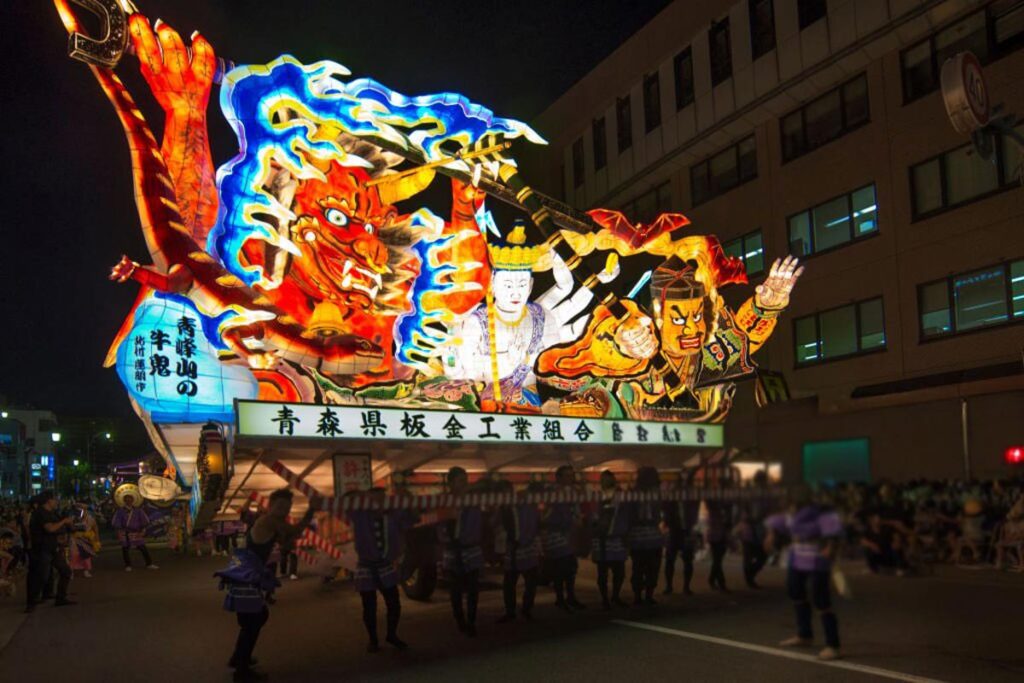
Aomori
- Nebuta Festival
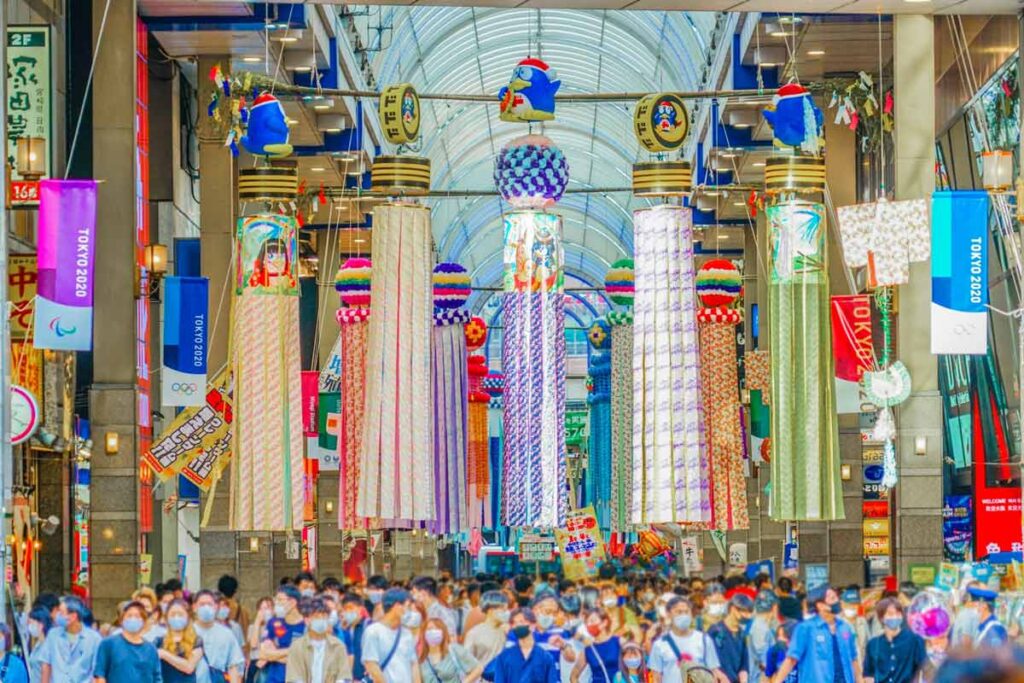
Sendai
- Tanabata Festival
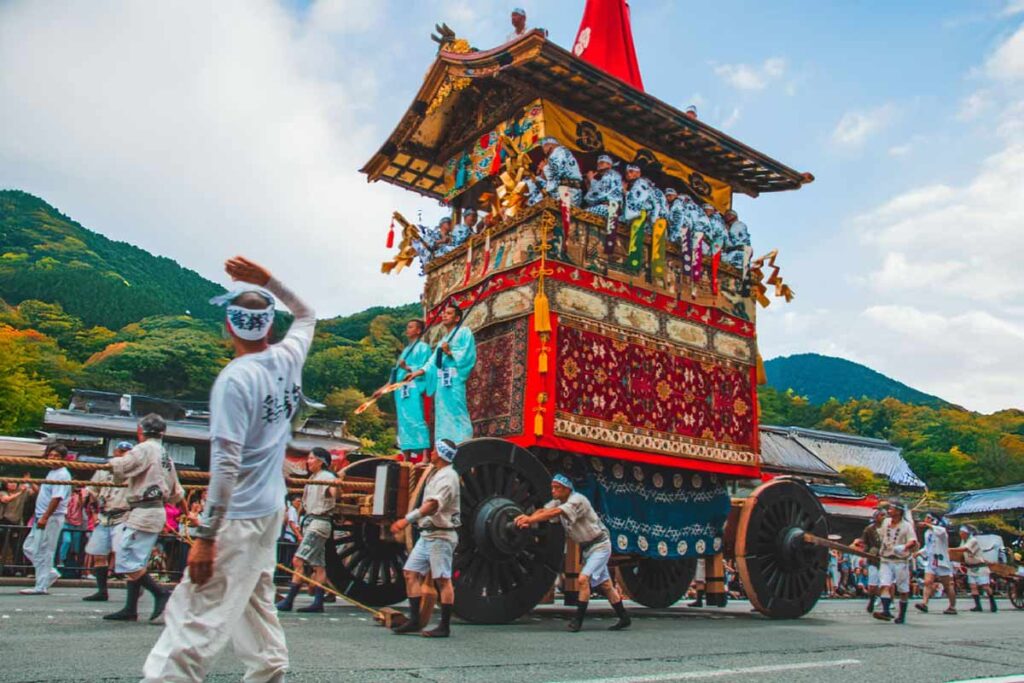
Kyoto
- Gion Matsuri
Other Seasonal Spot
Cherry Blossoms
Autumn Leaves