

Sushi
Sushi in Japan: Essential Guide for First-Time Visitors
For many travelers, eating sushi in Japan is as important as visiting temples or seeing cherry blossoms. But once you arrive, it can feel overwhelming: endless types of sushi, mysterious sauces, quiet chefs behind wooden counters, and menus you may not understand. This guide will walk you through how and where to eat sushi in Japan, what to order, etiquette to know, and how to enjoy the experience even if you do not speak Japanese.
Understanding Sushi in Japan
Outside Japan, “sushi” usually means rolls filled with avocado, spicy mayonnaise, and lots of toppings. In Japan, sushi is more minimal and focused on the flavor and texture of the rice and the fish. The goal is balance and simplicity, not size or decoration.
At its core, sushi is vinegared rice combined with seafood or other ingredients. The rice is the star: slightly warm, gently seasoned, and shaped by hand. The fish, shellfish, or vegetables are chosen for freshness and seasonality, not just for appearance.
Common Types of Sushi You Will See
Understanding the basic types makes it much easier to read menus and order with confidence:
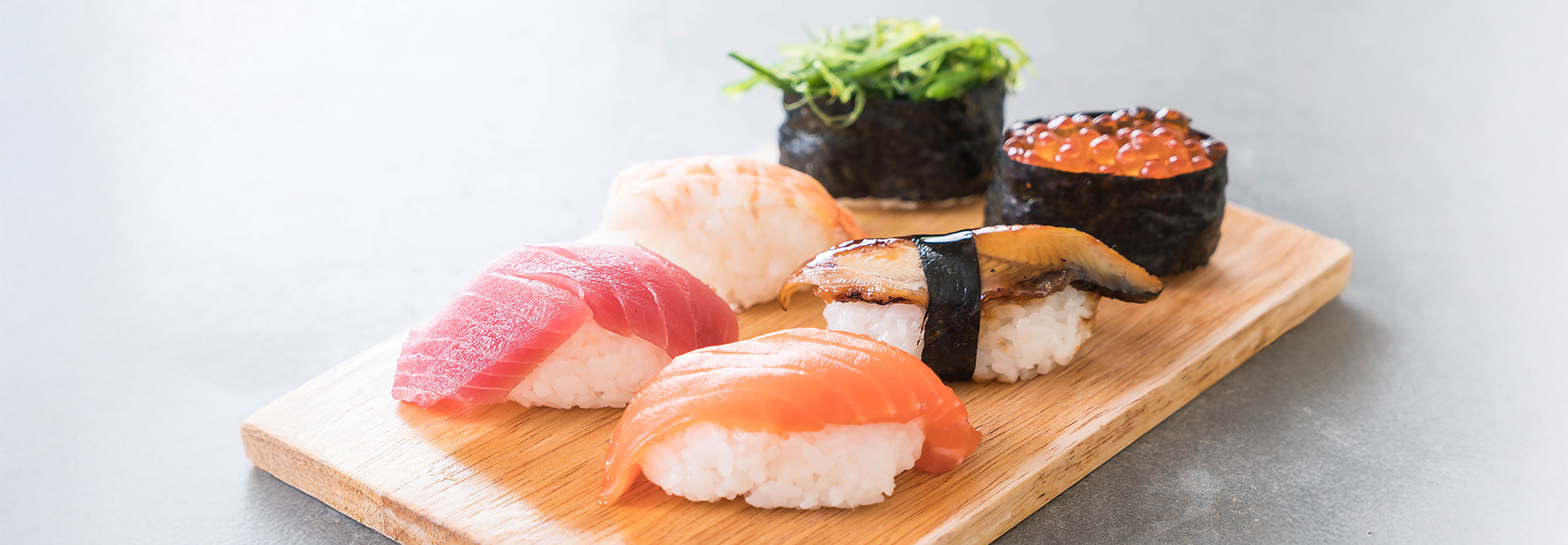
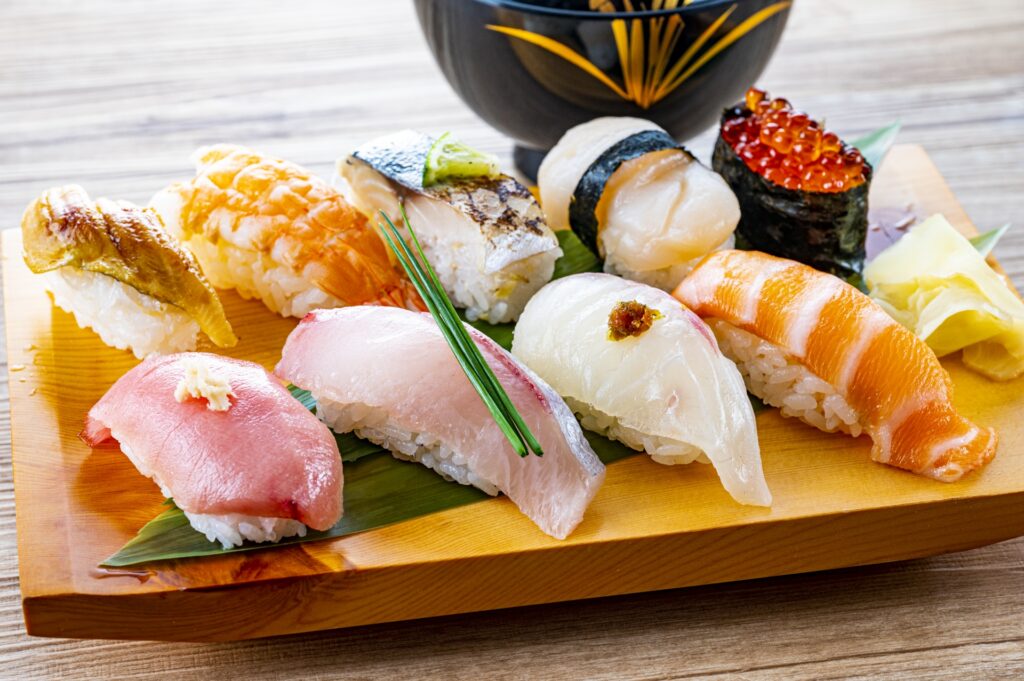
- Nigiri – Small, hand-formed mounds of rice topped with a slice of fish or other ingredients. Often brushed with a bit of soy sauce by the chef. This is the classic style you will see at sushi counters.
- Maki – Rice and fillings rolled in seaweed (nori) and sliced. Simple maki in Japan are usually thin rolls with one filling, such as cucumber (kappa maki) or tuna (tekka maki).
- Uramaki – Inside-out rolls with the rice on the outside. Common abroad, less traditional in Japan, but you may find them in more casual or international-style restaurants.
- Temaki – Hand rolls shaped like cones of seaweed filled with rice and toppings. Often eaten with your hands, popular in casual settings and at home.
- Oshizushi – Pressed sushi from the Kansai region, especially Osaka. Rice and fish are pressed into a rectangular mold, then sliced into blocks.
- Chirashizushi – A bowl of sushi rice topped with slices of raw fish, egg, and vegetables. Easy to eat and ideal if you want to try several toppings at once.
Popular Sushi Toppings to Try
Menus may be written in Japanese, but many sushi toppings are common and worth remembering. Here are a few you are likely to encounter:
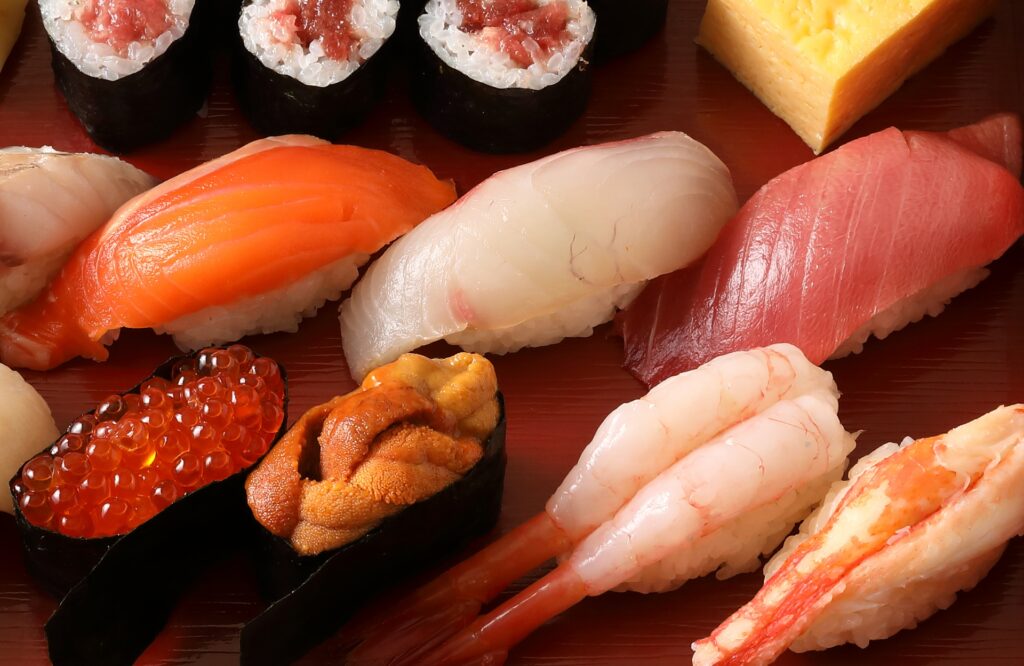
- Maguro – Tuna. Japan takes tuna very seriously; you may see different cuts such as lean (akami) and fatty (toro).
- Sāmon – Salmon. Not traditionally Japanese but now extremely popular and usually very mild in flavor.
- Ebi – Shrimp, often served boiled and sweet.
- Ama-ebi – Sweet shrimp, served raw with a delicate, sweet taste.
- Hamachi / Buri – Yellowtail, slightly oily and rich, a favorite in winter.
- Unagi – Grilled freshwater eel, served with a sweet soy-based sauce.
- Anago – Saltwater eel, usually softer and lighter in flavor than unagi.
- Ikura – Salmon roe, large orange pearls with a salty, rich burst of flavor.
- Uni – Sea urchin, creamy and oceanic; a delicacy that many visitors want to try at least once.
- Tamago – Sweet Japanese omelet. Often used as a test of a sushi shop’s skill, because it looks simple but is difficult to make well.
If you are unsure, many places offer assorted sets that include several kinds of nigiri and a roll. These sets are a comfortable way for first-time visitors to explore different flavors.
Where to Eat Sushi in Japan
Sushi is available at many price levels, from quick conveyor-belt restaurants to world-famous counters with just a few seats. You do not need to spend a fortune to enjoy excellent sushi in Japan, but it helps to understand the main options.
1. Conveyor-Belt Sushi (Kaiten-zushi)
For many international visitors, kaiten-zushi is the most approachable and fun way to start. Plates of sushi travel around the restaurant on a conveyor belt, and you simply take the dishes you want. Each plate’s color or pattern indicates its price.
Most branches of large chains have touch-screen menus with English language options and pictures. You can order specific items from the screen, and the chef will send them on a special lane directly to your seat.
Why it’s great for first-timers: Very casual, affordable, and easy to understand. You can try just one piece of something new without committing to a large set.
2. Standing Sushi Bars
In busy business districts and around major train stations, you may find standing-only sushi bars. These are compact shops where locals drop in for quick, high-quality nigiri at reasonable prices.
You place your order directly with the chef; some shops have bilingual menus or photos. The atmosphere is fast and lively, and it’s a good way to experience everyday sushi culture.
3. Casual Sit-Down Sushi Restaurants
Mid-range sushi restaurants offer counter seats and tables, with a calmer atmosphere than kaiten-zushi. Many have lunch sets that are excellent value: a combination of nigiri, miso soup, and sometimes chawanmushi (savory egg custard) for a fixed price.
These are great places to slowly enjoy your meal, watch the chefs at work, and learn from what your neighbors order.
4. High-End Sushi Counters (Omakase)
For a special experience, many travelers book an omakase meal at a high-end sushi counter. “Omakase” means “I leave it to you,” and the chef serves a sequence of seasonal bites chosen for that day’s best ingredients.
These counters are usually small, quiet, and serious about their craft. You sit just across from the chef, who shapes each piece by hand and serves it directly in front of you. The rice temperature, the cut of the fish, and even the order of each piece are carefully considered.
If you’re interested in this style, look for restaurants that explicitly mention accepting foreign guests, and reserve well in advance. Some require deposits or have strict cancellation policies.
How Much Does Sushi Cost in Japan?
Sushi in Japan can be surprisingly affordable—or extremely expensive. It depends on the style and location.
- Conveyor-belt sushi: From around ¥110–¥300 per plate at major chains. A light meal may cost ¥800–¥1,500, a bigger feast around ¥2,000–¥3,000.
- Casual restaurants: Lunch sets often range from ¥1,000–¥2,500. Dinner may be ¥3,000–¥6,000 depending on what you order.
- High-end omakase: Lunch may start around ¥8,000–¥15,000, with top-level counters in big cities charging far more. Dinners typically cost from ¥15,000 upward.
Service charges or cover charges (otoshi) are rare at casual sushi places, but always check if you are visiting a more formal restaurant or izakaya-style venue.
Basic Sushi Etiquette for Visitors
You do not need to worry about being perfect; Japanese hosts are generally forgiving of visitors who are clearly trying. Still, knowing a few key points will help you feel more comfortable and show respect for the chef’s work.
How to Eat Nigiri
You can eat nigiri either with chopsticks or with your hands—both are acceptable. Many locals prefer to use their hands, especially at counters, because it is easier to keep the rice together and avoid breaking the piece.
When dipping nigiri in soy sauce, try to dip the fish side, not the rice. This keeps the rice from absorbing too much soy sauce and falling apart. In many higher-end places, the chef will brush the sushi with just the right amount of soy sauce before serving, so you do not need to dip it again.
Wasabi and Ginger
In Japan, the chef usually places the right amount of wasabi between the fish and rice. Piling extra wasabi on top or mixing a large amount into your soy sauce is generally seen as unnecessary, though common at casual places.
The pickled ginger (gari) on your plate is not a topping. It is meant to cleanse your palate between different types of fish. Eat a small slice now and then to reset your taste buds.
Respecting the Counter Experience
At traditional counters, the preparation of each piece is part of the experience. Try to eat each piece soon after it is served so the temperature and texture are as intended. Avoid talking loudly, touching the sushi on the counter, or wearing strong perfume that could affect the aroma of the food.
Taking photos is usually allowed at casual places and some counters, but always be discreet. Avoid photographing other guests without permission, and if the chef looks uncomfortable, put the camera away.
Ordering Sushi Without Japanese
Japan is increasingly welcoming to international visitors, and many sushi restaurants in major cities have English menus or picture menus. Even so, a little preparation helps.
Useful Phrases
- Sumimasen – Excuse me (to call staff).
- Menu onegaishimasu – Menu, please.
- Eigo no menu wa arimasu ka? – Do you have an English menu?
- Omakase de onegaishimasu – Please serve the chef’s choice.
- Osusume wa nan desu ka? – What do you recommend?
- Sakana wa daijoubu desu ga, shellfish wa dame desu – Fish is okay, but shellfish is not (example sentence you can adapt).
Most casual places will happily point at a picture menu with you. If you have allergies, prepare a short note explaining them in Japanese or use a translation app to show staff.
Regional Sushi Experiences Across Japan
Sushi is not the same everywhere in Japan. Different regions have their own specialties, shaped by local fishing and history.
Tokyo: Edomae Sushi
Modern sushi culture largely developed in Edo (old Tokyo) in the 19th century. Edomae sushi focused on fish from Tokyo Bay, and included many techniques for preserving fish in the days before refrigeration: marinating in vinegar, simmering in soy sauce, or curing with salt.
Today, when you eat nigiri at a quality sushi counter in Tokyo, you’re often enjoying a refined version of this Edomae tradition. Look for toppings like marinated tuna, vinegared mackerel, and simmered clam.
Osaka and Kansai: Pressed Sushi
In Osaka and the surrounding Kansai region, oshizushi—pressed sushi—is a local specialty. Mackerel pressed sushi (saba-zushi) and box-shaped battera are popular examples. These are often sold as souvenirs at train stations, making them perfect for a Shinkansen ride.
Hokkaido: Seafood Heaven
In northern Hokkaido, cold waters provide some of Japan’s best sea urchin, salmon roe, crab, and scallops. Many visitors head to morning markets in cities like Sapporo, Hakodate, or Otaru to enjoy bowls of rice topped with generous portions of fresh seafood (kaisendon). It is not strictly sushi, but it gives a similar experience with a focus on freshness.
Is It Safe to Eat Raw Fish?
Food safety standards in Japan are very high, and sushi restaurants are used to handling raw fish. Most visitors can enjoy sushi without problems. However, there are some simple precautions:
- If you have a sensitive stomach, start with cooked or marinated items like tamago, unagi, or boiled shrimp.
- Choose busy restaurants with a high turnover of customers, especially for conveyor-belt sushi.
- If you are pregnant or have medical conditions, follow your doctor’s advice regarding raw fish.
- Many sushi toppings are seafood. If you have any allergies, please inform the staff in advance and be careful with the following toppings: salmon, mackerel, bonito, shrimp, crab, abalone, and squid.
Enjoying Sushi Respectfully and Confidently
Eating sushi in Japan is not just about food; it is a cultural experience that shows the country’s respect for craft, seasonality, and hospitality. Whether you sit at a simple conveyor-belt restaurant or in front of a master chef at a wooden counter, you are taking part in a tradition that has evolved over centuries.
You do not need perfect chopstick skills, fluent Japanese, or a deep knowledge of fish. Come with curiosity, an open mind, and a willingness to try something new. Start with familiar toppings, ask for recommendations, and use simple Japanese phrases. Little by little, you will discover your own favorite styles and flavors.
For many travelers, their first sushi meal in Japan becomes one of the most memorable parts of the trip—something they think about long after the journey ends. With a bit of preparation and this basic understanding, you can sit down anywhere in Japan, from Tokyo to Hokkaido, and enjoy sushi with confidence and respect.