



Atsuta Shrine
A First-Time Visitor’s Guide to Atsuta Shrine in Nagoya, Japan
Photos are for illustrative purposes only.
Atsuta Shrine is one of Japan’s most revered Shinto shrines, quietly nestled in the heart of Nagoya. While Tokyo and Kyoto often steal the spotlight, Atsuta offers something many first-time visitors dream of but rarely find: a deep sense of ancient Japan woven into everyday city life. Surrounded by dense greenery yet easily reached by train, this shrine is an ideal stop for international travelers who want to balance sightseeing with genuine cultural experiences.
Why Atsuta Shrine Belongs on Your Japan Itinerary
Atsuta Shrine, known in Japanese as Atsuta Jingu, is considered one of the most important Shinto shrines in the country. It is traditionally associated with the sacred sword Kusanagi-no-Tsurugi, one of Japan’s three Imperial Regalia. Although the sword itself is never displayed to the public, its presence makes Atsuta a powerful spiritual center and a key site in Japanese mythology.
For first-time visitors to Japan, Atsuta offers several advantages:
- Deep history without the overwhelming crowds found at some larger shrines.
- Easy access from central Nagoya, which connects conveniently with Tokyo, Kyoto and Osaka by Shinkansen.
- Calm, forested grounds where you can experience traditional rituals in a relaxed, unhurried way.
A Brief History and Spiritual Significance
Atsuta Shrine’s origins stretch back more than 1,900 years according to shrine tradition. It is dedicated primarily to the sun goddess Amaterasu-Omikami and associated deities, and more specifically to the sacred Kusanagi sword. In Japan’s mythic history, this sword is linked to heroes, emperors, and the country’s very identity.
Over the centuries, emperors, samurai lords, and common people have all paid their respects here. Atsuta flourished particularly during the samurai era, when powerful warlords like Oda Nobunaga are said to have made offerings before major battles. Although the shrine buildings have been destroyed and rebuilt several times due to wars and fires, its role in the spiritual landscape of Japan has remained constant.
Today, Atsuta continues to function as a living religious site. Locals visit for blessings before exams, weddings, business openings, and New Year. As you walk through the grounds, you are not just visiting a monument—you are stepping into a space that is actively used and cherished.
Exploring the Shrine Grounds
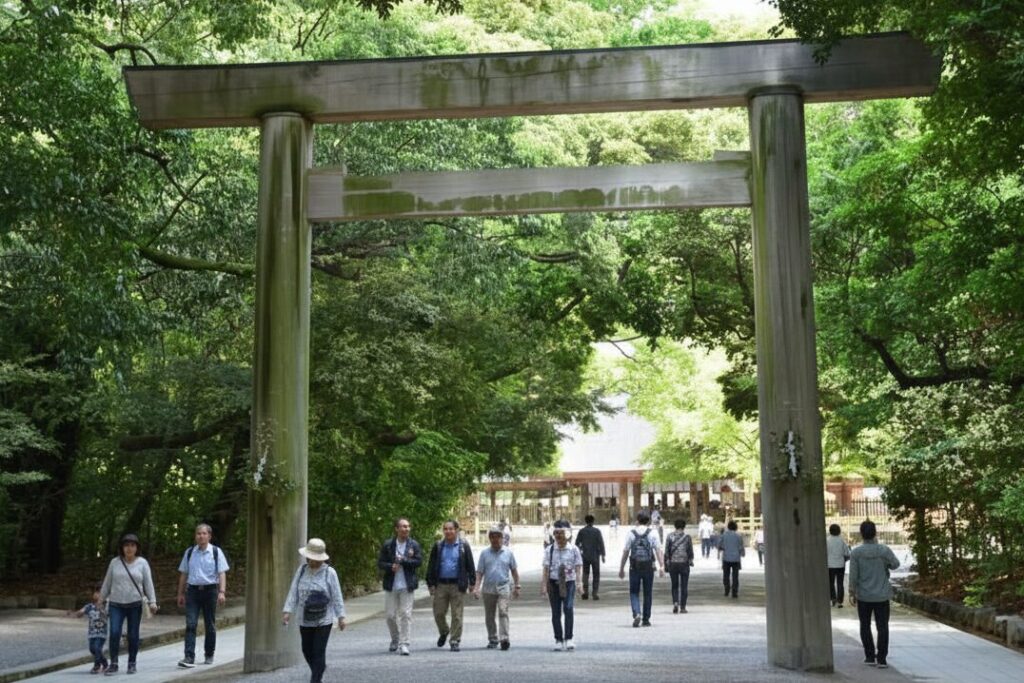
Despite being located in urban Nagoya, Atsuta Shrine is surrounded by a lush, sacred forest known as chinju no mori. Stepping through the torii gate from the busy streets into this cool, shaded grove is like crossing an invisible border between everyday life and the spiritual world.
Main Shrine and Worship Hall
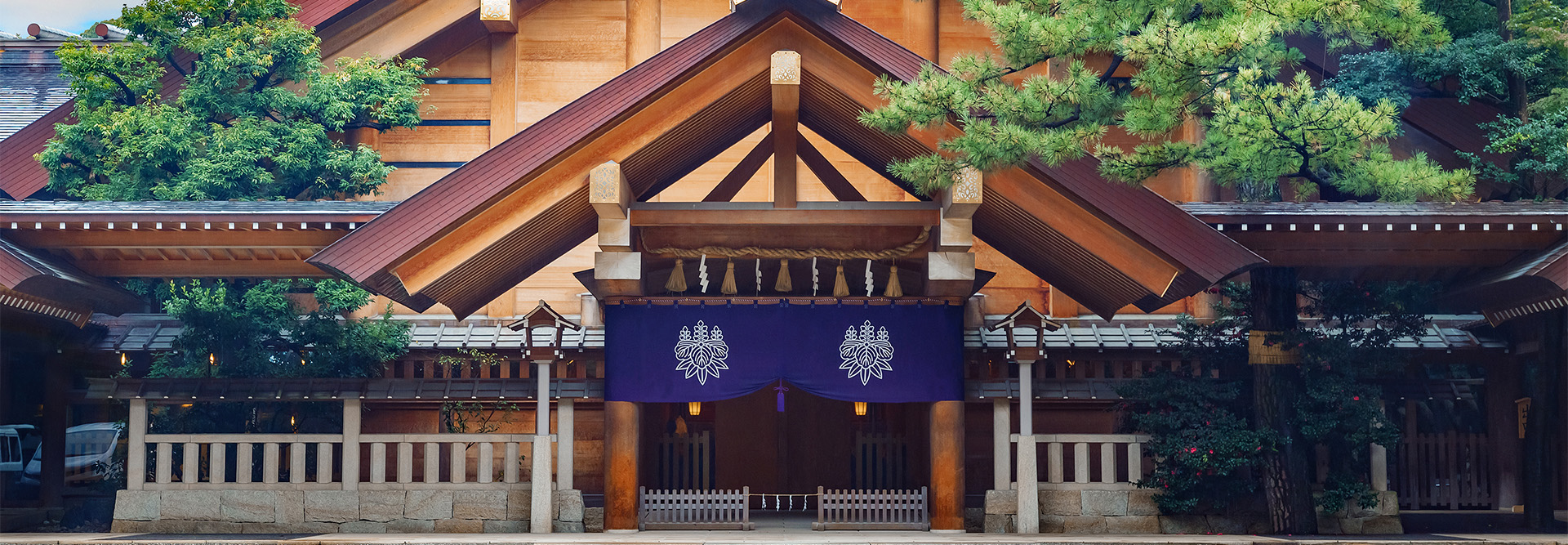
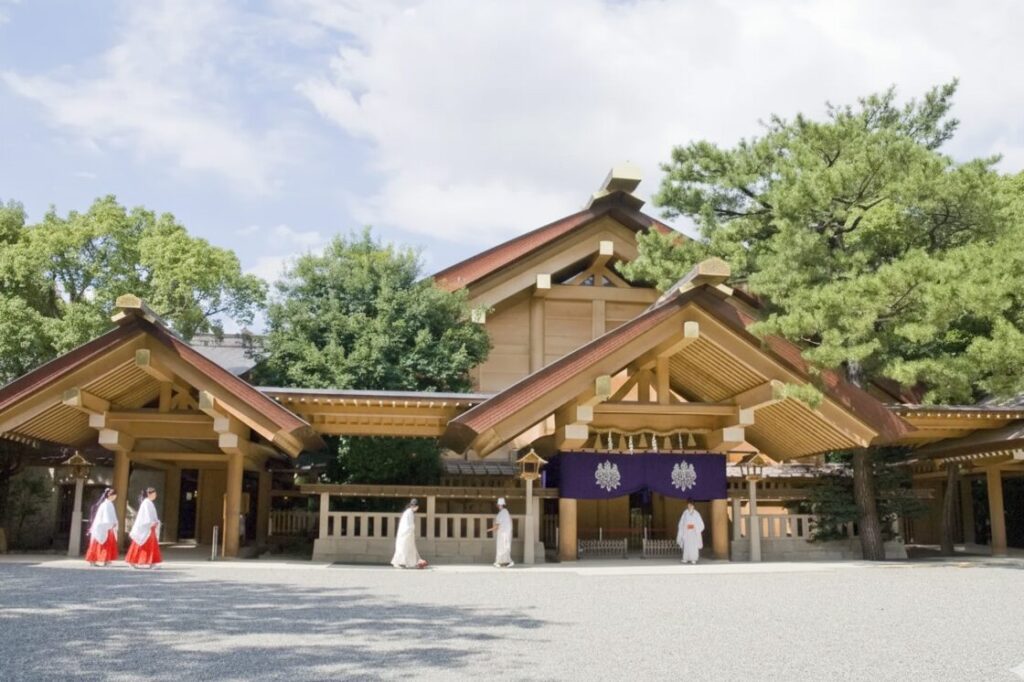
The heart of the complex is the main shrine building (honden), which is not publicly accessible, and the front worship hall (haiden), where visitors offer prayers. The architectural style is simple and dignified, with unpainted wood, clean lines, and cypress-bark roofs that reflect ancient Japanese aesthetic values: modesty, harmony with nature, and purity.
At the front of the worship hall you will see people bowing, clapping, and offering coins. This is the standard Shinto way of praying and something you can respectfully participate in (more on etiquette below).
Torii Gates and Sacred Trees
As you walk along the pathways, you will pass through impressive wooden torii gates, symbolic entrances to the sacred space of the kami (deities). The air smells of earth and cedar, and the sound of traffic fades behind the chirping of birds and the murmur of visitors.
Look out for ancient trees wrapped with white paper streamers and ropes called shimenawa. These markings indicate sacred trees believed to be dwelling places of deities. They offer a powerful visual reminder of the Shinto belief that the divine resides within nature.
Sub-Shrines and Quiet Corners
Atsuta Shrine’s grounds include a number of smaller sub-shrines dedicated to different kami. These quieter corners are perfect for a reflective stroll, especially if the main approach is busy.
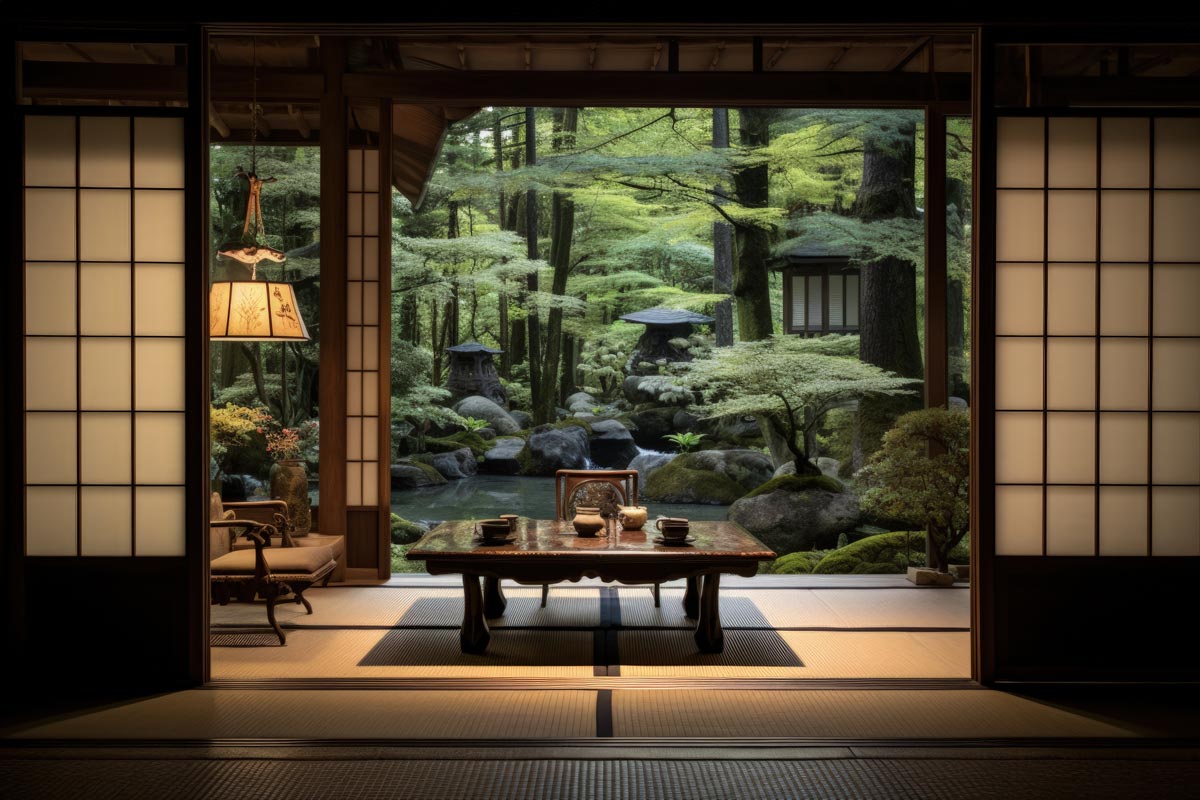
Take time to wander rather than rushing directly to the main hall. You may discover stone lanterns covered in moss, small bridges over ponds, or wooden plaques covered in handwritten wishes from visitors around the world.
Cultural Experiences and Things to Do
Praying the Shinto Way
Many first-time visitors are unsure how to behave at a shrine. Shinto etiquette is simple and, when followed, will make your visit feel more meaningful:
- Purify at the chozuya: At the entrance, you will find a stone basin with ladles. Rinse your left hand, then your right, pour water into your left hand to rinse your mouth (do not drink directly from the ladle), then rinse the handle.
- Approach the offering box in front of the worship hall, toss in a small coin (5 yen is considered especially lucky), then bow twice, clap your hands twice, silently offer your prayer or wish, and bow once more.
- Be respectful: keep voices low, avoid blocking pathways, and pause for ceremonies taking place.
Omamori, Goshuin and Ema
Like many major shrines, Atsuta offers traditional items that make meaningful souvenirs:
- Omamori (amulets): Small fabric charms for safe travel, good health, exam success, and other blessings. These should not be opened; they are meant to be carried or attached to a bag.
- Goshuin (shrine stamps): If you carry a goshuincho (stamp book), you can receive a hand-drawn seal and calligraphy unique to Atsuta Shrine. It’s a beautiful way to record your spiritual journey across Japan.
- Ema (wooden votive plaques): Visitors write their wishes on these small wooden boards and hang them at designated racks. You can write in your own language; plenty of international visitors do the same.
Atsuta Jingū Treasure Hall
For those interested in history and traditional crafts, the treasure hall (when open) displays a collection of religious artifacts, swords, mirrors, and items donated by emperors and warlords. Explanations may be limited in English, but the objects themselves—elegant lacquerware, finely worked metal, and ancient garments—tell a story of devotion and courtly culture.
If you plan to visit, check in advance for opening days and hours, as they may vary and sometimes require a small admission fee.
Seasonal Festivals and Events
Atsuta Shrine holds numerous festivals (matsuri) throughout the year, bringing the grounds to life with traditional rituals, food stalls, and performances. If your timing is flexible, aligning your visit with a festival can be unforgettable:
- New Year (Oshogatsu): In the first days of January, thousands of locals come to make their first visit of the year (hatsumode). Expect crowds, but also an energetic and hopeful atmosphere.
- Spring and Autumn festivals: You may see ceremonial dances, processions in traditional garments, and offerings of music to the deities.
- Summer evenings: Lanterns, yukata (summer kimono), and food stands selling grilled snacks and sweets create a nostalgic, festive mood.
Schedules change annually, so consult the Nagoya tourist information or local listings before you go.
Food and Local Flavors Near Atsuta Shrine
Visiting a shrine in Japan often goes hand-in-hand with enjoying regional food, and Atsuta is no exception. One of Nagoya’s famous dishes, hitsumabushi (grilled eel over rice), is strongly associated with the area around the shrine.
Hitsumabushi is eaten in three stages: first as it is, second with condiments like green onions and wasabi, and finally with a light broth poured over, turning it into a comforting rice soup. It is an indulgent but highly memorable meal that pairs well with a leisurely stroll through the shrine grounds.
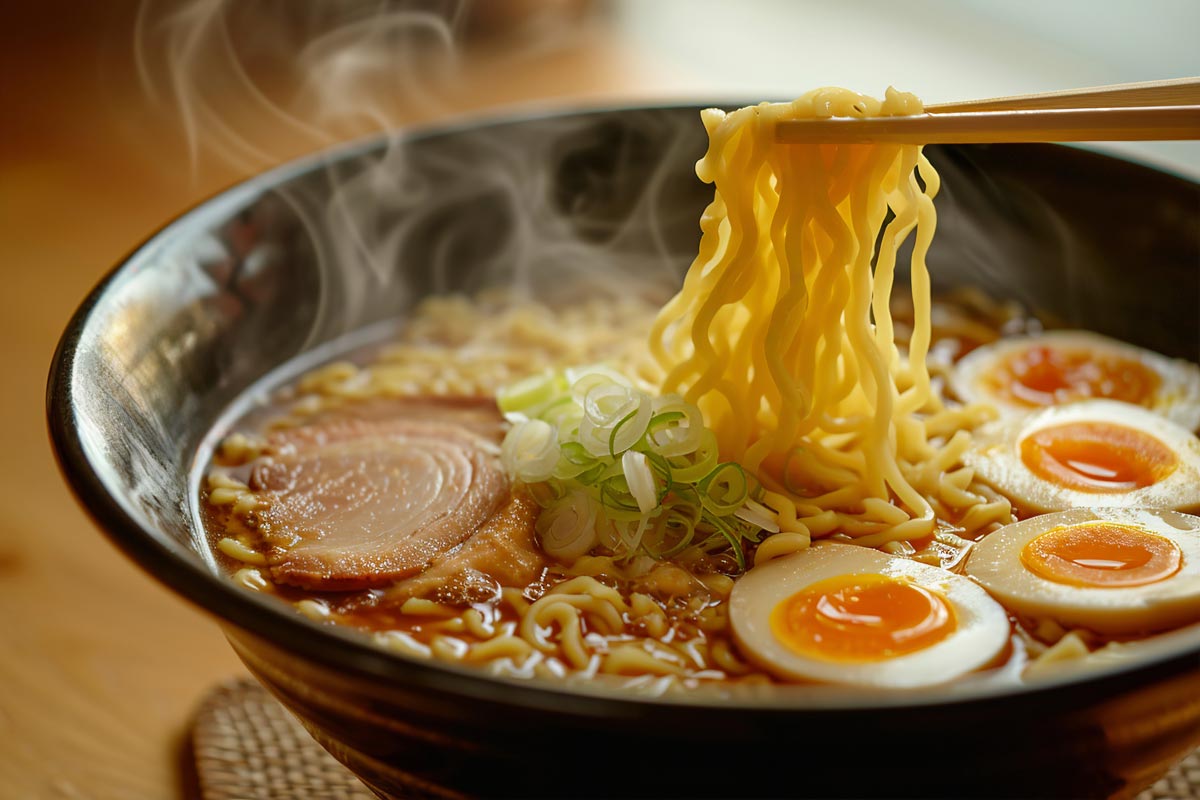
In addition to traditional restaurants, you will find casual eateries and cafes in the surrounding neighborhood, offering everything from simple noodle dishes to coffee and sweets. If you are traveling during a festival, try the food stalls for local street snacks.
How to Get to Atsuta Shrine
Atsuta Shrine’s central location in Nagoya makes it easy to include in a wider Japan itinerary, even as a half-day stop between Tokyo and Kyoto.
From Nagoya Station
- By JR train: Take the JR Tokaido Line from Nagoya Station to Atsuta or JR Atsuta Station. From there, it is a short walk to the shrine.
- By subway: The subway is often the most convenient for visitors. The closest stations include Jingū-Nishi Station (on the Meijo Line) and Jingū-Mae Station (on the Meitetsu Line), both within walking distance of the shrine.
- By taxi: A taxi ride from Nagoya Station is relatively short. This can be an easy option if you are carrying luggage or traveling with a group.
Nagoya itself is about 1.5 hours from Tokyo and under an hour from Kyoto or Osaka by Shinkansen, making Atsuta Shrine a realistic day-trip destination.
Practical Tips for First-Time Visitors
Opening Hours and Admission
The shrine grounds generally open early in the morning and remain accessible until evening. Admission to the main grounds is free, reflecting the shrine’s role as a place of public worship. The treasure hall, when open, may require a modest fee.
Because this is a religious site, some areas may close temporarily for ceremonies. Staff will usually indicate restricted access with signs or ropes—simply follow their guidance.
What to Wear
There is no strict dress code, but modest, respectful clothing is appreciated. Comfortable walking shoes are essential, as you will be moving along gravel paths and uneven surfaces in the wooded areas. In summer, light, breathable clothing and a hat are helpful; in winter, the forested grounds can feel colder than the city streets.
Photography Etiquette
Photography is generally allowed in the outdoor parts of the shrine, but there are a few guidelines:
- Avoid using flash or taking photos of people praying at close range.
- Look for signs indicating no-photography zones, especially near the main hall or during ceremonies.
- Refrain from posing in exaggerated or disrespectful ways in front of sacred objects.
Language and Visitor Services
Basic English signage is available for key locations and instructions, but not everywhere. If you do not read Japanese, a simple shrine vocabulary—such as torii (gate), haiden (worship hall), omikuji (fortune slip), and ema (votive plaque)—can make your visit more enjoyable.
Nagoya’s tourist information centers and online resources often provide maps and explanations in English. It can be helpful to download a map or note the Japanese characters for Atsuta Jingu before your visit.
Making the Most of Your Time at Atsuta Shrine
Allow at least one to two hours to explore the grounds at a relaxed pace. A simple sample visit might look like this:
- Enter through a main torii gate and cleanse your hands at the water basin.
- Walk slowly through the wooded paths, noticing the sounds and scents of the forest.
- Offer a prayer at the worship hall, following Shinto etiquette.
- Purchase an omamori or receive a shrine stamp as a meaningful keepsake.
- Stroll around the sub-shrines and ema racks, reading wishes from around the world.
- Finish with a local meal nearby, such as hitsumabushi or noodles.
If you have more time in Nagoya, you can easily combine Atsuta Shrine with other attractions such as Nagoya Castle or the city’s museums. But even if you are only passing through, a visit here offers a serene and authentic introduction to Japan’s spiritual traditions.
Why Atsuta Shrine Is Ideal for First-Time Travelers
For many international visitors, the dream of Japan includes peaceful shrines, towering trees, the sound of bells and rustling leaves, and a sense that the modern world has momentarily slipped away. Atsuta Shrine provides exactly this experience—without the overwhelming crowds that sometimes accompany better-known destinations.
Set within a major transport hub yet wrapped in an ancient forest, Atsuta bridges the Japan of myth and the Japan of bullet trains and business districts. Whether you come seeking blessings for your journey, a quiet moment of reflection, or simply a deeper understanding of Japanese culture, Atsuta Shrine is a rewarding and accessible place to begin.
As you step back out through the torii and return to the city streets, you may find that the calm and clarity you discovered beneath the cedar trees stays with you, becoming one of the most lasting memories of your trip to Japan.

Access Map
Recommended spots in Aichi
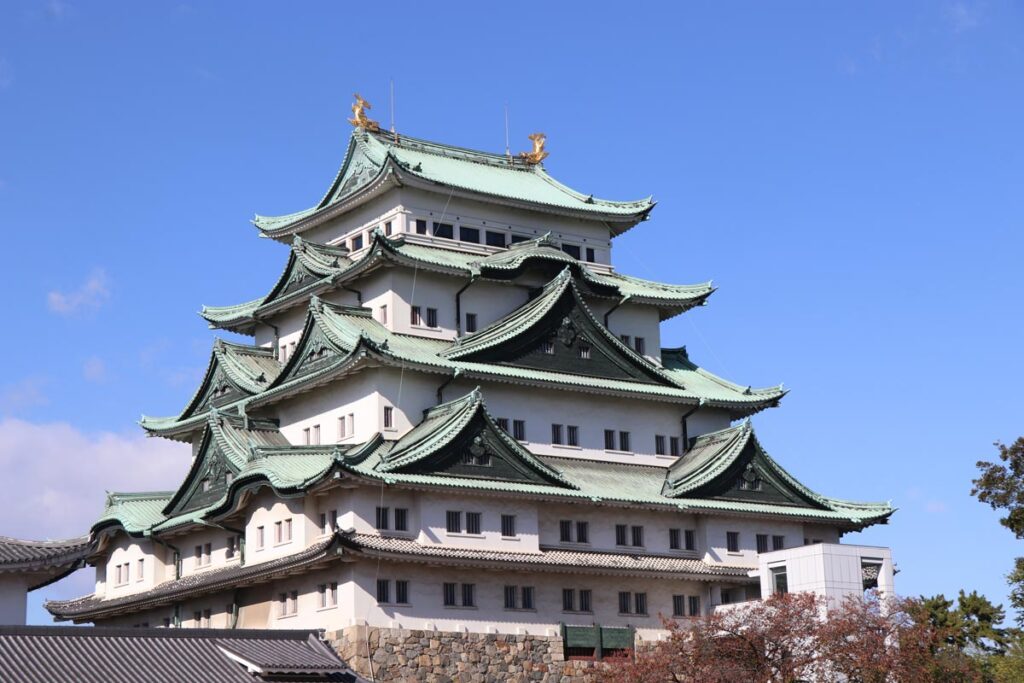
Nagoya Castle
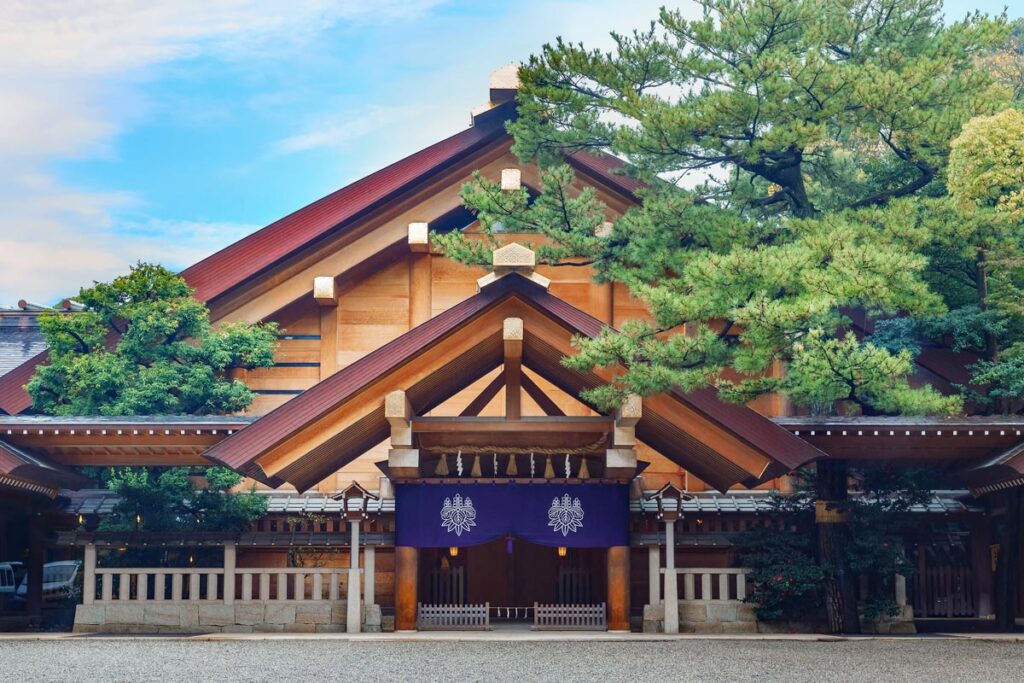
Atsuta Shrine
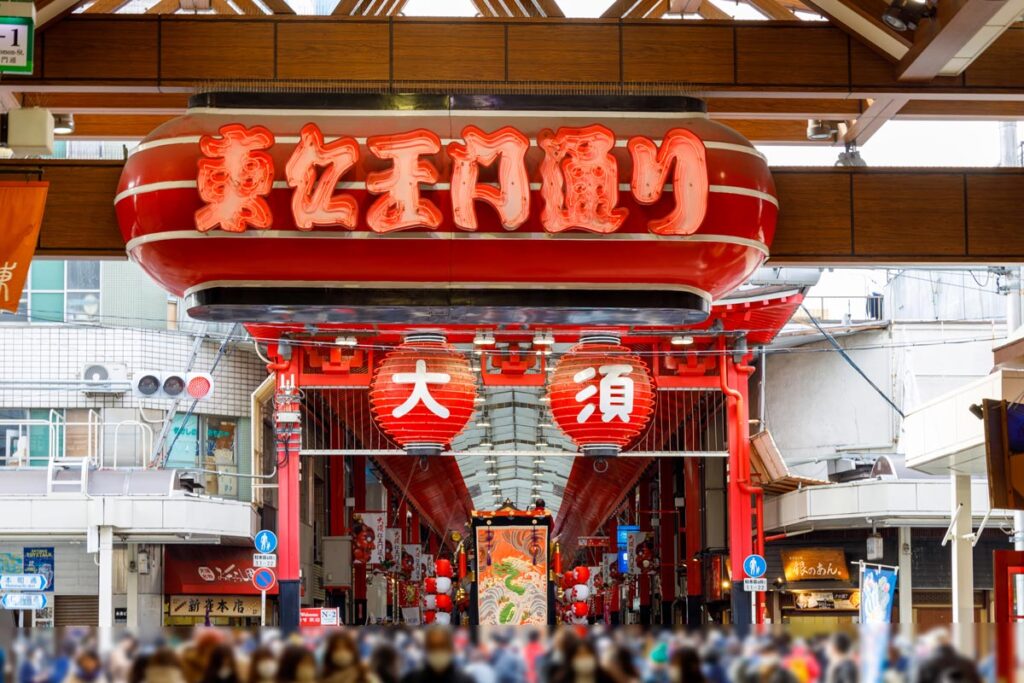
Ōsu Shopping Street
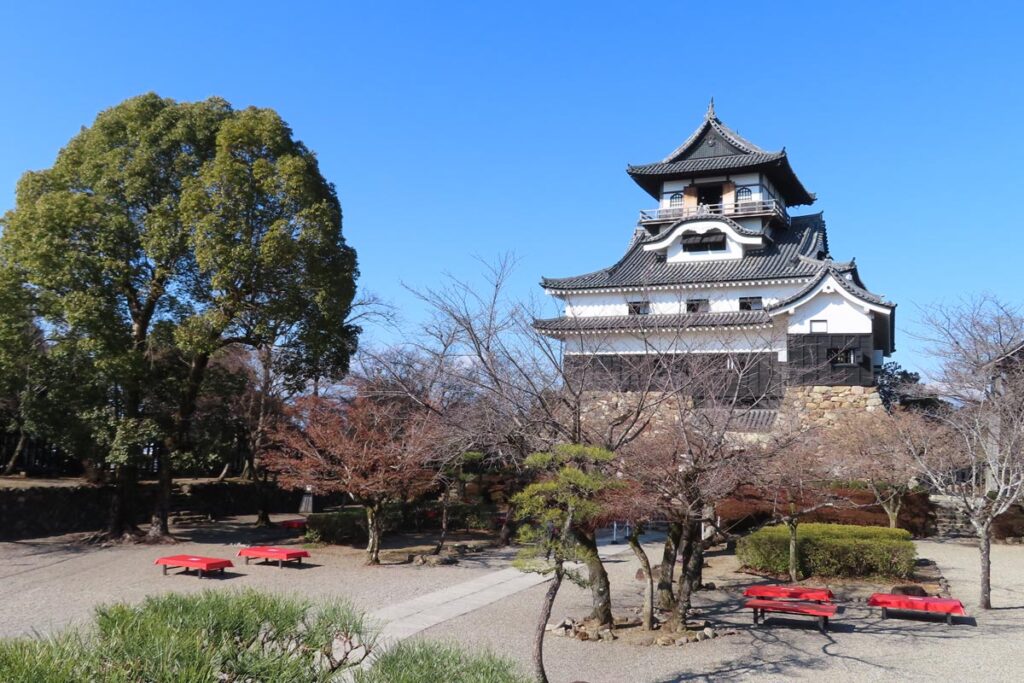
Inuyama Castle
Top destinations in Chubu/Hokuriku
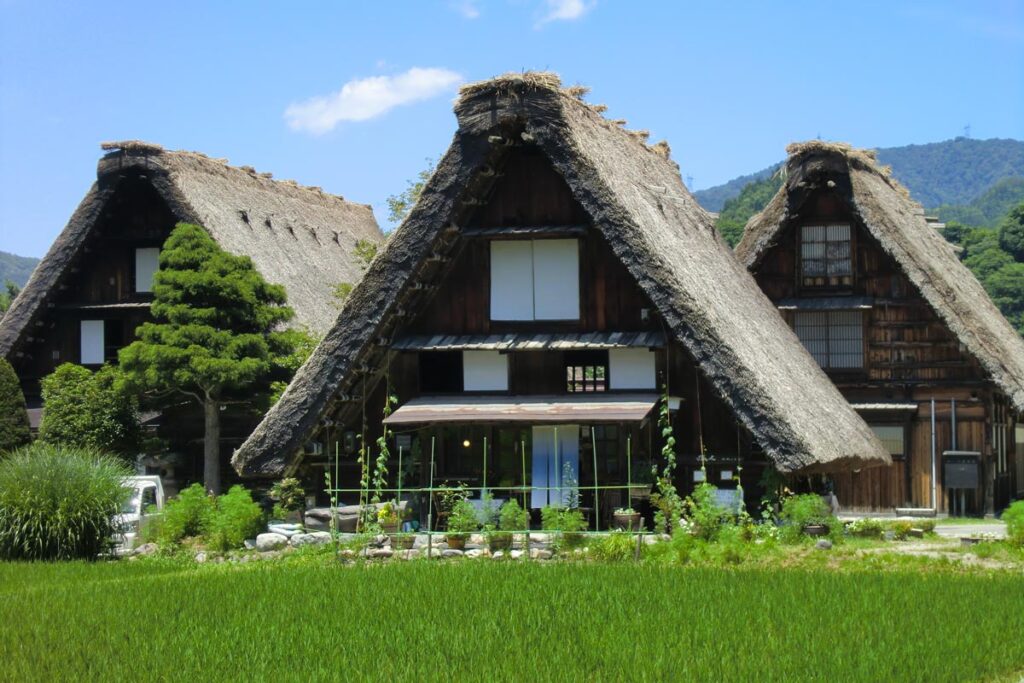
Gifu
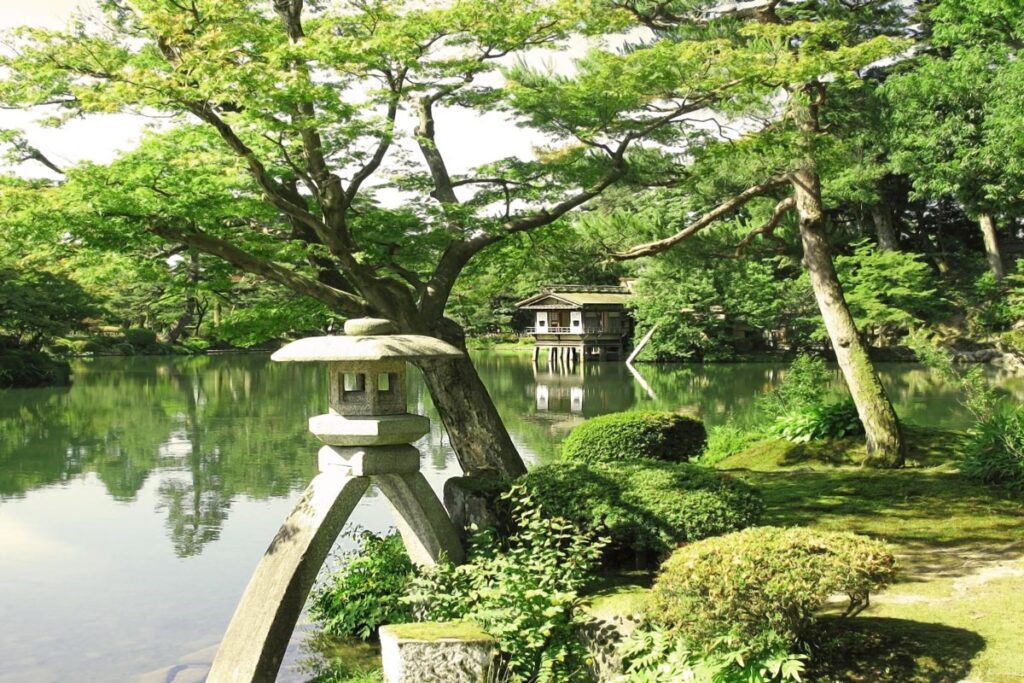
Ishikawa
Nagano