


Bus & Subway Guides
Bus & Subway Guides in Japan for First-Time Travelers
Navigating public transportation in Japan can feel intimidating before you arrive, but the reality on the ground is far more welcoming. With clear signage, punctual services, and an increasing amount of English information, Japan’s bus and subway networks are among the most convenient ways to explore the country. This guide will walk you through how to use buses and subways with confidence, from buying tickets to understanding etiquette and avoiding common mistakes.
Why Use Buses and Subways in Japan?
Japan’s major cities are designed around public transportation, not cars. Subways and local trains form the backbone of urban travel, while buses connect areas the rail network doesn’t reach. For most visitors, this means you can move quickly, safely, and affordably without ever needing a taxi.
Here are a few advantages:
- Reliability: Trains and buses are famously punctual, often down to the minute.
- Coverage: Subways cover city centers; buses reach residential neighborhoods, hillsides, and tourist spots off the rail grid.
- Cost-effective: Fares are affordable, and day passes or IC cards reduce hassle.
- Safe and clean: Vehicles and stations are well maintained, and late-night travel is generally safe.
Understanding IC Cards and Tickets
Before you jump onto a bus or subway, you need a way to pay your fare. In most cities, this comes down to two options: rechargeable IC cards or paper tickets and passes.
IC Cards: The Easiest Option
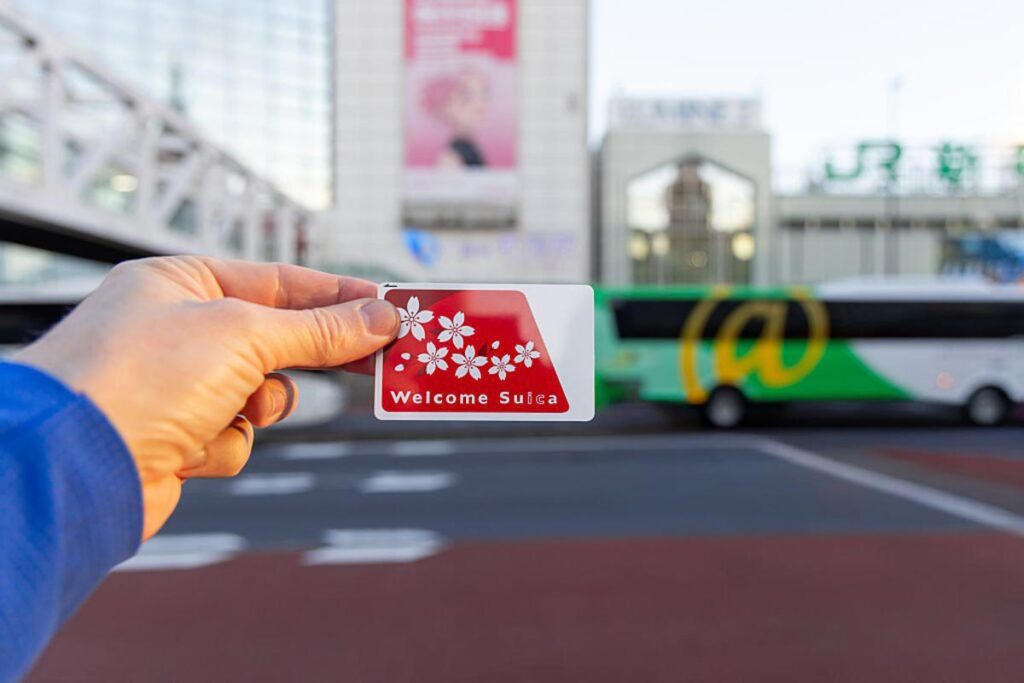
IC cards are contactless smart cards that you tap on a reader when entering and exiting the system. They automatically deduct the correct fare, so you never have to calculate prices yourself. Common brands include Suica and PASMO in the Tokyo region, ICOCA in the Kansai area (Osaka, Kyoto, Kobe), and several others in different regions.
Key points about IC cards:
- Where to get them: Buy them at major train and subway stations from ticket machines or staffed counters. Most machines offer an English menu.
- How to use them: Touch the card to the IC reader at ticket gates (look for a blue or glowing pad) when you enter and again when you exit.
- On buses: In many cities, tap when you board and again when you get off. In some cities, you only tap once; follow the on-board signs.
- Where they work: IC cards are widely interoperable. A Suica from Tokyo, for example, generally works in Osaka, Fukuoka, and other major cities.
- Refunds: You can usually return cards to the issuing company’s service counter for a refund of your deposit and remaining balance (minus a small fee).
For short trips of a few days, an IC card is often the most convenient solution. It also works at many vending machines, convenience stores, and coin lockers.
Paper Tickets and Day Passes
If you do not want to use an IC card, single-journey tickets are available at all subway and train stations. You’ll see fare charts above the machines: find your destination, read the fare, and buy a ticket for that amount. Many cities also sell 1-day or multi-day passes that offer unlimited rides on subways, and sometimes buses, within a set period.
Consider a day pass if you plan to:
- Visit multiple sites in a single day across different parts of the city
- Stay mostly within one urban area, such as central Tokyo or Kyoto
- Use buses heavily (for example, in Kyoto, where buses often reach temples more directly than trains)
How to Use the Subway in Japan
Subways in Japan are fast, frequent, and generally easy to understand. Tokyo, Osaka, Nagoya, Sapporo, Fukuoka, and other large cities all have their own systems. While maps can look complex at first, there is usually a clear logic once you know what to look for.
Reading Subway Maps and Signs
Most subway maps use lines distinguished by colors and letters (such as G for the Tokyo Metro Ginza Line) and station numbers (like G-09). Identifying a station by its code can be easier than remembering a Japanese name.
Look out for:
- Line name and color: For example, the Marunouchi Line is red, the Tozai Line is light blue, and so on.
- Station codes: Each station usually has a letter-number combination, useful when the pronunciation is difficult.
- English signage: In major cities, signs for exits, platforms, and transfer routes are shown in both Japanese and English.
Buying Tickets and Entering the System
At the entrance to the subway, you’ll find banks of ticket machines and ticket gates.
- Use an IC card by tapping the gate reader, or purchase a paper ticket from the machine.
- Insert the paper ticket into the gate slot; pick it up again from the other side as you walk through.
- Follow overhead signs to your line and platform. They will indicate train direction by the line’s destination or terminal station.
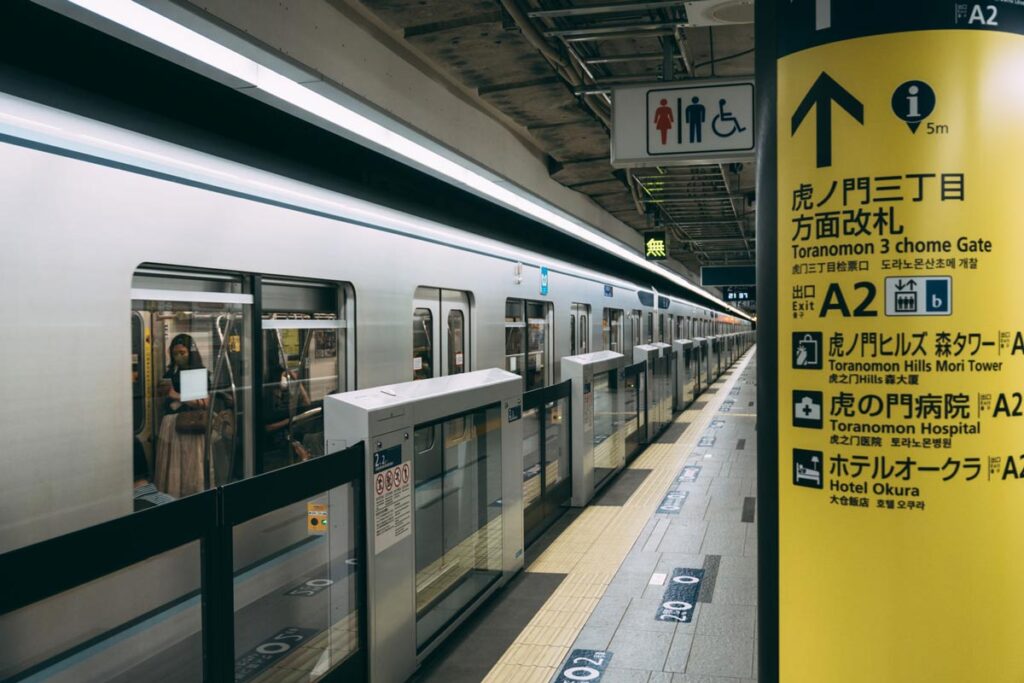
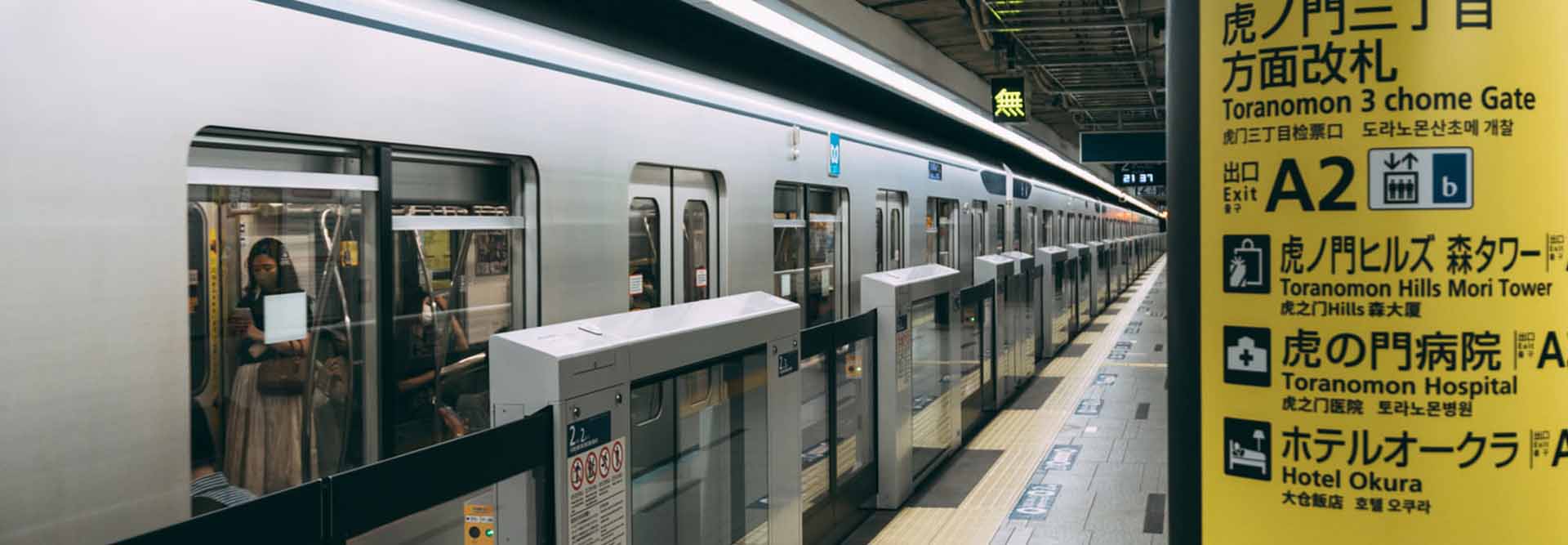
Train platforms often show the station name, the next stations along the line, and line diagrams in English.
On Board the Train
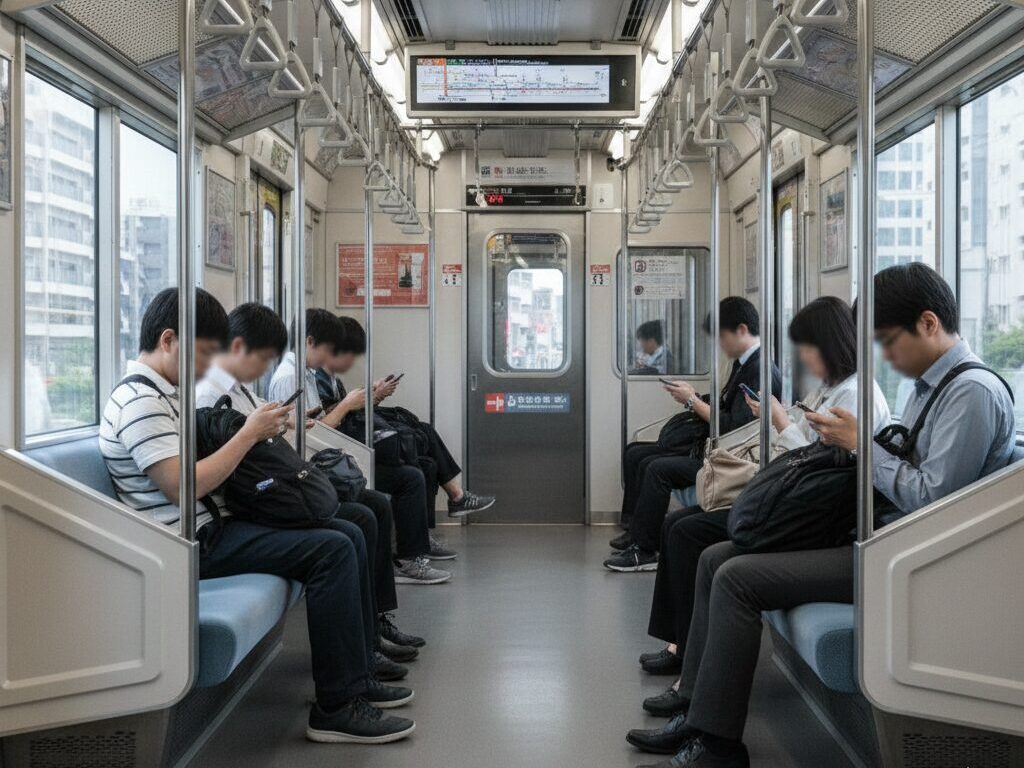
Once on the train, digital displays above the doors usually show the next stop in both Japanese and English, along with transfer information. There are also recorded announcements in multiple languages on many lines in major cities.
Subway etiquette to remember:
- Queue politely: Stand behind the line markings on the platform and let passengers exit before you board.
- Quiet environment: Keep your voice low, set phones to silent mode, and avoid talking loudly on calls (it is often discouraged).
- Priority seating: Priority seats for the elderly, pregnant women, and people with disabilities are clearly marked. Avoid using them if the car is busy and someone may need them.
- Bags and backpacks: Keep bags on your lap or at your feet; during rush hour, wear backpacks on your front to save space.
Exiting and Finding Your Way
When you arrive at your destination, follow the exit signs, which are usually numbered (Exit 1, Exit 2, etc.). In larger stations, maps near the ticket gates show which exit is best for particular landmarks, hotels, or neighborhoods. Choosing the right exit can save you a long above-ground walk.
As you leave through the ticket gate, tap your IC card again or insert your paper ticket into the gate; paper tickets are retained by the machine on exit.
How to Use City Buses in Japan
Buses are particularly useful in cities such as Kyoto, Hiroshima, Kanazawa, and Sapporo, where major attractions might not be directly connected by rail. While bus systems can be slightly less intuitive for first-timers than subways, they are manageable once you understand local rules, which can differ between regions.
Boarding and Paying: Front or Back?
Where you board and how you pay on buses varies by city. Always check the signs near the bus door or watch what locals do. Common patterns include:
- Tokyo-style “flat fare” buses: You usually board at the front and pay as you enter (tap an IC card or drop the fare into the box). The fare is often fixed within a certain zone.
- Kyoto and many regional cities: You board at the rear door and exit at the front. Take a small paper ticket (seiri-ken) from a machine when you board if you are paying cash. When you get off, the fare is calculated based on the number printed on your ticket.
Using an IC card simplifies this: in distance-based systems, you tap when boarding and again when exiting, and the correct fare is automatically deducted.
Route Displays and Announcements
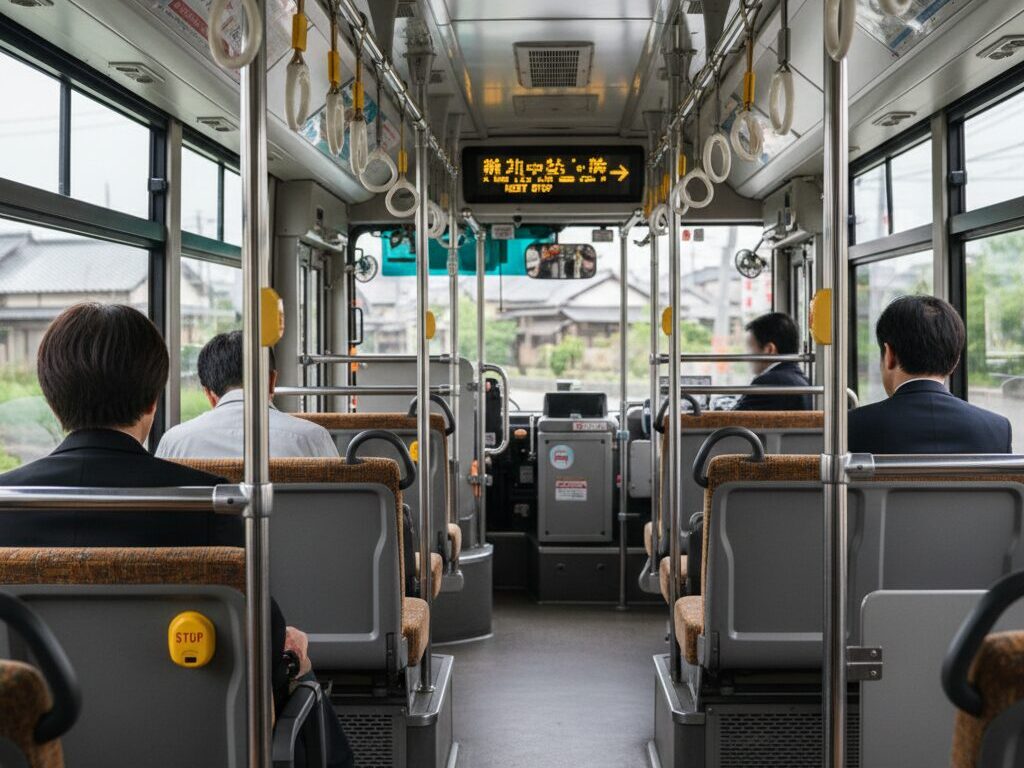
Modern buses often have digital displays at the front of the cabin showing upcoming stops and fares. In popular tourist cities, stops may be announced in English as well. If you are unsure, it is completely acceptable to tell the driver your destination name when you board and ask if the bus goes there.
When your stop is approaching, press one of the yellow or red buttons along the walls or poles to signal the driver to stop. You generally press the button once; a chime will sound and a light will come on.
Paying Your Fare
If you’re paying cash, prepare coins or small bills. Bus drivers cannot usually make large change, but there is often a change machine built into the fare box that can break larger coins or 1,000-yen notes into smaller denominations. Insert your ticket and exact fare into the box when you exit from the front door.
For IC card users, simply tap the card reader when boarding and again when getting off, depending on the system. If you are unsure, watch what other passengers do.
Bus Etiquette
Bus etiquette is similar to the subway, with a few extra points:
- Keep the front area clear for people getting on and off, especially the elderly or those pushing strollers.
- Move toward the back when the bus gets crowded.
- Priority seats are often near the front; give them up when needed.
- Hold on to straps or poles when standing, as buses can brake sharply.
Planning Your Routes and Using Apps
Digital tools make navigating buses and subways in Japan much easier, even if you don’t speak Japanese.
Popular navigation apps allow you to:
- Search routes by station or landmark name in English
- Filter results by “subway only,” “fewest transfers,” or “lowest cost”
- See platform numbers, train types, and departure times
- Check last-train times late at night
Having mobile internet access (via a SIM card or portable Wi-Fi) greatly simplifies on-the-go planning, especially if you need to adjust your plans after a late start or a longer-than-expected temple visit.
Regional Tips for Major Cities
Tokyo
Tokyo’s transportation network combines subways, private railways, and JR lines. For first-time visitors, the subway and JR Yamanote Line, which loops around central Tokyo, will cover most sightseeing areas.
Useful pointers:
- Stations are large and sometimes complex; follow the color-coded line signs and station codes.
- Many districts have multiple stations with similar names (for example, Shinjuku, Shinjuku-sanchome). Double-check which one you need.
- Rush hours (around 7:30–9:30 a.m. and 5–7 p.m.) can get extremely crowded; avoid them if possible.
Kyoto
Kyoto has a small subway network compared to Tokyo or Osaka, but excellent city buses. Many temples and shrines are best reached by bus, including Kiyomizu-dera, Ginkaku-ji, and Kinkaku-ji.
Consider the following:
- City bus passes valid for 1 day can offer good value if you plan to visit several sites.
- Buses can become crowded during peak tourist seasons (spring cherry blossoms and autumn leaves). Allow extra travel time.
- The subway is useful for north–south movement through the city and for connecting to JR lines.
Osaka
Osaka’s subway network is extensive and convenient, linking major districts like Umeda, Namba, and Tennoji. City buses fill in the gaps but are less essential for most tourists than in Kyoto.
Tips for Osaka:
- IC cards such as ICOCA work seamlessly across subways, buses, and JR lines.
- Some passes combine subway and bus use with attraction discounts, which can be good value for active sightseeing.
Accessibility and Traveling with Luggage
Japan’s public transportation is increasingly accessible. Most major stations have elevators, ramps, and tactile paving for visually impaired travelers. However, smaller stations may only have stairs, so be prepared if you have heavy luggage.
When traveling with suitcases:
- Avoid rush hour, as cars can be too crowded for large bags.
- Use station elevators when available; signs often indicate their location.
- Consider using a luggage delivery service to send large suitcases between airports and hotels, lightening your load on public transport.
Common Mistakes to Avoid
Even with clear systems, first-time visitors sometimes make the same few errors. Being aware of them in advance will save you time and stress.
- Not tapping in or out correctly: If you forget to tap your IC card at the entrance or exit, the system may charge a default fare or flag an error. If that happens, speak to the station staff at the nearby fare adjustment window (often labeled in English).
- Ignoring the last train: Subways and trains do not run all night. Check final departure times, especially if you are staying outside the city center.
- Using the wrong bus door: Different cities have different boarding customs. Watch locals or check the signs, and don’t worry if you make a mistake; drivers are used to visitors and generally helpful.
- Blocking the flow: In busy stations, keep to the side when checking your phone or consulting a map so others can pass.
Final Thoughts: Enjoy the Journey, Not Just the Destination
Learning to use Japan’s buses and subways transforms your visit from a checklist of sights into a more local experience. You’ll share space with office workers, students, and families, watch the city change from district to district, and feel the daily rhythm that doesn’t appear in guidebooks.
With an IC card in your pocket, a navigation app on your phone, and a basic understanding of how fares and etiquette work, you’ll be ready to travel independently and confidently. The network may look complex on a map, but on the ground it is designed to guide you step by step. Treat it as part of the adventure, and Japan’s public transportation will become one of the highlights of your trip.
Explore Other Transportation
Japan Rail Pass
IC Cards