





Digital Art & TeamLab
Digital Art & teamLab: A First-Time Visitor’s Guide to Japan’s Immersive Art
Photos are for illustrative purposes only.
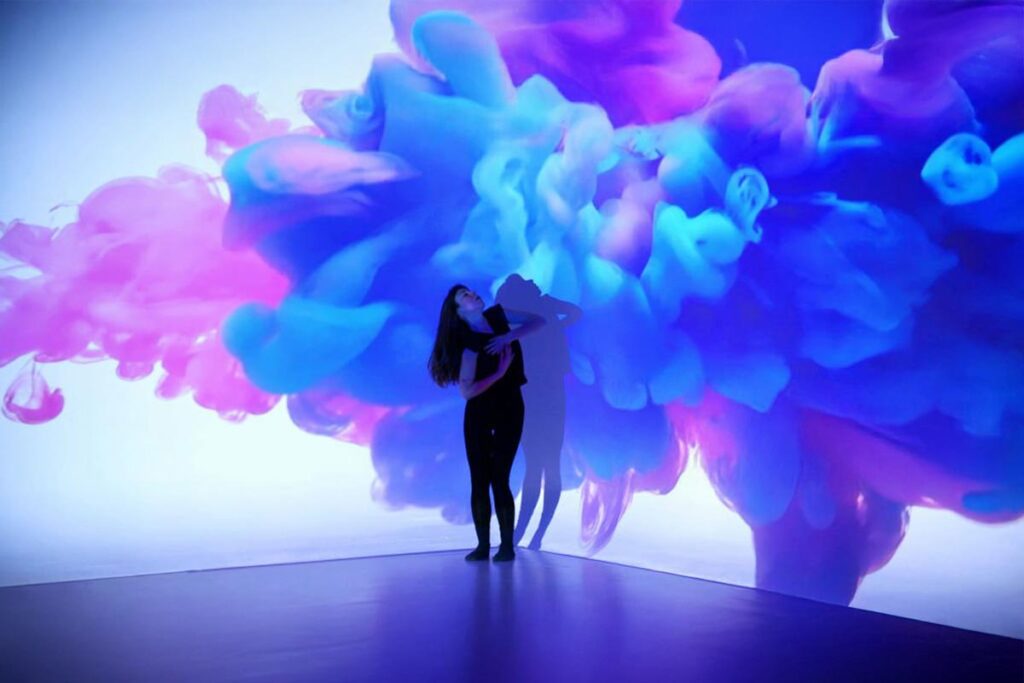
For many first-time visitors to Japan, digital art has become just as iconic as temples, sushi, and neon cityscapes. At the center of this new wave is teamLab, an art collective that transformed the museum experience into an immersive, walk-through world of light, sound, and interactive technology. If you have ever wanted to step inside a living painting or walk through a field of glowing flowers, a teamLab experience should be high on your Japan itinerary.
Who Are teamLab and Why Are They Famous?
teamLab is a Tokyo-based interdisciplinary art collective founded in 2001. Their members include artists, programmers, engineers, animators, architects, and mathematicians. Instead of hanging framed works on a wall, they create borderless digital environments that respond to your movements and presence.
In teamLab spaces, art is not something you quietly observe from a distance. It surrounds you, follows you, and sometimes even depends on you. A flock of digital birds may scatter when you walk through them; flowers may bloom or wither based on the time you spend in a room. This philosophy aligns with a traditional Japanese appreciation of seasonality and impermanence, known as mono no aware — an awareness of the beauty of things that do not last.
Where to Experience teamLab in Japan
teamLab has created installations around the world, but the most complete and accessible experiences are in Japan, especially in and around Tokyo. Exhibitions change and move, but there are a few major venues and recurring concepts that first-time travelers should know.
Tokyo and Greater Tokyo Area
1. Permanent or Long-Term Museums (venue names and locations can change over the years, so always confirm before you travel):
- Large-scale immersive museums feature interconnected rooms of digital waterfalls, floating lanterns, flower fields, and interactive corridors. Artwork may drift from room to room, reinforcing the idea of a “borderless” world.
- Nature-focused installations are often set in parks or gardens, where projections are mapped directly onto trees, rocks, and water. These shows usually run seasonally, after sunset.
These major exhibitions are usually accessible by train from central Tokyo and are designed with international visitors in mind, offering English signage and multilingual audio guides.
Other Cities in Japan
Beyond Tokyo, teamLab frequently stages temporary events and special exhibitions in cities like Osaka, Kyoto, Fukuoka, and Nagoya, as well as in smaller regional locations. They often collaborate with historic temples, castles, or gardens, using projection mapping to illuminate ancient architecture with modern art.
Because schedules change, it is wise to check current exhibitions a few months before your trip and consider adding a city or day trip that matches your travel dates.
What to Expect Inside a teamLab Exhibition
teamLab spaces are designed to be fully immersive. Expect to walk, climb short slopes, and sometimes even wade through shallow water. Each room has its own theme, soundscape, and interactive features.
Signature Rooms and Experiences
While every venue is unique, several types of rooms appear regularly and have become visitor favorites:
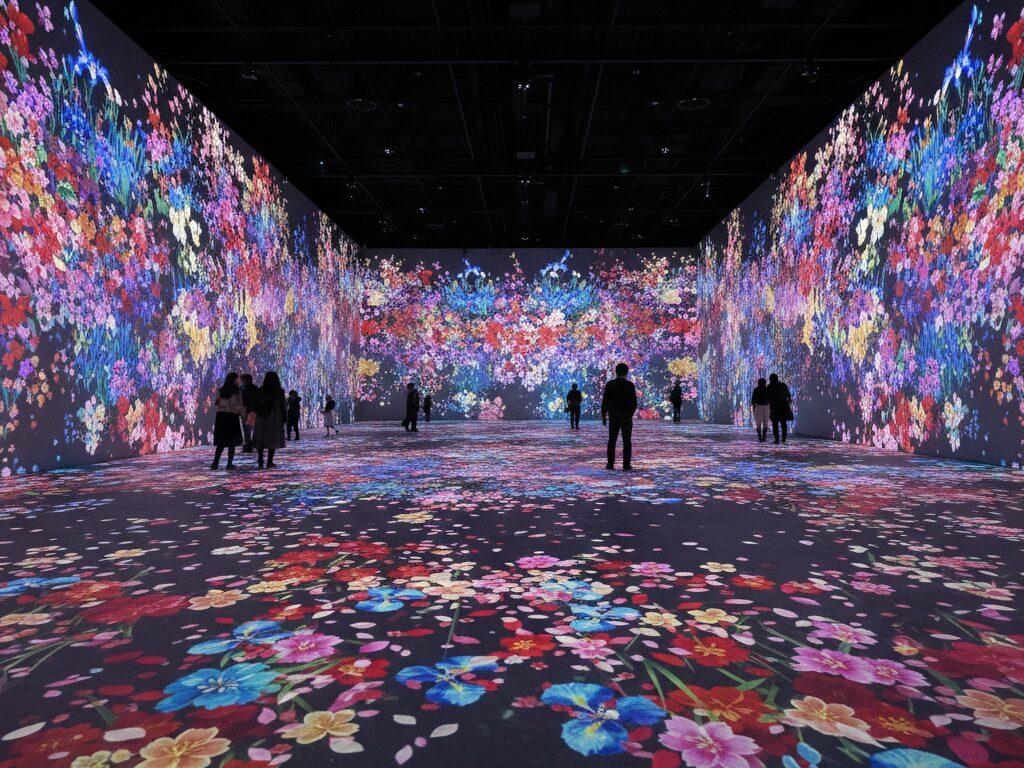
- Infinite Flower Rooms – Dark spaces where flowers bloom, scatter, and transform around you. The compositions evolve over time and never repeat in exactly the same way.
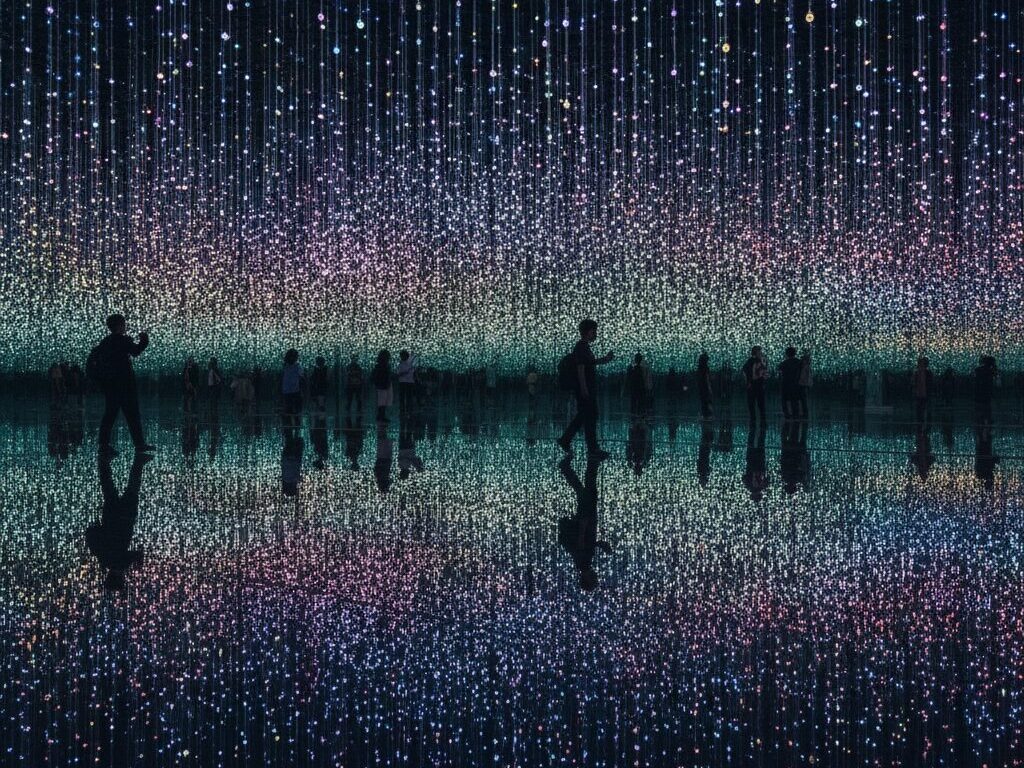
- Crystal or Light Forests – Hanging LED strips or light columns create a three-dimensional maze of color. Lights shift with music and sometimes with your touch or movement.
- Digital Waterfalls – Water seems to pour from walls and cliffs, flowing realistically around people as they stand or sit. The particles are calculated in real time, making each moment unique.
- Lantern Rooms – Spaces filled with glowing lanterns or orbs that change color as you approach, creating a living constellation around you.
- Interactive Drawing Zones – Often popular with families, these areas let you draw creatures or vehicles on paper. After scanning, your drawing appears on the wall in a giant animated world, swimming or flying alongside others.
Many installations have no fixed start or end. You can wander freely and stay as long as you like, returning to favorite rooms and discovering small details you missed the first time.
Sound, Scent, and Sensation
teamLab environments engage multiple senses. Gentle ambient music, the hum of electronic sounds, and occasionally subtle scents work together to create a meditative mood. Some rooms have uneven or soft flooring; others may mirror the sky or give the illusion of walking among the stars. Expect to take your time and move slowly — rushing through defeats the purpose.
Practical Tips: Tickets, Timing, and Crowds
Booking Tickets
teamLab exhibitions in Japan are extremely popular, especially during weekends, national holidays, and cherry blossom or autumn foliage seasons. To avoid disappointment:
- Book online in advance. Same-day tickets may sell out or have limited entry times.
- Reserve a specific time slot when required. Many venues space out entry to control crowds.
- Bring a digital or printed confirmation. Most places accept QR codes on your smartphone, but having a backup printout is helpful if your battery dies.
Best Time to Visit
For a more relaxed experience and better photo opportunities:
- Weekdays are generally quieter than weekends.
- Morning or late-evening slots can be less crowded than midday.
- Off-peak seasons (excluding major holidays like Golden Week, New Year, and Obon) provide more space to wander.
If you must visit during a busy time, be prepared for lines at popular rooms. Use the opportunity to slow down and observe how other visitors interact with the art — it is part of the experience.
What to Wear and Bring
Because teamLab installations rely on darkness, reflections, and projections, your clothing and belongings can significantly affect both your experience and your photos.
- Wear white or light-colored clothing. Light colors reflect the projections and glow beautifully, while black tends to disappear into the darkness.
- Avoid very short skirts and dresses. Many spaces use mirrored floors, and some areas involve stairs or ramps. For comfort and modesty, opt for trousers, longer skirts, or leggings.
- Choose comfortable shoes. You will walk and stand more than you might expect. Some areas may require you to remove shoes, so wear socks in good condition.
- Prepare to roll up your trousers. Certain installations involve shallow water, usually just above the ankle. Staff may provide towels or special footwear, but check details in advance.
- Travel light. Lockers are often available and recommended for large bags. A small crossbody bag or secure pocket is sufficient inside.
Photography is usually allowed, but tripods, flashes, and selfie sticks are commonly prohibited. Respect staff instructions and avoid blocking pathways while taking photos.
Navigating with Children, Couples, and Groups
Visiting with Children
teamLab spaces are generally family-friendly and can be magical for children. Interactive zones that respond to touch or drawing are particularly engaging. However:
- The dark rooms and unfamiliar sounds can be overwhelming for very young children.
- Keep a close eye on kids in crowded spaces and areas with uneven floors or water.
- Consider bringing a small hand towel and a change of socks if water is involved.
Romantic and Group Visits
For couples, teamLab can be one of the most romantic experiences in Japan — walking together through silent forests of light or standing side by side under digital stars is hard to forget. For groups of friends, it becomes a playful adventure, as you discover new rooms and trigger different effects together.
That said, try not to crowd a single point for photos. Rotating quickly allows everyone to enjoy popular spots, and you will likely find quieter corners elsewhere for pictures.
Cultural Context: How teamLab Reflects Japan
Although thoroughly modern, teamLab’s work echoes many themes in traditional Japanese culture:
- Nature as Art – From classical ink paintings to rock gardens, Japan has long celebrated landscapes and seasonal change. teamLab translates this into digital forms: cherry blossoms that bloom in pixels, waves calculated by algorithms, and forests illuminated with projected light.
- Impermanence – Nothing in a teamLab space is fixed. Flowers fade, animals appear and vanish, and compositions never repeat exactly. This reflects mujo, the Buddhist-inspired notion that all things are in flux.
- Harmony with Others – Many installations respond not just to you, but to everyone sharing the room. Your presence affects others’ experiences and vice versa, echoing the Japanese emphasis on community and consideration.
Approach the experience not only as entertainment but as a living, moving artwork inspired by long-standing Japanese philosophies, interpreted through cutting-edge technology.
Accessibility and Visitor Services
Accessibility varies by venue, but most modern teamLab exhibitions in Japan are designed with a range of visitors in mind.
- Language support: Signage and instructions are typically available in Japanese and English, sometimes with additional languages via apps or audio guides.
- Mobility: Many areas are accessible by elevator or ramps, but certain rooms (especially those with steep slopes, water, or soft surfaces) may be challenging for visitors with mobility issues. Check accessibility information on the venue’s official website before booking.
- Sensory considerations: Environments are dark and can include flashing lights, loud or layered sounds, and crowded rooms, which may be difficult for those with sensory sensitivities.
If you have specific needs, consider contacting the venue directly in advance. Japanese staff are usually very helpful and will do their best to explain which sections might be difficult and offer alternative routes.
Combining teamLab with Nearby Attractions
Many teamLab museums and events are located in areas that are already popular with visitors, making them easy to combine with other sightseeing.
- In Tokyo: You can pair a teamLab visit with waterfront shopping complexes, observation decks, or nearby science museums. A morning of traditional temples and shrines followed by an afternoon or evening at teamLab creates a powerful contrast between old and new Japan.
- In other regions: teamLab collaborations with gardens, castles, and temples are ideal to visit after dark, once the lights turn on. Spend the day exploring local history and cuisine, then return at night to see the same landscape transformed by digital art.
When planning your route, remember that Japan’s train network is highly efficient, but transfers can take longer than you expect in busy hubs. Aim to arrive at least 15–20 minutes before your reserved time slot.
Etiquette and How to Be a Considerate Visitor
Japan values harmony and consideration, and that extends into digital art spaces.
- Follow staff instructions. They are there to keep both you and the artworks safe.
- Move slowly and calmly. Running, pushing, or shouting can disrupt the tranquil mood.
- Be mindful of photos. Take your time, but step aside once you have your shots. Avoid shining your phone flashlight at others.
- Respect the installations. Do not touch equipment unless invited, and avoid leaning on walls or projectors.
By treating the space like a living artwork shared with others, you will fit naturally into the Japanese approach to public experiences.
Making the Most of Your teamLab Experience
For first-time visitors to Japan, a teamLab exhibition can be more than just a photogenic stop — it can become a highlight that stays with you long after your trip. To get the most out of it:
- Give yourself at least two to three hours inside, longer if you enjoy photography.
- Put your phone away occasionally and simply stand still, watching how the room evolves.
- Visit with someone whose reactions you want to remember — shared amazement is part of the magic.
- Reflect on the contrast between this ultra-modern art and the traditional sites you visit elsewhere in Japan. Together, they tell a fuller story of the country.
Whether you are wandering through a glowing forest, watching digital koi swim around your feet, or seeing your child’s drawing come to life on a giant wall, Digital Art and teamLab offer an intimate, human way to experience high technology. It is Japan’s past and future, woven together in light.
Include at least one teamLab experience in your itinerary, and you will understand why so many travelers say it feels like stepping into another world.

Explore Other Cultures

Kawaii Culture

Street Fashion
Instagram-worthy Spots

Seasonal Limited Items
Character Collaborations
Digital Art & TeamLab

Unique Vending Machines