


Hiroshimayaki (Hiroshima)
Hiroshimayaki: A First-Timer’s Guide to Hiroshima’s Signature Soul Food
For many first-time visitors to Japan, food memories become the highlight of the trip. In Hiroshima, that memory is very often a sizzling plate of Hiroshimayaki – Hiroshima-style okonomiyaki – served bubbling hot on an iron griddle. More than just a local dish, it’s comfort food, a symbol of post-war recovery, and one of the most enjoyable culinary experiences you can have in western Japan.
What Is Hiroshimayaki?
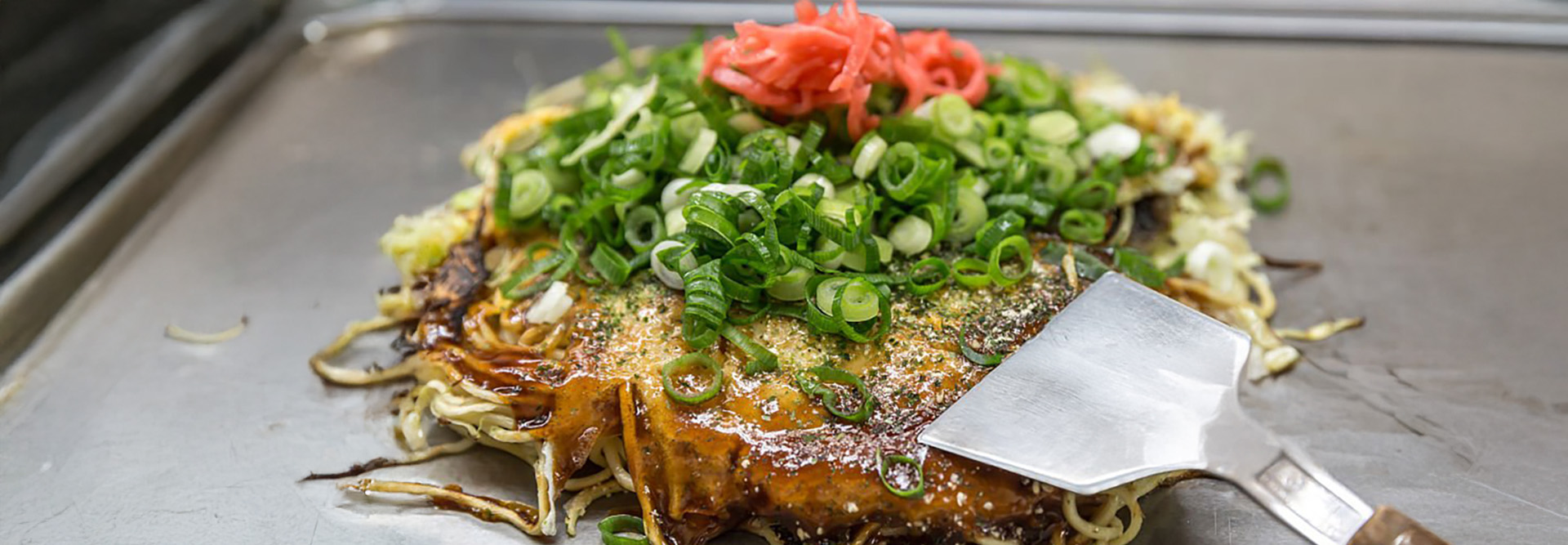
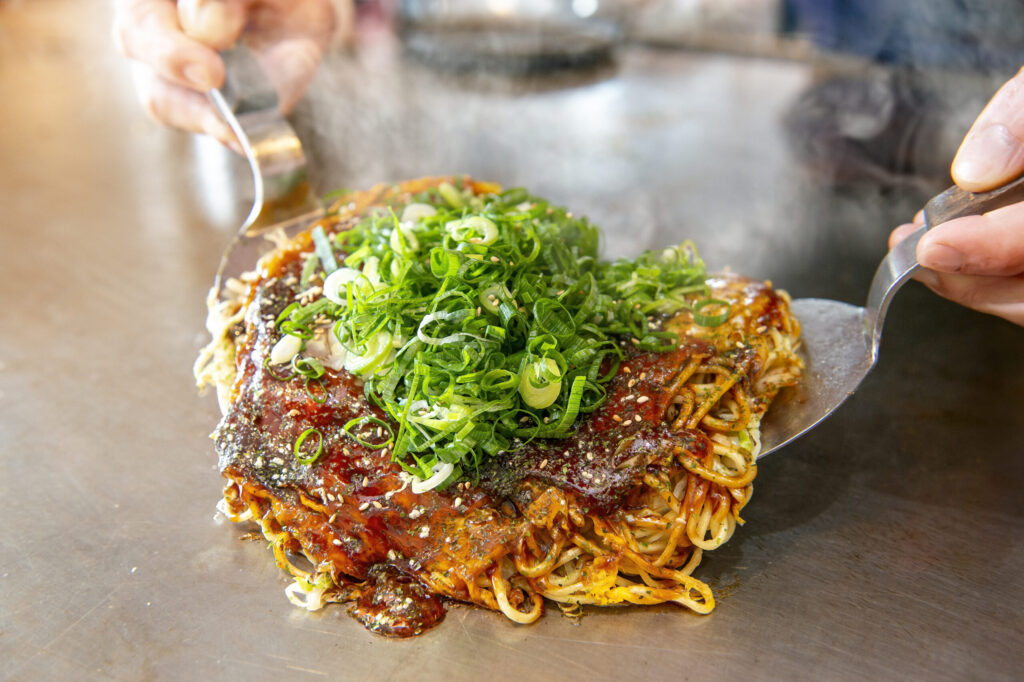
Hiroshimayaki (often called Hiroshimaokonomiyaki or just “okonomiyaki” in Hiroshima) is a savory pancake-like dish cooked on a large iron plate called a teppan. Unlike the more famous Osaka-style okonomiyaki, which mixes all ingredients into a batter, Hiroshimayaki is carefully layered as it cooks.
A typical Hiroshimayaki includes:
- A thin crepe-like batter base
- A huge mound of shredded cabbage and bean sprouts
- Sliced pork belly or other meat
- Stir-fried yakisoba or udon noodles
- A fried egg
- Plenty of tangy-sweet okonomiyaki sauce
- Optional toppings like green onions, cheese, squid, oysters, or mayonnaise
All of this is cooked and stacked into a neat, round tower directly in front of you, then served on the hot iron plate so it stays warm until the last bite.
Hiroshimayaki vs. Osaka-Style Okonomiyaki
Visitors who have tried okonomiyaki in Osaka are sometimes surprised when they order it in Hiroshima and receive something that looks quite different. The key differences are:
1. Mixing vs. Layering
In Osaka, cabbage, batter, meat, and other fillings are mixed together in a bowl and cooked like a thick pancake. In Hiroshima, the chef pours a very thin layer of batter first, then builds ingredients in layers: batter, cabbage, sprouts, meat, noodles, egg. This method creates distinct textures – crisp edges, soft cabbage, chewy noodles – in each bite.
2. Noodles as a Standard Ingredient
Hiroshimayaki usually includes noodles, most commonly yakisoba (fried wheat noodles) or sometimes udon (thicker wheat noodles). This makes the dish more substantial and filling. In Osaka-style okonomiyaki, noodles are optional and often treated as an extra.
3. More Vegetables, Lighter Batter
Hiroshimayaki uses a larger volume of cabbage and bean sprouts, with less batter overall. Despite its size, many people find it feels lighter than they expect, thanks to all the vegetables.
The Story Behind Hiroshimayaki
Understanding Hiroshimayaki also means understanding a little about Hiroshima’s recent history. After World War II and the atomic bombing of Hiroshima, food was scarce and people turned to cheap, filling street food. A simple snack called issen yōshoku – a thin crepe with scallions and sauce – became popular.
Over time, vendors began adding cabbage, pork, and finally noodles, creating something heartier and more nutritious. This evolution led to the dish we now know as Hiroshima-style okonomiyaki. For locals, it symbolizes both everyday comfort and the city’s resilience and creativity in rebuilding from tragedy.
Where to Eat Hiroshimayaki in Hiroshima
You can find Hiroshimayaki all over the city, from downtown counters to shopping mall food courts. For first-time visitors, the most convenient and atmospheric places are:
Okonomimura (Okonomi Village)
Okonomimura is a multi-story building filled with small, family-run okonomiyaki stalls, each with its own counter and teppan. You sit around the grill while the chef cooks your dish in front of you. It’s casual, lively, and ideal if you want to try a very local experience in one spot. Each shop has slightly different toppings and styles, so don’t hesitate to walk around and choose a counter that feels welcoming.
Micchan Sohonten and Other Famous Chains
Several Hiroshima-based chains specialize in Hiroshimayaki, often with branches near major sights such as Hiroshima Station and the Peace Memorial Park. These restaurants are used to serving tourists, often have picture menus, and maintain consistent quality – a good choice if you feel nervous about ordering.
Near Hiroshima Station
If you are just passing through on the Shinkansen, you can still try authentic Hiroshimayaki in the station complex. Many visitors grab a seat at a counter before or after visiting Miyajima or the Peace Memorial Park.
In any of these areas, look for the words お好み焼き (okonomiyaki) or 広島焼 (Hiroshimayaki) on signs.
How to Order Hiroshimayaki (Even with Limited Japanese)
Menus vary by shop, but most follow a similar structure. Here is how to navigate your first order:
Step 1: Choose the Basic Style
Many restaurants start with a standard Hiroshima okonomiyaki that includes batter, cabbage, pork, noodles, and egg. This might be labeled simply as “standard” or “regular” on English menus, or as niku tama soba (meat, egg, noodles) on Japanese menus.
If you can say or point to this phrase, you’ll get the classic version:
- Niku tama soba (肉玉そば) – pork, egg, yakisoba noodles
- Niku tama udon (肉玉うどん) – pork, egg, udon noodles
Step 2: Choose Your Noodles
You’ll usually be asked to choose between:
- Soba (そば) – actually yakisoba; thin, slightly chewy fried wheat noodles
- Udon (うどん) – thicker, softer wheat noodles
For a classic Hiroshima experience, soba is the most common choice.
Step 3: Add Toppings (Optional)
Popular add-ons include:
- Cheese (チーズ)
- Green onion (ネギ)
- Oyster (カキ) – a local Hiroshima specialty
- Squid (イカ)
- Mocha / rice cake (餅, mochi)
You can simply point at the menu and say “This, please” or in Japanese, “Kore kudasai.” Many Hiroshima shops have picture menus or even English explanations.
Watching the Cooking Show
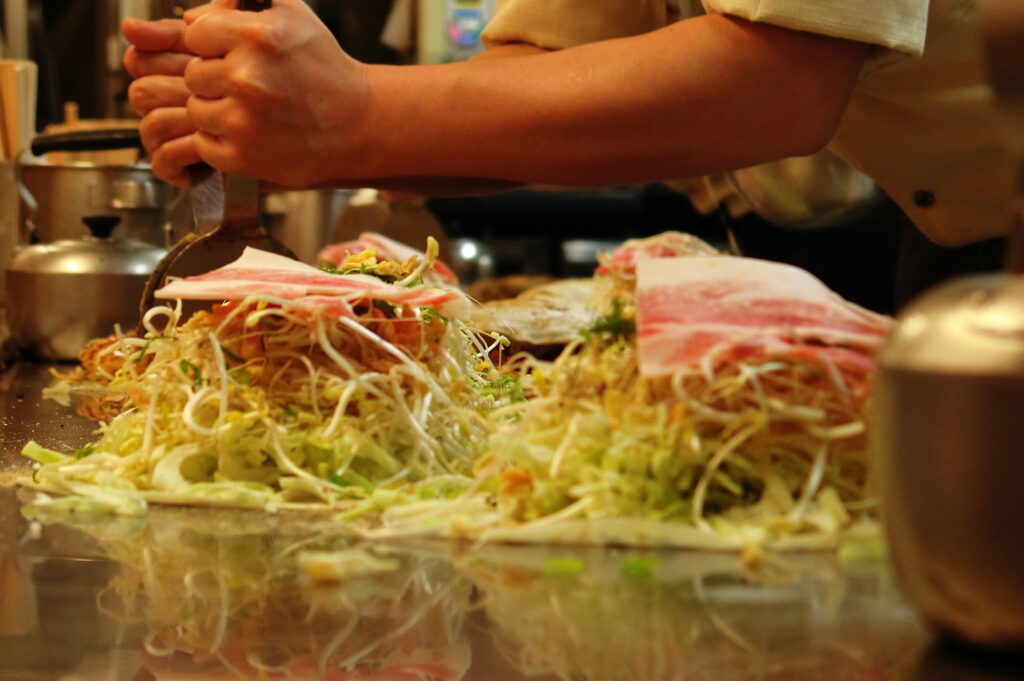
Part of the joy of eating Hiroshimayaki is watching it being made. At most restaurants, your seat is right at the counter surrounding the teppan grill. The typical sequence looks like this:
- The chef pours a thin round of batter onto the grill.
- A generous pile of shredded cabbage, bean sprouts, and green onions is placed on top.
- Sliced pork is laid over the vegetables, then the stack is pressed down gently.
- Separately, the chef stir-fries noodles with sauce on the grill.
- An egg is cracked and spread into a circle.
- The tower of cabbage and pork is flipped, then set on the noodles and egg.
- Everything is shaped into a neat round, brushed with sauce, and sprinkled with toppings like seaweed powder.
The process is rhythmic and mesmerizing, like watching a performance. Don’t be shy about observing closely – chefs are used to curious visitors and often enjoy showing off their skills.
How to Eat Hiroshimayaki
When the dish is ready, it is usually placed directly in front of you on the teppan, still sizzling. Eating it correctly – and safely – is part of the fun.
Using the Mini Spatula
Many Hiroshima-style shops provide a small spatula called a kote or hera. Locals often use this to cut bite-sized pieces directly from the hotplate and then bring them to their mouths.
If the idea of eating directly from a metal spatula feels awkward, you can:
- Use the small spatula to cut off a piece
- Transfer it to your plate
- Eat it with chopsticks
The iron plate is very hot, so avoid touching it, and take small bites at first so you don’t burn your mouth.
Condiments and Sauces
On the counter, you’ll usually find:
- Okonomiyaki sauce – sweet and tangy, similar to a thick Worcestershire-based sauce
- Mayonnaise – often drizzled in a zigzag pattern
- Aonori (green seaweed flakes)
- Katsuobushi (dried bonito flakes) in some shops
You can adjust the flavor to your liking. If you prefer less sauce or no mayonnaise, you can tell the staff when ordering by saying, “Sauce sukoshi” (a little sauce) or “No mayonnaise.”
Dietary Considerations and Tips
Traditional Hiroshimayaki includes pork and sometimes fish-based ingredients in the sauce or toppings. If you have dietary restrictions:
- Vegetarians can sometimes request no meat (niku nashi) and focus on cabbage, noodles, and egg, though sauces may still contain animal products.
- Seafood lovers should seek out versions topped with Hiroshima oysters in season (typically autumn to early spring).
- Gluten-free travelers should be cautious; standard noodles and sauces contain wheat.
In more tourist-oriented restaurants, staff may understand basic English regarding food allergies. It can still be helpful to carry a translated allergy card in Japanese if you have serious dietary needs.
When and How Much to Eat
Hiroshimayaki is usually a main meal rather than a light snack. One full serving is often enough for an adult, especially if it includes noodles and extra toppings. Many locals eat it for lunch or dinner with a soft drink or beer.
If you’re not very hungry, some shops offer half-size portions or allow two people to share one Hiroshimayaki, though there may be a small minimum order per person. It is polite to ask first rather than assuming sharing is fine.
Pairing Hiroshimayaki with Hiroshima Sightseeing
Hiroshimayaki fits naturally into many popular Hiroshima itineraries:
- Before or after visiting the Peace Memorial Park – Many restaurants are within walking distance, making it easy to enjoy a comforting meal after a powerful, emotional visit.
- On your way to or from Miyajima – Grab a plate at Hiroshima Station before boarding the train and ferry, or reward yourself with Hiroshimayaki after exploring Itsukushima Shrine.
- Evening in downtown Hiroshima – Combine a stroll through the shopping arcades and riverside with dinner at Okonomimura for a relaxed local night out.
Etiquette for First-Time Diners
Hiroshimayaki restaurants are casual and friendly, but a few basic manners will help you feel more comfortable:
- Wait to be seated; staff will usually direct you to a spot at the counter or a table with a teppan.
- It’s fine to watch the chef cook and even take photos, but avoid leaning over the hotplate or blocking the narrow aisles.
- Use the hand towels provided (often a small wet towel called oshibori) to clean your hands before eating.
- If the restaurant is busy, try not to linger too long after finishing; these are typically fast-turnover places.
- Cash is still more common than cards in small, family-run shops, so carry enough yen.
Bringing Hiroshimayaki Memories Home
While the full Hiroshimayaki experience is difficult to recreate outside Japan, you can bring back some of its flavors. At souvenir shops and even convenience stores around Hiroshima Station, look for:
- Bottles of Hiroshima-style okonomiyaki sauce
- Dried aonori (seaweed flakes) and katsuobushi (bonito flakes)
- Instant okonomiyaki mixes featuring Hiroshima branding
These make easy, portable gifts for food-loving friends and a tangible reminder of your time in Hiroshima.
Why You Shouldn’t Miss Hiroshimayaki
Hiroshimayaki is more than a hearty, delicious meal. It’s a window into everyday life in Hiroshima and a taste of how the city has rebuilt itself with warmth and creativity. For first-time visitors to Japan, sitting at a counter, watching the chef build layer upon layer, and sharing a steaming hotplate of Hiroshimayaki is one of the most memorable – and approachable – food adventures you can have.
Whether you are on a quick day trip or staying several nights, make time for this signature dish. Your Hiroshima story will feel incomplete without it.