


Kagawa
Kagawa Travel Guide: Udon, Art Islands and Coastal Charm
Photos are for illustrative purposes only.
Japan’s smallest prefecture by area, Kagawa, often slips under the radar of first-time visitors focused on Tokyo, Kyoto and Osaka. Yet this compact region on Shikoku Island offers some of the country’s most rewarding experiences: world-class contemporary art on island landscapes, a historic feudal garden, views across the Seto Inland Sea and, of course, Japan’s most famous udon noodles.
If you are planning your first trip to Japan and want to add somewhere authentic and slightly off the main tourist trail, Kagawa is an excellent choice. It combines easy access from major cities with a slower, coastal pace that feels distinctly different from Japan’s urban centers.
Where Is Kagawa and Why Visit?
Kagawa sits on the northeastern tip of Shikoku, facing the island-dotted Seto Inland Sea. The prefectural capital, Takamatsu, is about an hour by train from Okayama on Japan’s main Honshu island, connected by the dramatic Seto Ohashi Bridge. This makes Kagawa an easy side trip from Osaka, Kyoto or Hiroshima.
Travelers are drawn to Kagawa for three main reasons:
- Art and architecture on Naoshima and surrounding islands
- Classic Japanese landscape design at Ritsurin Garden
- Sanuki udon, a local noodle style beloved across Japan
Because Kagawa is relatively small, you can experience all three in just two or three days, making it ideal for a short but memorable detour on a first-time Japan itinerary.
Best Time to Visit Kagawa
Kagawa enjoys a mild, relatively dry climate compared with many other regions of Japan. The Seto Inland Sea helps moderate temperatures, and the area even promotes itself as having some of the country’s sunniest weather.
Seasonal Highlights
- Spring (March–May): Pleasant temperatures and blooming cherry blossoms make this a beautiful time to explore Ritsurin Garden and coastal walks. Early April is typically peak sakura season.
- Summer (June–August): Warm and humid, but cooled slightly by sea breezes. This is a lively time for festivals, and the longer daylight hours are perfect for island-hopping. Note that late June to mid-July is the rainy season.
- Autumn (September–November): Many locals consider this the best time to visit. The heat eases, the skies are often clear and Ritsurin Garden’s maple leaves turn vibrant red and gold from mid to late November.
- Winter (December–February): Winters are relatively mild and sunny by Japanese standards, with less snow than inland regions. Crowds are thin, and clear air often brings crisp views over the Seto Inland Sea.
If you are particularly interested in contemporary art, check dates for the Setouchi Triennale, a large art festival held on islands across the Seto Inland Sea roughly every three years. During festival years, Kagawa’s art islands are especially vibrant but also busier and require more advance planning.
How to Reach Kagawa
By Train
The main gateway to Kagawa is Takamatsu Station.
- From Tokyo: Take the Shinkansen to Okayama (around 3.5 hours), then transfer to a rapid train to Takamatsu (about 1 hour).
- From Osaka or Kyoto: Take the Shinkansen or limited express to Okayama (around 1 hour from Osaka, 1.5 hours from Kyoto), then continue to Takamatsu.
- From Hiroshima: Shinkansen to Okayama (approx. 40 minutes), then onward to Takamatsu.
Japan Rail Pass holders can use the Shinkansen to Okayama and JR trains to Takamatsu, making Kagawa an easy addition to a rail-based itinerary.
By Air
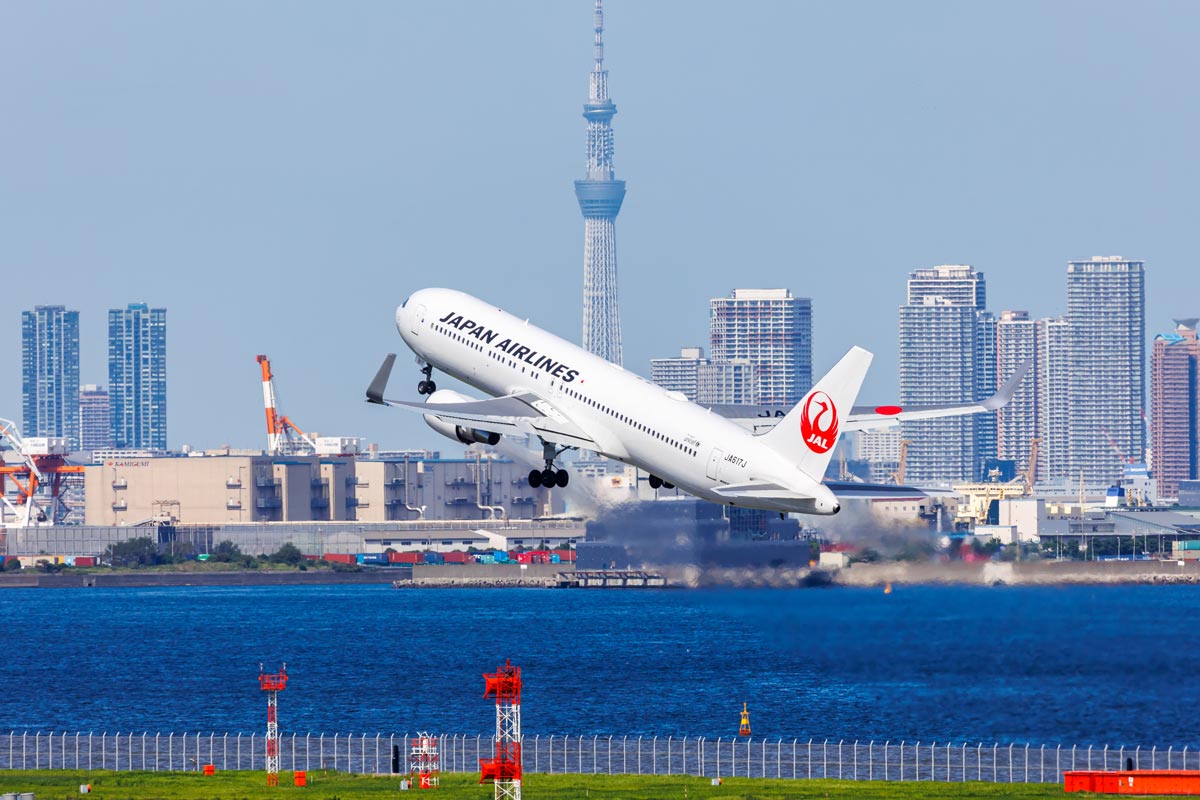
Takamatsu Airport offers domestic flights from Tokyo and other major cities, plus some international routes to East Asia. From the airport, limousine buses connect to central Takamatsu in about 40–50 minutes.
By Highway Bus
Overnight and daytime highway buses link Takamatsu with Tokyo, Osaka and other cities, offering a budget-friendly if slower option.
Top Things to Do in Kagawa
1. Wander Through Ritsurin Garden
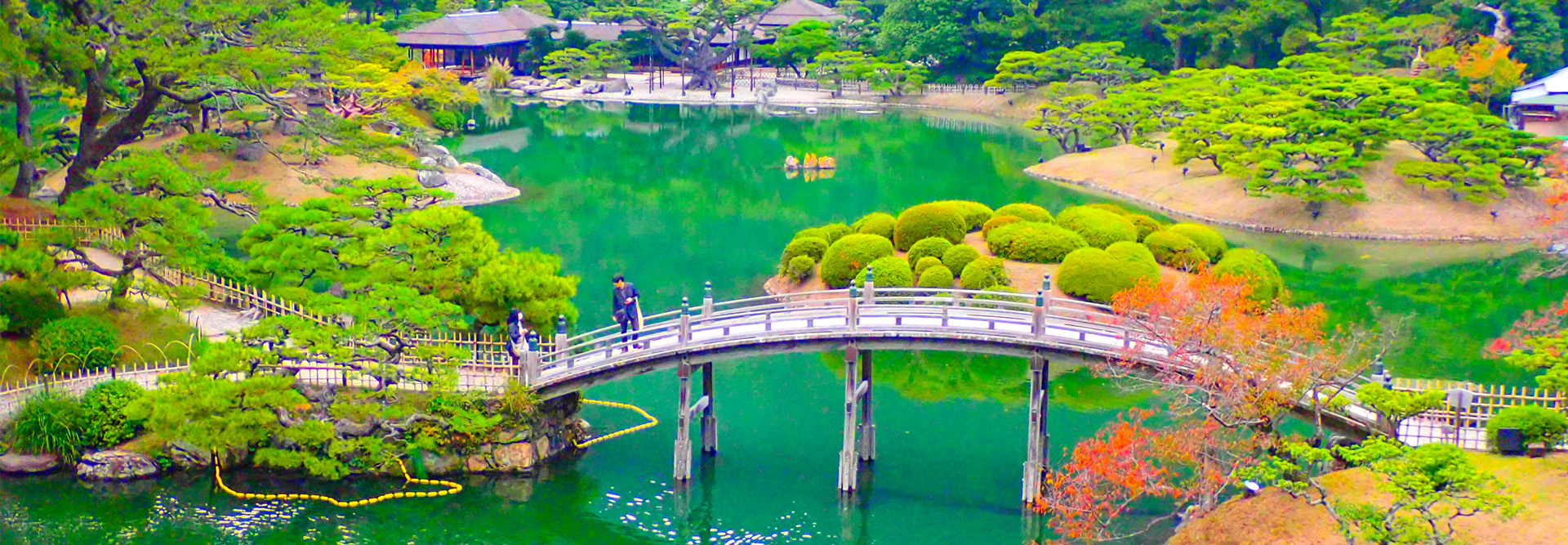
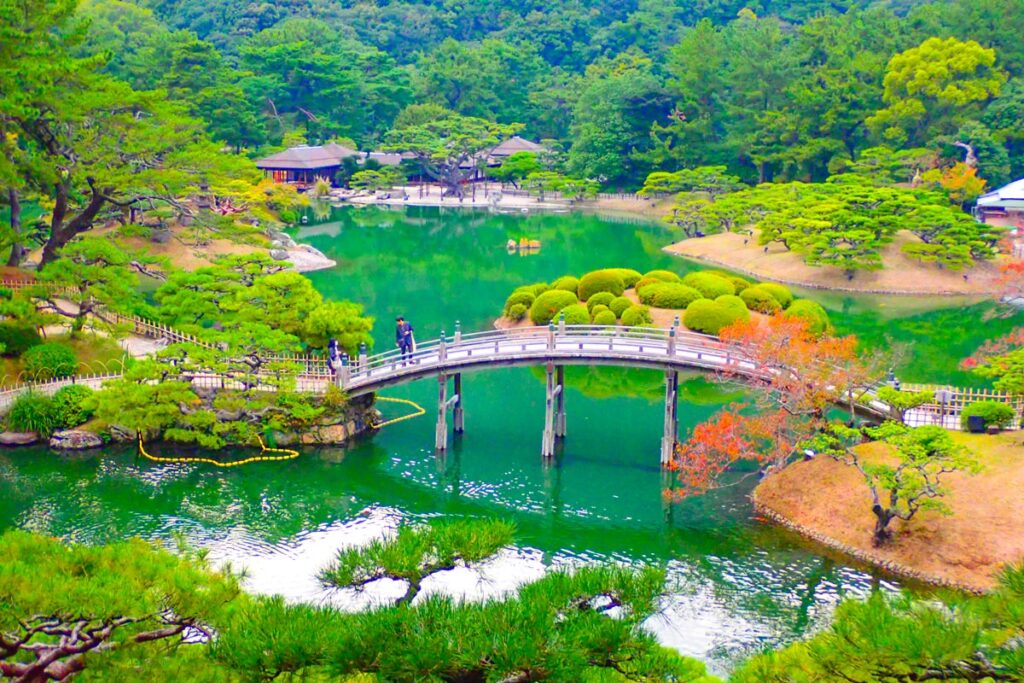
Ritsurin Garden in Takamatsu is one of Japan’s most celebrated feudal stroll gardens. Started in the early 17th century by local daimyo (feudal lords), it was refined over more than 100 years into the harmonious landscape visitors see today.
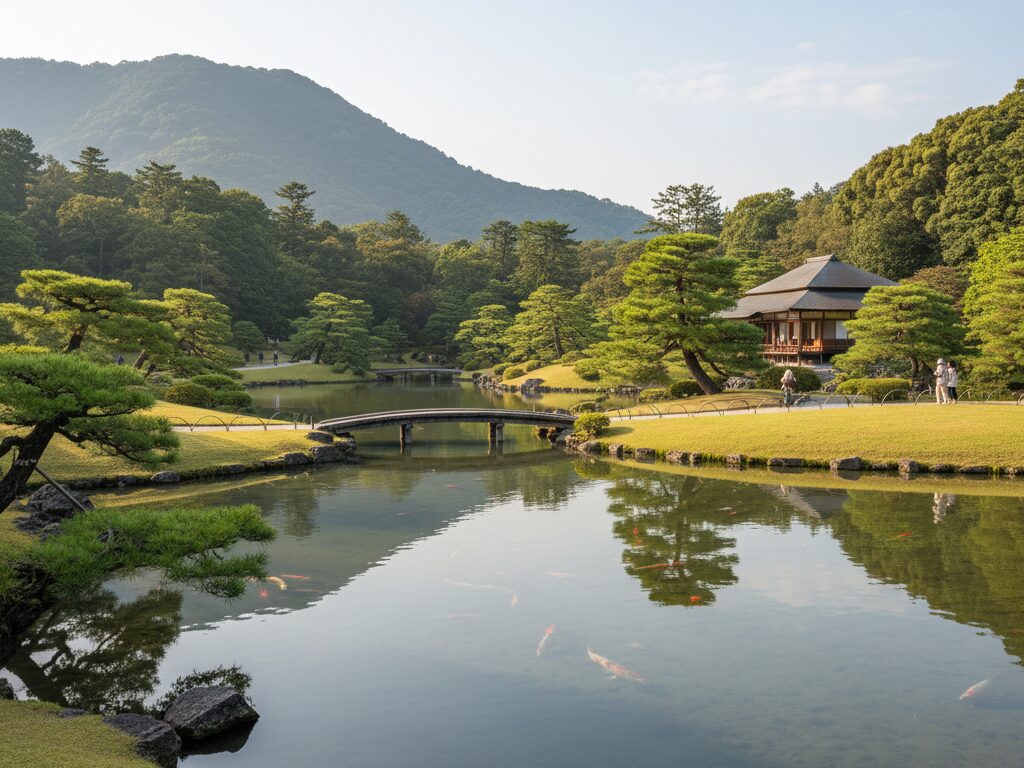
The garden is laid out at the foot of Mt. Shiun, with carefully shaped pine trees, koi-filled ponds, small hills and tea houses. Paths are designed so that each turn reveals a new perspective: a red bridge reflected in the water, a borrowed view of the mountain beyond, or a boat gliding quietly across the pond.
For first-time visitors to Japan, Ritsurin offers an accessible introduction to Japanese landscape aesthetics. Look for details like:
- Nurse pines trained into elegant curves through generations of care
- Borrowed scenery (shakkei), where distant mountains appear integrated into the garden composition
- Teahouses such as Kikugetsu-tei, where you can enjoy matcha and sweets while gazing over the pond
Arriving early in the morning often means softer light and fewer visitors. Audio guides and English pamphlets help you understand the garden’s history and design.
2. Explore Takamatsu Castle and the Waterfront
Near Takamatsu Station, Takamatsu Castle (also called Tamamo Castle) once guarded the sea approach to Shikoku. While the main keep is no longer standing, the surviving stone walls, turrets and moats tell the story of a rare seaside castle, where seawater flowed directly into the moats.
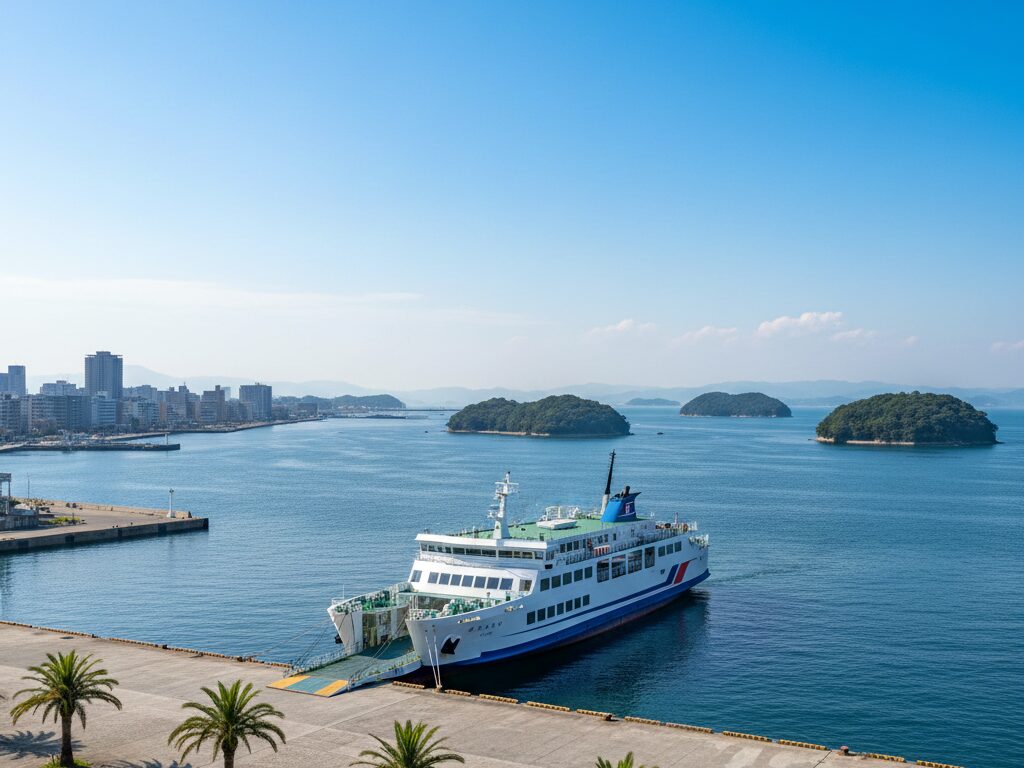
The castle grounds are now a pleasant park with walking paths and seasonal flowers. Combine a visit here with a stroll along the modern waterfront, where ferries depart for Kagawa’s famous art islands.
3. Island-Hop to Naoshima and Beyond
The islands of the Seto Inland Sea have transformed from quiet fishing communities into one of the world’s most intriguing destinations for contemporary art and architecture. Kagawa is your main jumping-off point.
Naoshima: Art Island Icon
Naoshima is the best-known of the art islands. From Takamatsu Port, regular ferries reach Naoshima’s ports in about 50–60 minutes.
Spread across the island are museums and installations created in harmony with the natural landscape:
- Chichu Art Museum: Built mostly underground to minimize its visual impact on the environment, this museum showcases works by Claude Monet, James Turrell and Walter De Maria in spaces designed to interact with natural light.
- Benesse House Museum: A combination of museum and hotel, where guests can stay overnight surrounded by contemporary artworks.
- Art House Project: Traditional houses in the Honmura area converted into site-specific works by contemporary artists, blending daily life and art.
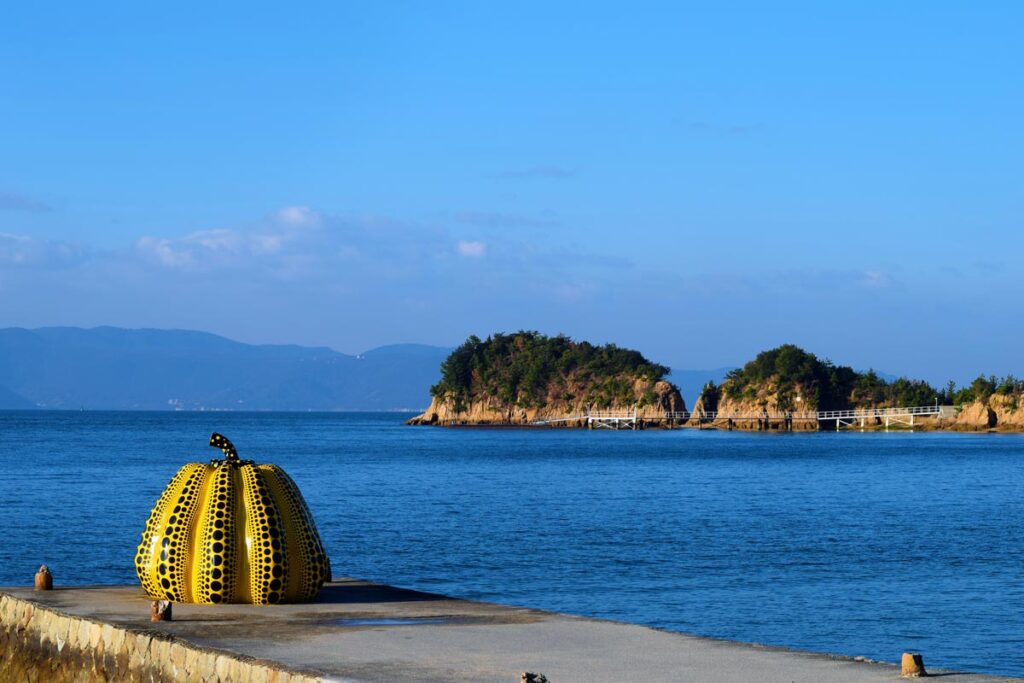
One of Naoshima’s most photographed sights is Yayoi Kusama’s yellow pumpkin sculpture set against the sea. Even if your interest in art is casual, the experience of traveling between small ports, walking quiet island roads and discovering artworks in unexpected corners is deeply memorable.
Other Art Islands
From Takamatsu, you can also reach other islands with their own character:
- Teshima: Home to the Teshima Art Museum, an ethereal, open concrete shell where water, light and wind become part of the artwork.
- Shodoshima: A larger island known for olive groves, scenic coastal roads and the Kankakei Gorge. It also hosts art installations during the Setouchi Triennale.
Island ferries have fixed schedules and can be busy on weekends and holidays. Check times in advance, and consider starting early to make the most of daylight.
4. Eat Your Way Through Sanuki Udon
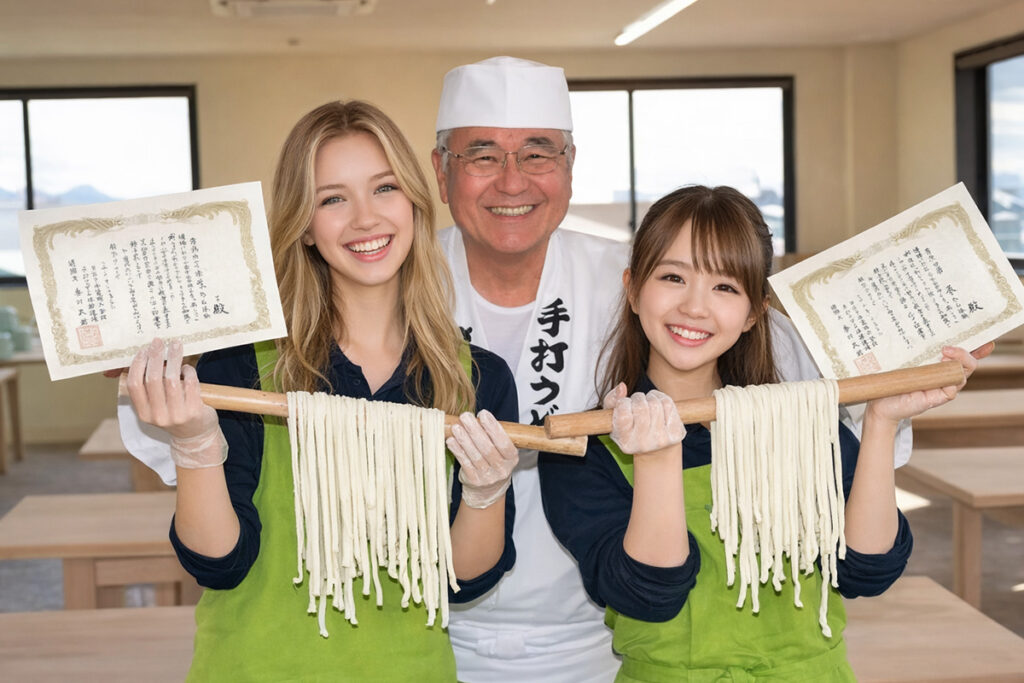
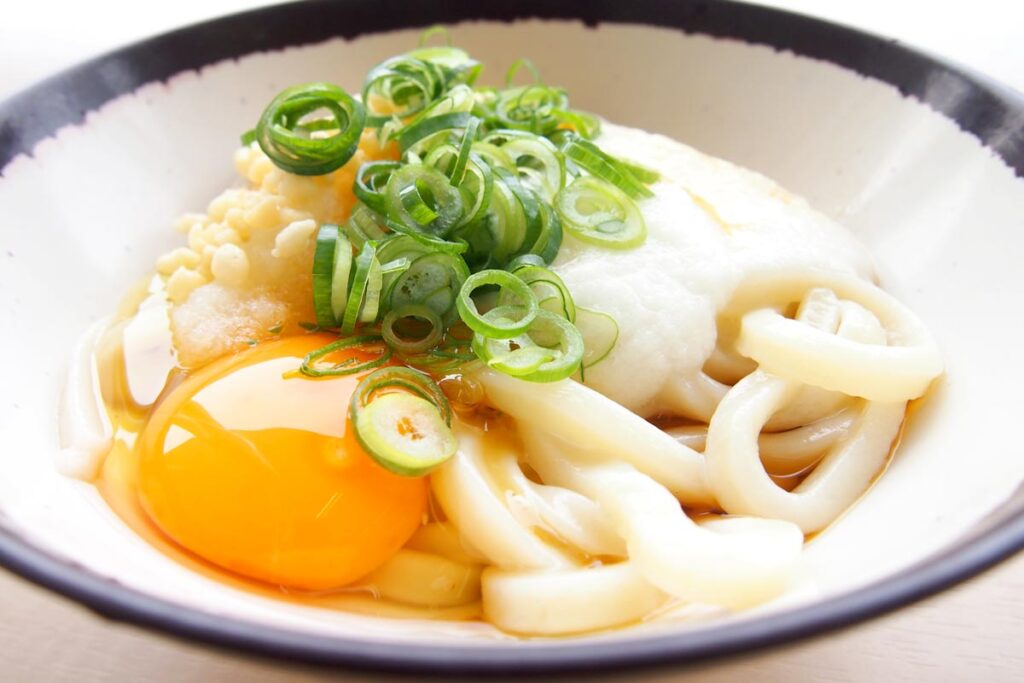
Kagawa is synonymous in Japan with Sanuki udon, a firm, chewy noodle style named after the region’s old province name, Sanuki. Locals eat it for breakfast, lunch and snacks, and a visit to Kagawa is not complete without trying at least a few bowls.
Udon Culture in Kagawa
Many udon shops in Kagawa are simple, self-service affairs. You choose your noodle type and size, add toppings from trays and pay at the end. This casual style reflects udon’s roots as an everyday food for farmers and workers.
Common ways to enjoy Sanuki udon include:
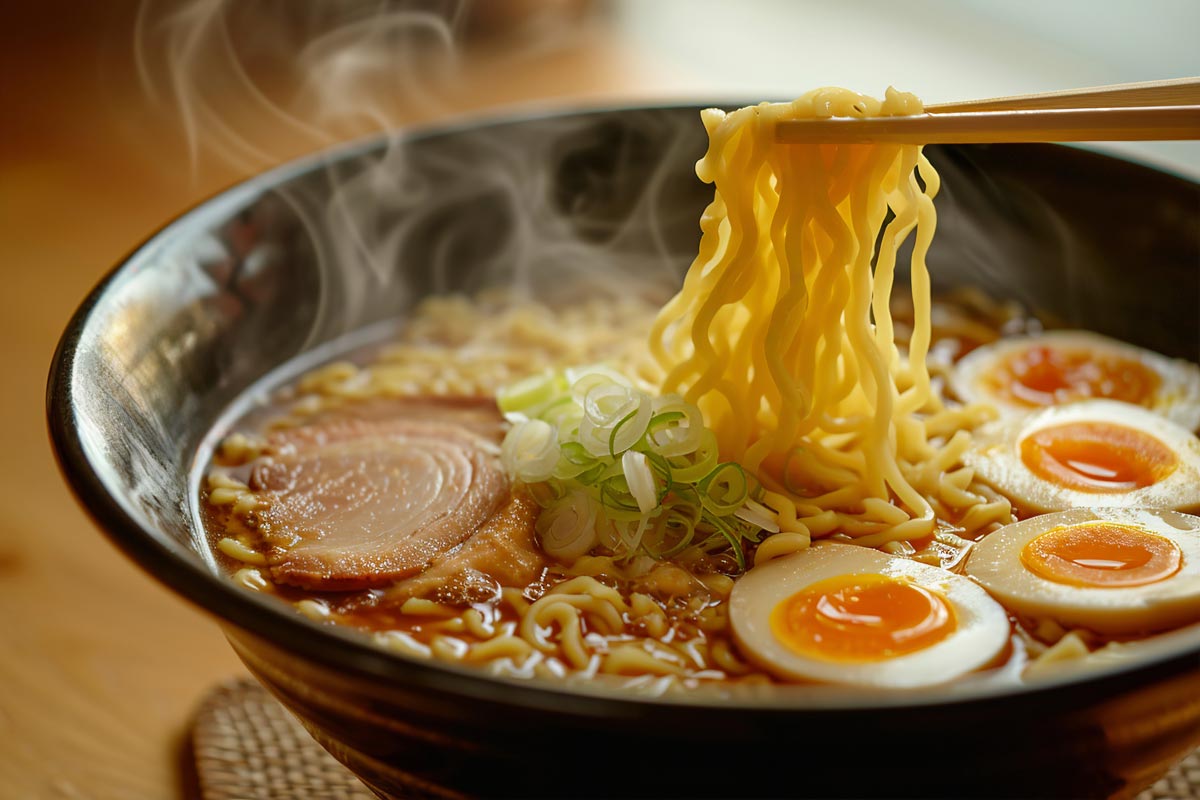
- Kake udon: Hot noodles in a light soy-based broth, topped with spring onions and sometimes tempura bits.
- Bukkake udon: Noodles served with a concentrated sauce poured over, often eaten cold in summer.
- Kama-tama udon: Freshly boiled noodles topped with a raw egg and soy-based sauce, stirred together at the table.
- Zaru udon: Chilled noodles served on a bamboo tray with a dipping sauce.
For many visitors, part of the fun is following local recommendations or guide maps to small, out-of-the-way shops. These might be in converted barns, side streets or even semi-industrial areas. Don’t be put off by humble exteriors; often these are the places locals line up for.
Ordering Tips
Even if you don’t speak Japanese, ordering udon is straightforward:
- Indicate size by saying shō (small), chū (medium) or dai (large), or hold up fingers.
- Point to sample photos or plastic models often displayed at the counter.
- After getting your bowl, move along the line to choose tempura or side dishes, then pay at the end.
Many shops offer free water or tea, and it is normal to return your tray and dishes to a designated area when finished.
5. Discover Kotohira-gu Shrine
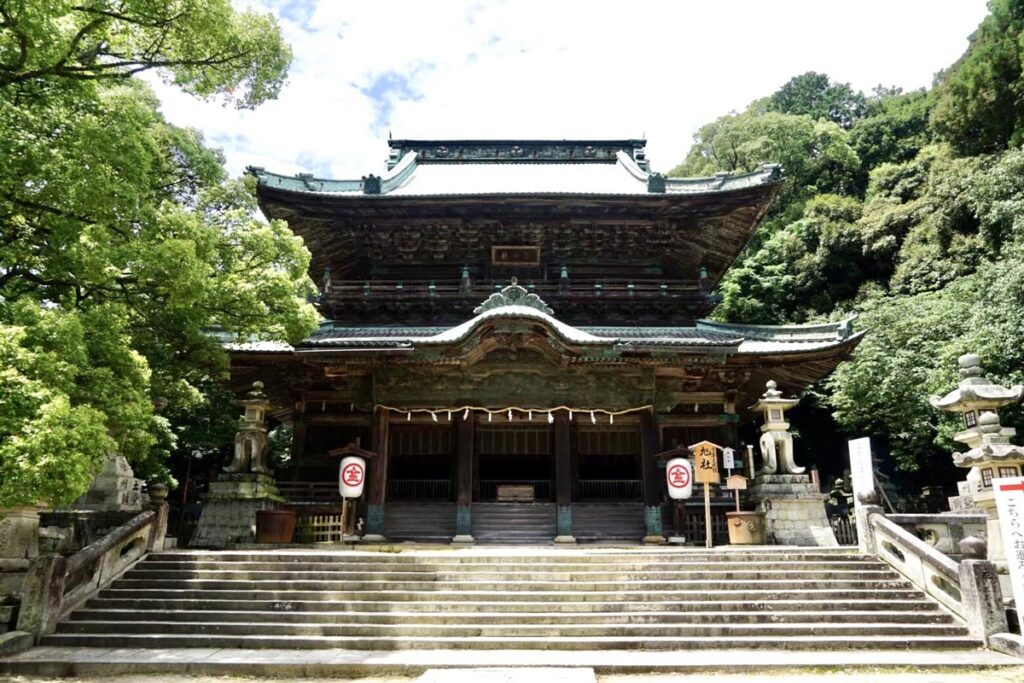
Though just over the border in neighboring prefecture Ehime geographically, many visitors base themselves in Kagawa to visit Kotohira-gu (often called Konpira-san) due to convenient rail links. This historic shrine, perched on a hillside, has long been a place of worship for seafarers and travelers.
The approach involves climbing hundreds of stone steps through atmospheric streets of traditional inns and souvenir shops. Reaching the main shrine buildings rewards you with sweeping views and a sense of accomplishment. For many Japanese people, making the pilgrimage to Konpira-san at least once is a lifelong wish.
Suggested Itineraries for First-Time Visitors
Two-Day Kagawa Highlights
Day 1: Takamatsu and Ritsurin Garden
- Arrive at Takamatsu and drop luggage at your hotel.
- Spend the morning wandering Ritsurin Garden, pausing for tea.
- Afternoon visit to Takamatsu Castle and waterfront.
- Dinner at a local Sanuki udon shop.
Day 2: Naoshima Art Island
- Early ferry from Takamatsu to Naoshima.
- Explore Chichu Art Museum, Benesse House and Art House Project.
- Return to Takamatsu in the early evening, or stay overnight on the island if you can secure accommodation.
Three Days with Extra Island Time
Add a third day to visit Teshima or Shodoshima, or to make a day trip to Kotohira-gu for the shrine climb and town stroll.
Where to Stay in Kagawa
Most first-time visitors base themselves in or near Takamatsu Station. This area offers easy access to trains, buses and ferries, plus plenty of restaurants and shops.
- Business hotels: Clean, compact and good value, ideal for travelers spending most of the day exploring.
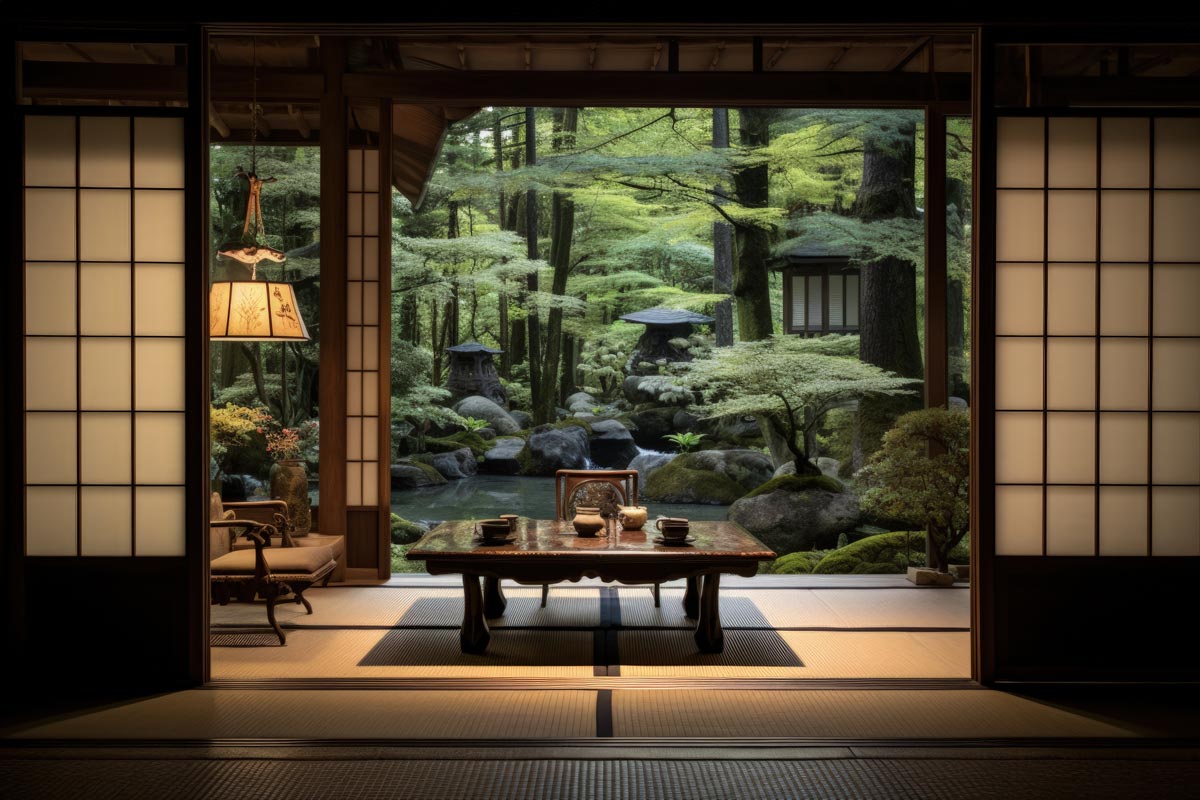
- Ryokan (traditional inns): A chance to experience tatami rooms, futon bedding and Japanese-style meals. Look for ryokan in Takamatsu or nearby onsen towns.
- Island stays: On Naoshima and other islands, small guesthouses and lodgings offer simple but atmospheric stays. Book well in advance, especially during holidays and art festival periods.
Getting Around Kagawa
Kagawa’s compact size makes it relatively easy to move between major sights, though you may need to combine different transport modes.
- Trains: JR lines connect Takamatsu with other parts of Shikoku, while private lines and local trains reach nearby towns.
- Buses: City buses serve Takamatsu and major attractions. Timetables may have limited English, but staff can often help.
- Ferries: Essential for reaching Naoshima, Teshima and Shodoshima. Leave yourself margin time to catch return boats.
- Rental car: Helpful if you want to explore rural areas or Shodoshima in depth. International Driving Permits are required.
Cultural Tips for Visiting Kagawa
Kagawa shares many customs with the rest of Japan, and following a few basic courtesies will make your visit smoother.
- At temples and shrines, follow the local pattern: bow slightly at the entrance, purify hands and mouth at the water basin before approaching the main hall, and avoid loud voices.
- In gardens and historical sites, stay on designated paths and avoid touching moss or delicate plants.
- In udon shops, it is fine to slurp your noodles; this is considered normal and even a sign of enjoyment.
- Cash is still useful in small shops and older eateries, though contactless payment is gradually spreading.
Outside major art museums, English signage can be limited. Downloading offline maps and translation apps will help you navigate smaller towns and bus systems.
Why Add Kagawa to Your First Japan Trip?
For many travelers, the most memorable moments in Japan happen away from the busiest city centers. Kagawa offers a chance to experience that quieter side without sacrificing convenience. You can wander a centuries-old garden in the morning, stand before cutting-edge art in the afternoon and finish the day with a simple, perfect bowl of udon shared with locals.
Whether you are weaving Kagawa into a classic Tokyo–Kyoto–Osaka route or dedicating more time to Shikoku, this small prefecture rewards curiosity with a rich blend of history, cuisine, nature and contemporary creativity.

Access Map
Recommended spots in Kagawa
Ritsurin Garden
Sanuki Udon Tour
Kotohira-gu Shrine
Naoshima Island
Kagawa Useful Link