



Kansai Airport Access
Kansai Airport Access Guide for First-Time Visitors to Japan
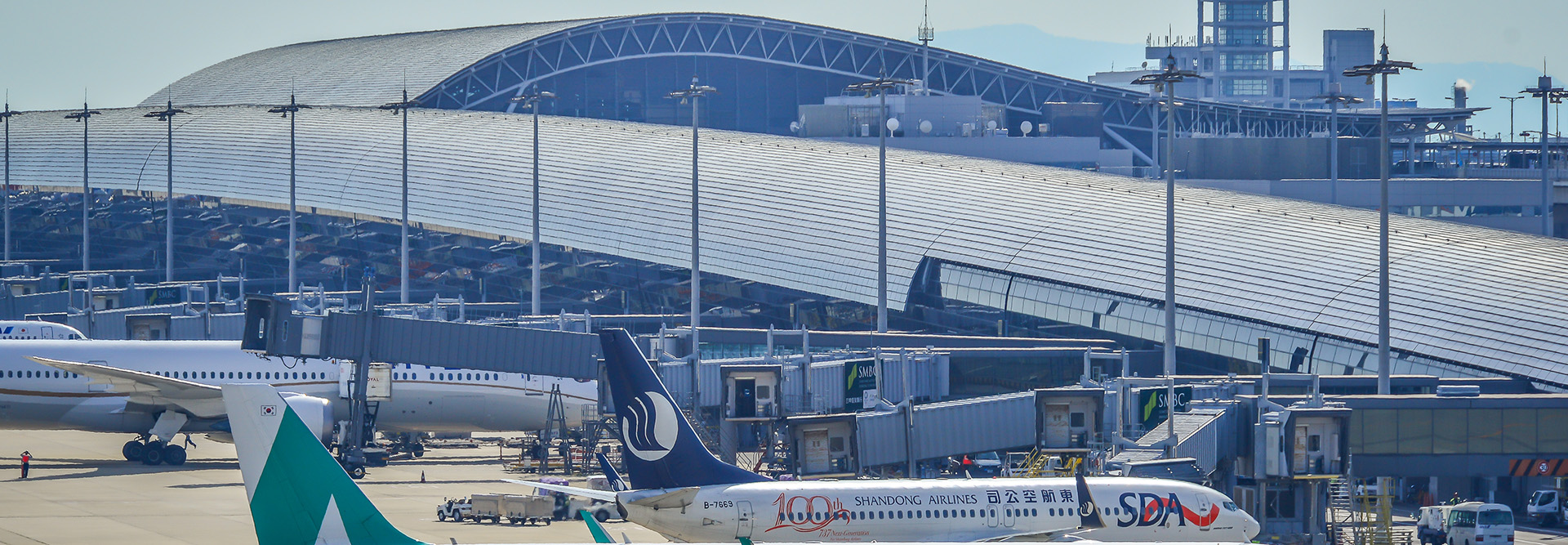
Kansai International Airport (KIX) is the main gateway to western Japan, serving Osaka, Kyoto, Nara, Kobe and Wakayama. Built on an artificial island in Osaka Bay, it can feel remote on a map, but the access into the city is fast, frequent and easy to understand once you know your options.
This guide explains the main ways to travel between Kansai Airport and the major cities of the region, how to choose the best route for your itinerary and budget, and what to expect on arrival as a first-time visitor to Japan.
Understanding Kansai Airport and Its Transport Hubs
Kansai Airport has two terminals. Most international flights use Terminal 1, a large, modern building with direct access to trains and buses. Terminal 2 serves mainly low-cost carriers and is connected to Terminal 1 by a frequent free shuttle bus (about 10 minutes).
All public transport into Kansai departs from around Terminal 1:
- Train station: JR (Japan Railways) and Nankai Railway share a station directly connected to the terminal via a short, covered walkway.
- Limousine buses: Depart from clearly signed bus stops outside arrivals.
- Taxis and ride services: Available 24 hours, but relatively expensive for long distances.
On arrival, follow the signs for Trains or Buses after customs. English signage is clear, and staff are used to assisting international travelers.
Main Destinations from Kansai Airport
Most visitors head from Kansai Airport to one of four main areas:
- Osaka – Japan’s lively food capital, closest major city to the airport.
- Kyoto – historic city of temples, gardens and traditional culture.
- Nara – compact ancient capital, perfect for day trips.
- Kobe – port city west of Osaka, known for steak and harbor views.
Each has multiple access routes. The best option depends on your arrival time, hotel location, budget and whether you carry a lot of luggage.
Train Access from Kansai Airport
Trains are usually the fastest and most convenient way to leave Kansai Airport. There are two main operators:
- JR West (Japan Rail): connects to Osaka Station, Kyoto, Kobe and Nara.
- Nankai Railway: connects directly to southern Osaka, including Namba.
JR Haruka Limited Express
The Haruka Limited Express is the premium and most comfortable JR train from Kansai Airport, ideal if you are heading to Osaka Station (Umekita area), Shin-Osaka, Kyoto or beyond.
- Destinations: Tennoji, Shin-Osaka, Kyoto and some services beyond Kyoto.
- Time: Approx. 35 min to Tennoji, 50 min to Shin-Osaka, 80 min to Kyoto.
- Cost: More expensive than local JR trains, but still good value for the speed and comfort.
- Seats: Both reserved and non-reserved cars. Reserved is recommended at busy times or with heavy luggage.
The Haruka has luggage racks and overhead space. Announcements and electronic signboards are in English as well as Japanese, making it stress-free for first-time visitors.
JR Kansai Airport Rapid Service
The Kansai Airport Rapid Service is a regular commuter-style JR train connecting Kansai Airport with central Osaka. It is cheaper than the Haruka but slower and can be crowded at peak times.
- Destinations: Tennoji, Osaka Station, Kyobashi and other stops on the Osaka Loop Line.
- Time: Around 65–70 minutes to Osaka Station.
- Cost: Cheaper than the Haruka; no seat reservations.
- Best for: Budget-conscious travelers going to central Osaka who do not mind standing or a longer ride.
This is a commuter train, so there are no reserved seats and limited luggage space. Try to avoid rush hours if you have big suitcases.
Nankai Railway: Rapi:t and Airport Express
Nankai Railway is often the best option if your accommodation is in or near Namba, one of Osaka’s main entertainment and transport hubs.
Nankai Rapi:t Limited Express
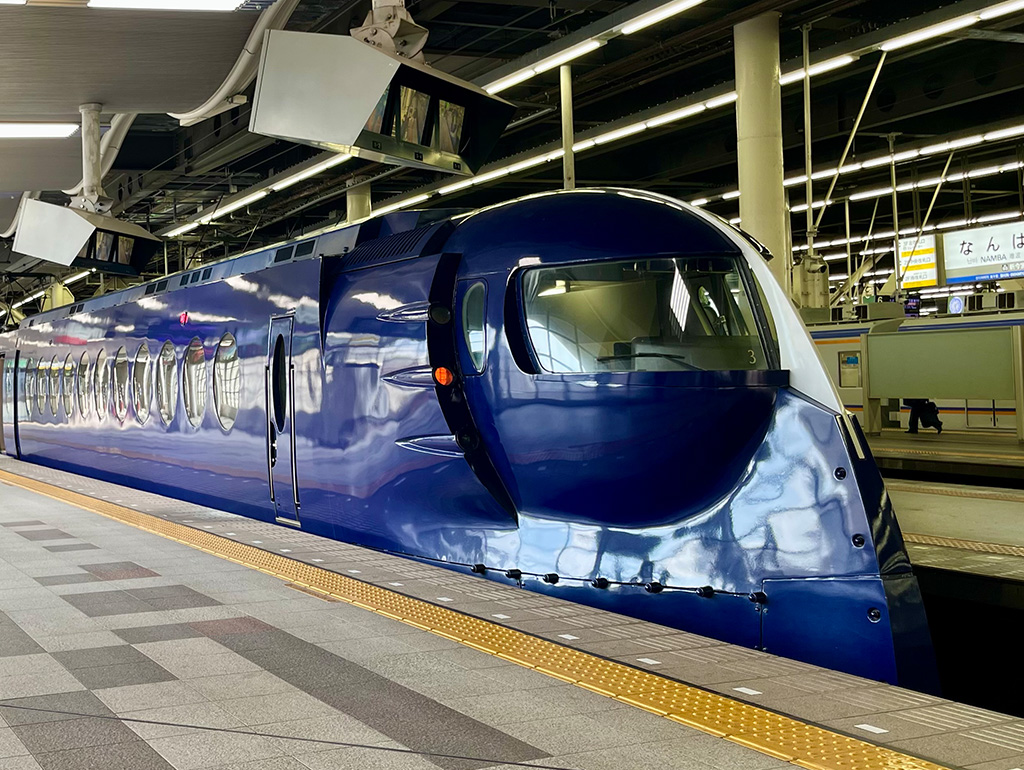
The Rapi:t is a distinctive, futuristic blue limited express that runs non-stop or with very few stops between Kansai Airport and Namba.
- Time: About 35–40 minutes to Namba.
- Cost: Slightly more expensive than the Nankai Airport Express but still reasonable.
- Seats: All reserved seats, with comfortable recliners and luggage areas.
This is an excellent choice if you want an easy, direct ride into one of Osaka’s most popular districts, close to Dotonbori, Shinsaibashi and many hotels and guesthouses.
Nankai Airport Express
The Nankai Airport Express is a regular commuter train linking Kansai Airport and Namba.
- Time: Around 45–50 minutes to Namba.
- Cost: Cheaper than Rapi:t.
- Seats: Unreserved, typical commuter layout.
It is a good budget option if you arrive outside of rush hours and are comfortable finding a space with your luggage.
Bus Access from Kansai Airport
Airport limousine buses offer direct services to major hotels and city centers in Osaka, Kyoto, Kobe, Nara, Wakayama and other destinations. They can be more convenient than trains if your hotel is far from the station or if you prefer not to transfer with luggage.
- Comfort: Reserved seats, reclining chairs, air-conditioning and luggage stored in the hold.
- Time: Travel time depends on traffic; generally 60–90 minutes to central Osaka, 1.5–2 hours to Kyoto.
- Cost: Comparable to, or sometimes slightly higher than, train fares.
Tickets can be bought at airport bus counters or vending machines near the bus stops. Staff speak at least basic English and can help you choose the right bus for your hotel or area. Keep your ticket until the end of the ride, as the driver may check it when you board or alight.
Taxi and Private Transfer Options
Taxis are available 24 hours a day at Kansai Airport. They are clean, reliable and safe, but the cost into central cities can be high because of the distance and highway tolls.
- To central Osaka: Typically 15,000–20,000 yen or more, depending on traffic.
- To Kyoto: Significantly more, often not cost-effective for solo travelers.
For families, groups with heavy luggage or late-night arrivals when trains are limited, a pre-booked private transfer or shared shuttle can be a convenient alternative. Many services allow advance online booking in English, with a driver waiting at the arrival hall with a signboard.
Choosing the Best Route for Your Destination
To Osaka (Namba, Umeda and Central Areas)
- Staying in Namba, Dotonbori or Shinsaibashi: Use Nankai Rapi:t or Nankai Airport Express directly to Namba.
- Staying near Osaka Station or Umeda: Use JR Haruka to Osaka Station (via the new Umekita area) or the JR Kansai Airport Rapid. Limousine buses also serve major hotels in the area.
- On a tight budget: Choose JR Kansai Airport Rapid or Nankai Airport Express, depending on your final station.
To Kyoto
The smoothest way to Kyoto from Kansai Airport is usually the JR Haruka Limited Express, which runs directly to Kyoto Station.
- Fastest and easiest: JR Haruka (direct, comfortable, clear English announcements).
- Alternative: Limousine bus to Kyoto Station or major hotels; can be easier if you prefer not to navigate trains with luggage.
- Cheapest: Combinations of local JR and private lines are possible but involve transfers and are not recommended for first-time visitors with luggage.
To Nara
Nara is slightly less direct but still easy to reach.
- Via JR: Take the JR Haruka or Kansai Airport Rapid to Tennoji, then change to a JR Yamatoji Line rapid train to Nara.
- Via Kintetsu Railway: We recommend taking the Limousine Bus or Nankai Electric Railway to Namba and transferring to the Kintetsu Line, but if it's your first time, the JR route may be easier to understand.
If you are staying near Nara Station, the JR route is straightforward. If you are staying near Kintetsu Nara Station (often more central Nara Park), consider transferring at Namba and using the Kintetsu Railway.
To Kobe and Other Destinations
- Kobe: You can reach Kobe by JR (via Osaka or Shin-Osaka) or by direct limousine bus services. If you are staying near Sannomiya Station, bus or JR with a single transfer is usually easiest.
- Wakayama: JR trains and some buses connect Kansai Airport to Wakayama City and coastal areas, useful if you plan to explore the Kii Peninsula or pilgrimage routes later.
Tickets, IC Cards and Rail Passes
Buying Train Tickets at Kansai Airport
Both JR and Nankai railways have ticket counters and machines at the airport station. Staff can assist you in English to buy the right ticket or pass. Look for signs reading JR Ticket Office or Nankai Ticket Counter.
Ticket machines also offer English-language menus. You can pay by cash or credit card for most services, though it is wise to have some yen in cash on arrival.
Using IC Cards
IC cards such as ICOCA, Suica or Pasmo are rechargeable smart cards you can tap to ride most trains, subways and buses across Japan.
- You can buy or charge IC cards at the airport station.
- Tap in at the ticket gate when you enter, and tap out when you exit.
- They are convenient if you plan to travel around Osaka, Kyoto and other cities without calculating fares each time.
Some special limited express trains (like Haruka or Rapi:t) require both an IC card fare and a separate seat/express ticket, so follow staff instructions or posted signs.
Regional Rail Passes
Many visitors use regional passes to save money. Examples include:
- JR West Kansai Area Pass
- JR West Kansai–Hiroshima Area Pass
- Japan Rail Pass (nationwide)
- Various Nankai + Osaka Metro passes
Depending on the pass, a ride on the Haruka or Nankai lines from Kansai Airport may be included or discounted. Always confirm in advance whether your pass covers:
- Airport lines (Kansai Airport–Osaka/Kyoto).
- Limited express surcharges (for Haruka, Rapi:t etc.).
Airport information counters and pass exchange offices can check details and help you plan your first journey.
What to Expect When You Arrive
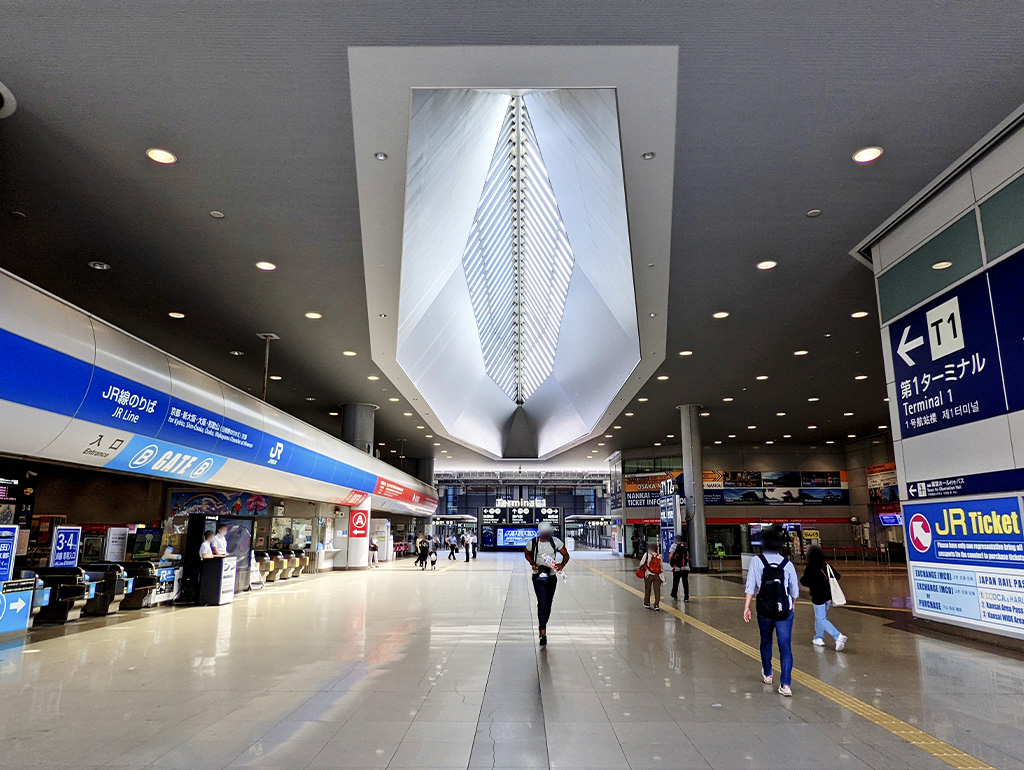
After immigration and customs, you will step into the arrivals hall of Terminal 1. Here you will find:
- Currency exchange and ATMs for withdrawing yen.
- Tourist information desks with free maps and multilingual staff.
- SIM card and pocket Wi-Fi counters so you can get online immediately.
- Convenience stores (such as Lawson or FamilyMart) for snacks, drinks and basic necessities.
From the arrivals hall, follow overhead signs towards Train or Bus. The path to the train station is indoors and step-free, suitable for luggage and strollers.
Practical Tips for a Smooth Airport Transfer
- Keep your hotel address handy: Have it printed or saved on your phone in both English and Japanese if possible.
- Check last train times: If you arrive late at night, confirm that trains to your destination are still running, or plan for a bus or taxi.
- Travel light if you can: Japanese trains are punctual but can be crowded, especially around commuting hours.
- Consider luggage delivery: Takkyubin (baggage delivery) services can send your suitcase to your hotel, allowing you to travel into the city with only a small bag.
- Be mindful of manners: Keep your voice low on trains, switch your phone to silent mode and avoid blocking doors with luggage.
Making Kansai Your Gateway to Western Japan
Kansai International Airport is more than just a point of arrival; it is a well-connected hub for exploring western Japan. With direct access to Osaka’s neon streets, Kyoto’s centuries-old temples, Nara’s deer-filled parks and Kobe’s ports and mountains, you can step off the plane and quickly reach a wide range of cultural and natural attractions.
By understanding your options for airport access in advance and choosing the route that best matches your accommodation, budget and travel style, your first journey in Japan can be both smooth and memorable. Once you are settled at your hotel, the rest of Kansai’s rail and bus network will be ready to take you deeper into one of Japan’s most fascinating regions.
Explore Other Transportation
Narita Airport Access
Haneda Airport Access
Kansai Airport Access