



Kibitsu Shrine
Kibitsu Shrine Japan Travel Guide for First-Time Visitors
Photos are for illustrative purposes only.
Set on a gentle hillside just outside Okayama City, Kibitsu Shrine (Kibitsu Jinja) is one of western Japan’s most atmospheric Shinto shrines. Famous for its long wooden corridor, rare architectural style, and legends that inspired the Momotaro (Peach Boy) folktale, it offers a quieter, more contemplative experience than many of Japan’s headline shrines.
For first-time travelers to Japan looking beyond the classic Tokyo–Kyoto route, Kibitsu Shrine is an ideal half-day trip: easy to reach, deeply traditional, and rarely crowded with international tourists.
Why Visit Kibitsu Shrine?
While Kyoto and Nara are overflowing with temples and shrines, Kibitsu Shrine stands out for several reasons:
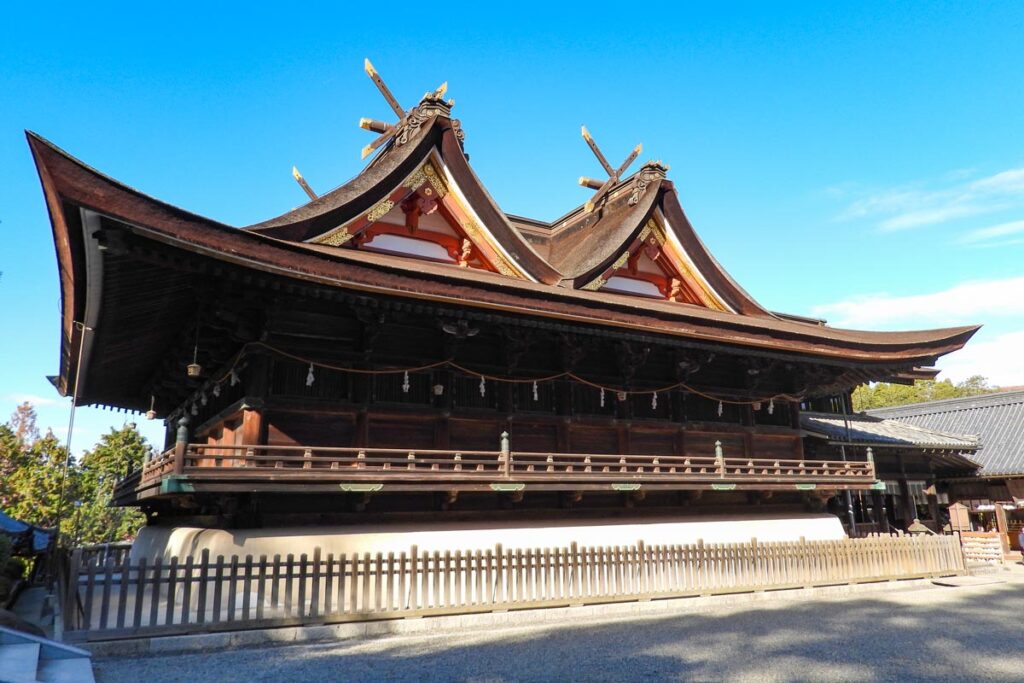
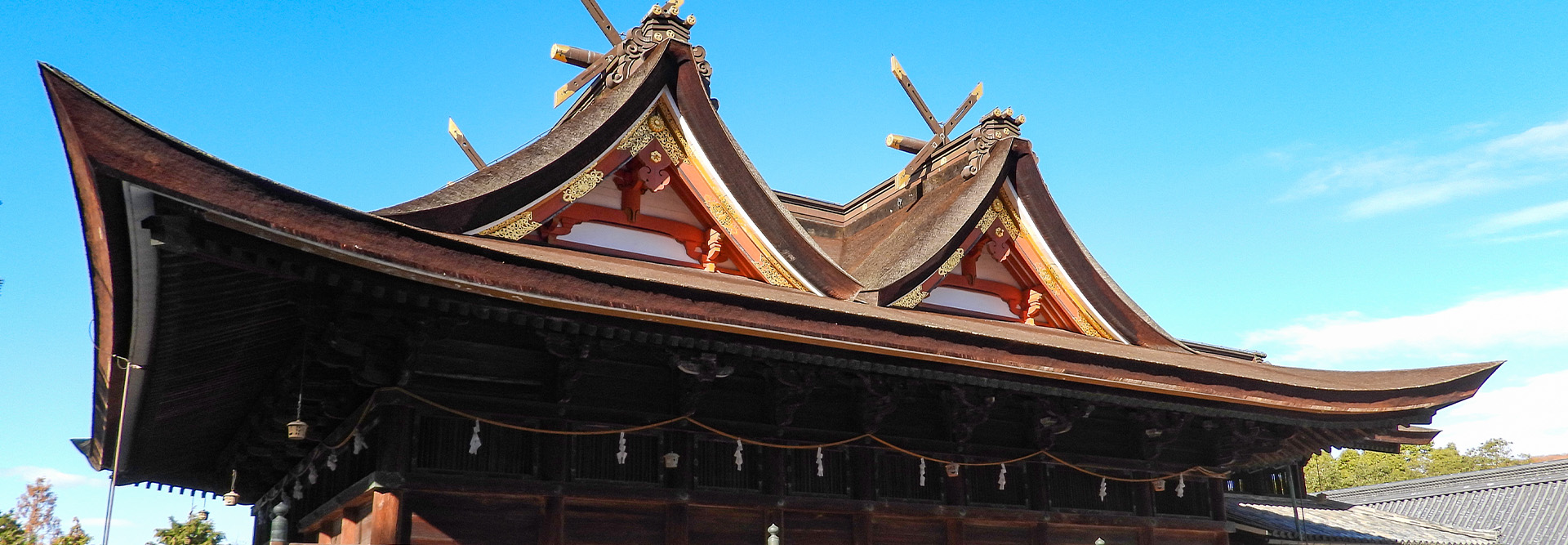
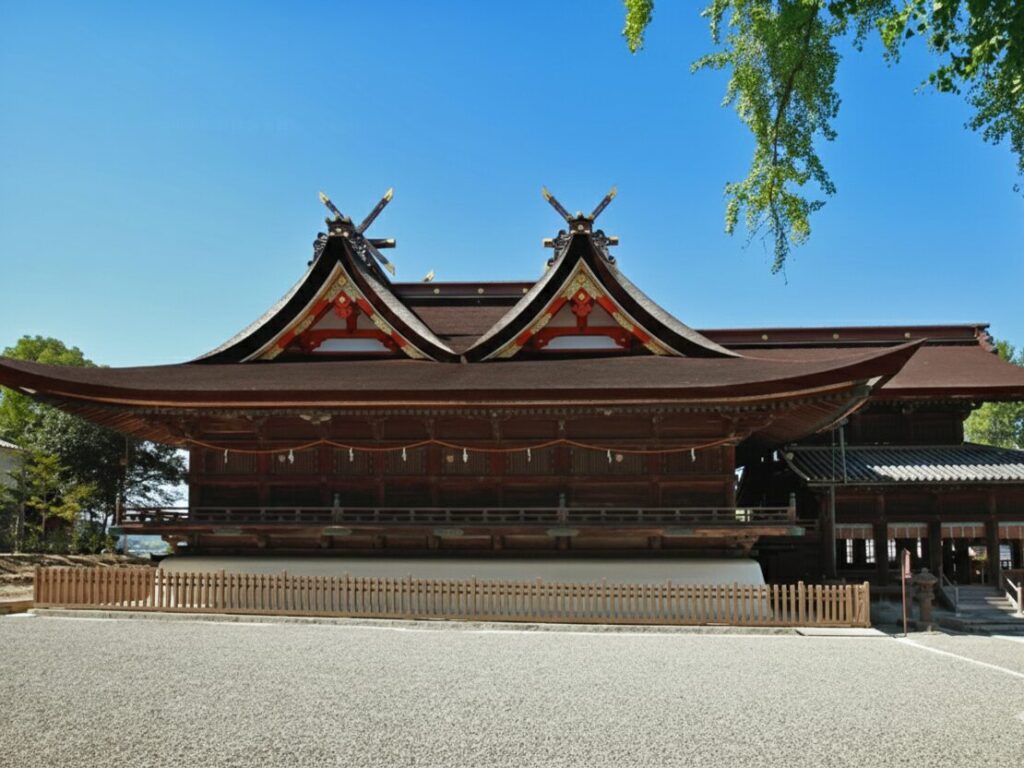
- Unique architecture: The main hall features the only surviving example of the hiyoku irimoya-zukuri style in Japan.
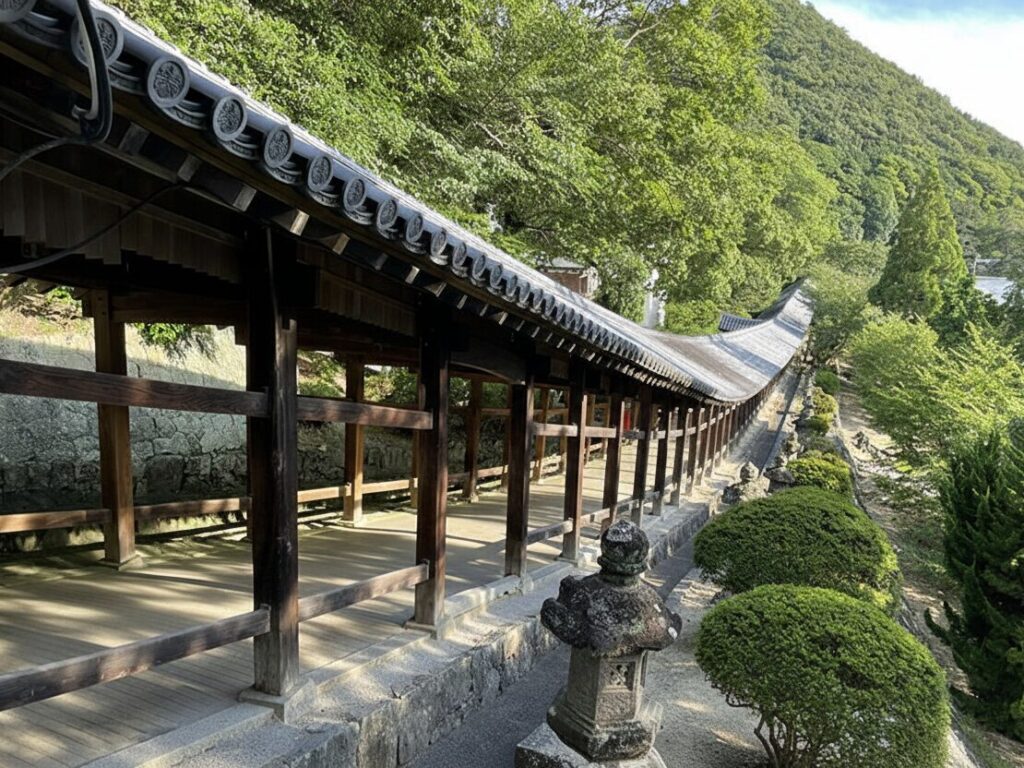
- Famous corridor: A 398-meter-long covered corridor gently climbs the hillside, creating a beautiful perspective in every season.
- Legendary roots: The shrine is linked to the story of Prince Kibitsuhiko-no-Mikoto, whose battles with an ogre inspired elements of the beloved Momotaro legend.
- Peaceful atmosphere: Compared with major shrines in Tokyo and Kyoto, Kibitsu is quiet and spacious, ideal for slow exploration.
Visiting Kibitsu Shrine gives you a deeper sense of how Japanese history, myth, and everyday worship intertwine in a living religious site.
A Brief History and the Momotaro Connection
Kibitsu Shrine’s origins stretch back over a thousand years, and it is dedicated to Kibitsuhiko-no-Mikoto, a semi-legendary prince credited with subduing a local ogre or demon. Over time, this local legend merged with the nationwide Momotaro (Peach Boy) folktale, one of Japan’s most famous children’s stories.
In the folktale, Momotaro is a boy born from a giant peach who sets off with a dog, monkey, and pheasant to defeat ogres on a distant island. In the Okayama area, locals associate this ogre-slaying hero with Prince Kibitsuhiko, whose spirit is enshrined at Kibitsu Shrine. While the story is mythologized, the shrine grounds keep the legend alive through statues, motifs, and local souvenirs themed around peaches and Momotaro.
Historically, Kibitsu Shrine was an important regional power, patronized by ruling clans and the imperial court. The current main buildings date from the early 15th century and are designated as National Treasures of Japan, recognizing their outstanding cultural value.
What Makes Kibitsu Shrine Architecturally Special
The Hiyoku Irimoya-zukuri Main Hall
Kibitsu Shrine’s main sanctuary is celebrated for its rare hiyoku irimoya-zukuri style — literally “paired gabled roof.” Instead of a single roof over the worship hall and inner sanctuary, the structure features two adjoining gabled roofs of equal height, creating a grand, double-roof silhouette when viewed from the side.
This layout blends the outer worship hall where visitors stand with the inner sanctuary where the deity is enshrined, symbolically bringing the human and divine spaces closer together. Even if you are not an architecture enthusiast, the building’s symmetry, richly painted details, and weighty cypress bark roof give it a dignified, almost fortress-like presence.
The 398-Meter Corridor
One of Kibitsu Shrine’s most striking features is its long covered corridor that stretches nearly 400 meters up the hillside. Built in the Edo period, the gently sloping walkway connects the main shrine area with subsidiary shrines and overlooks the surrounding countryside.
The corridor frames your view with regular wooden pillars, creating a changing pattern of light and shadow as you walk. In spring and autumn especially, the interplay of seasonal colors beyond the railings makes this a favorite scene for photographers and painters.
For visitors, the corridor is more than just a passageway. Walking its length becomes a quiet, meditative experience, echoing the Shinto idea that approaching the deity should be a gradual, purifying journey rather than a sudden arrival.
Highlights to See at Kibitsu Shrine
Main Worship Hall (Haiden) and Inner Sanctuary (Honden)
After passing through the torii gate and purifying your hands and mouth at the water basin, you’ll arrive at the main worship hall. This is where most visitors offer their prayers. The richly decorated building, with its layered roofs and vermilion details, stands on a raised stone platform that emphasizes its importance.
Look closely and you may notice carved wooden details, painted crests, and metalwork that reflect the shrine’s long history and high status. The inner sanctuary, hidden from public view, is directly behind the worship hall and houses the enshrined deity.
The Long Corridor and Sub-Shrines
From the main precinct, you can enter the long covered corridor. As you walk upward, you’ll pass several smaller shrines dedicated to various kami (deities), each with its own character and blessings. Some are linked to safe childbirth, others to academic success or business prosperity.
Take your time strolling along the corridor. Stop occasionally to look back toward the main shrine or out over the surrounding town. On clear days you can enjoy surprisingly expansive views, a reminder that many major shrines were deliberately sited where they could watch over the lands and people below.
Seasonal Gardens and Surroundings
While Kibitsu Shrine is not primarily a garden destination, its grounds are quietly beautiful year-round:
- Spring: Plum blossoms and cherry trees add touches of soft pink, while fresh green leaves emerge along the corridor.
- Summer: The shade of the corridor and tall trees offers relief from the sun, and the shrine takes on a deep, lush green.
- Autumn: Maple foliage turns red and gold, particularly picturesque when framed by the corridor’s wooden pillars.
- Winter: On rare snowy days, the contrast of white rooftop dustings and dark wood creates a serene, almost monochrome beauty.
Because Kibitsu Shrine is less visited by tour groups, even peak seasons tend to feel calm compared with major temples in Kyoto.
How to Experience Kibitsu Shrine Respectfully
Basic Shinto Etiquette
You do not need to be religious to visit a Shinto shrine, but following a few simple customs will make your visit smoother and more meaningful:
- At the torii gate: Bow lightly before passing under the gate, as you are entering a sacred precinct.
- At the purification basin (temizuya):
- Take the ladle in your right hand and pour water over your left hand.
- Switch hands and pour water over your right hand.
- Pour a little water into your left hand to rinse your mouth (do not touch the ladle to your lips), then spit discreetly beside the basin.
- Hold the ladle vertically to let remaining water wash down the handle, then return it.
- At the main hall offering box:
- Throw a coin (often 5 yen is considered lucky) into the box.
- Bow deeply twice.
- Clap your hands twice, hold them together, and silently make your wish or prayer.
- Bow deeply once more.
Photography is generally allowed in outdoor areas, but avoid shooting inside buildings, during ceremonies, or where signs specifically prohibit it.
Omamori, Goshuin, and Small Rituals
Near the main hall, you’ll find a counter selling omamori (protective charms) for travel safety, health, relationships, and more. These make compact, meaningful souvenirs. It is customary not to open an omamori, as the blessings are believed to reside inside the cloth cover.
If you enjoy collecting cultural mementos, consider purchasing a goshuincho (shrine and temple stamp book) either here or at a major temple in Kyoto or Tokyo. At Kibitsu Shrine, you can receive a beautiful handwritten stamp (goshuin) that includes the shrine’s name and date of your visit, brushed by a shrine attendant and accompanied by a red seal.
Best Time to Visit Kibitsu Shrine
Kibitsu Shrine is open year-round, and each season has its charms. For most visitors:
- Late March to early April: Mild temperatures and cherry blossoms make this one of the most pleasant periods.
- Late October to late November: Autumn foliage along the corridor and surrounding hills is particularly photogenic.
- New Year period (early January): The shrine becomes lively as locals come for their first shrine visit of the year (hatsumode)—interesting to observe, but more crowded.
For a quieter experience, visit on a weekday morning. The soft light enhances the architecture, and you’re more likely to have the corridor and main hall area almost to yourself.
Getting to Kibitsu Shrine
Kibitsu Shrine is located in Okayama Prefecture, in Japan’s Chugoku region, and is easy to combine with a visit to Kurashiki or as a stop between Osaka and Hiroshima.
From Okayama Station
- Take the JR Kibi Line from Okayama Station to Kibitsu Station. The ride takes around 15–20 minutes.
- From Kibitsu Station, it is roughly a 10–15 minute walk to the shrine. The route is signposted in Japanese, and navigation apps work well; look for the shrine’s torii gates and wooded hill as you approach.
The JR Kibi Line is a local train, and your Japan Rail Pass covers this route. Trains are not as frequent as in major cities, so checking the timetable in advance is helpful.
From Osaka, Kyoto, or Hiroshima
- From Osaka or Kyoto: Take the Shinkansen (bullet train) to Okayama Station (about 45 minutes from Shin-Osaka, about 1 hour from Kyoto), then transfer to the JR Kibi Line.
- From Hiroshima: Take the Shinkansen to Okayama Station (about 35 minutes), then transfer to the JR Kibi Line.
This makes Kibitsu Shrine an excellent excursion if you are already passing through Okayama on a longer Shinkansen journey.
Practical Tips for First-Time Visitors
- Language: Signage is primarily in Japanese, with occasional English explanations. Basic English may be understood at the shrine office, but not guaranteed. Offline translation apps are very useful.
- Footwear: Wear comfortable walking shoes. The grounds are mostly level, but you will be walking the corridor’s gentle slope and possibly some stone steps.
- Weather: The corridor is covered, but the rest of the grounds are exposed. In summer, bring sunscreen and water; in winter, dress warmly, as the hilltop can feel colder.
- Food and drink: There are limited food options immediately around the shrine. Consider eating near Okayama Station or bringing a light snack for after your visit.
- Cash: Small purchases such as omamori and goshuin are often cash-only. Carry some coins and small bills.
- Time needed: Allow at least 60–90 minutes to explore comfortably, more if you like photography or quiet contemplation.
Combining Kibitsu Shrine with Nearby Attractions
To make the most of your day around Okayama, consider pairing Kibitsu Shrine with:
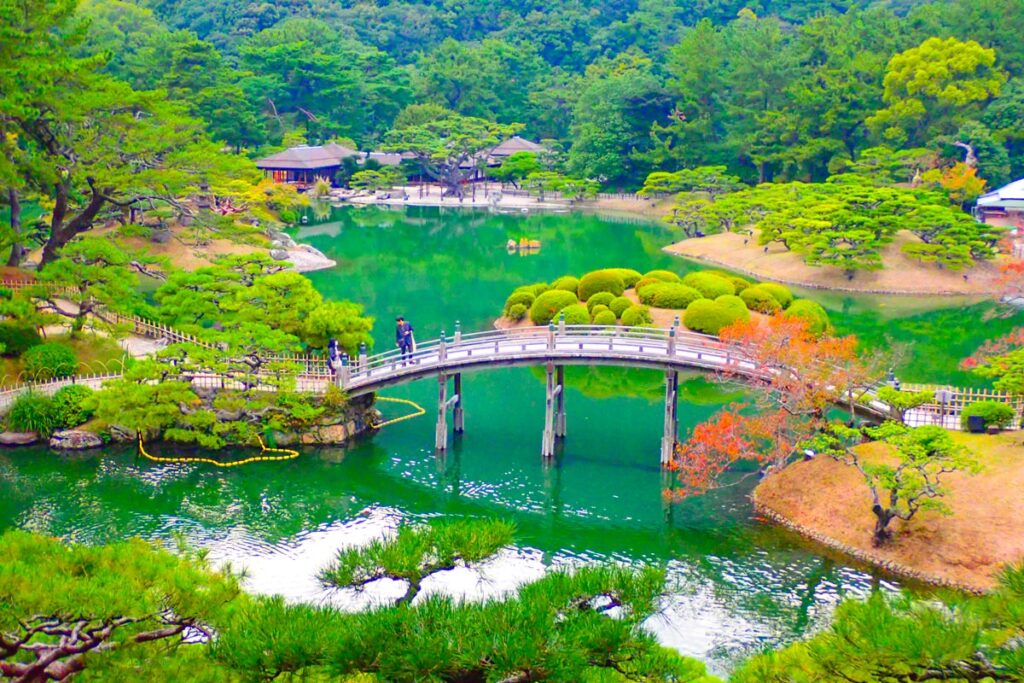
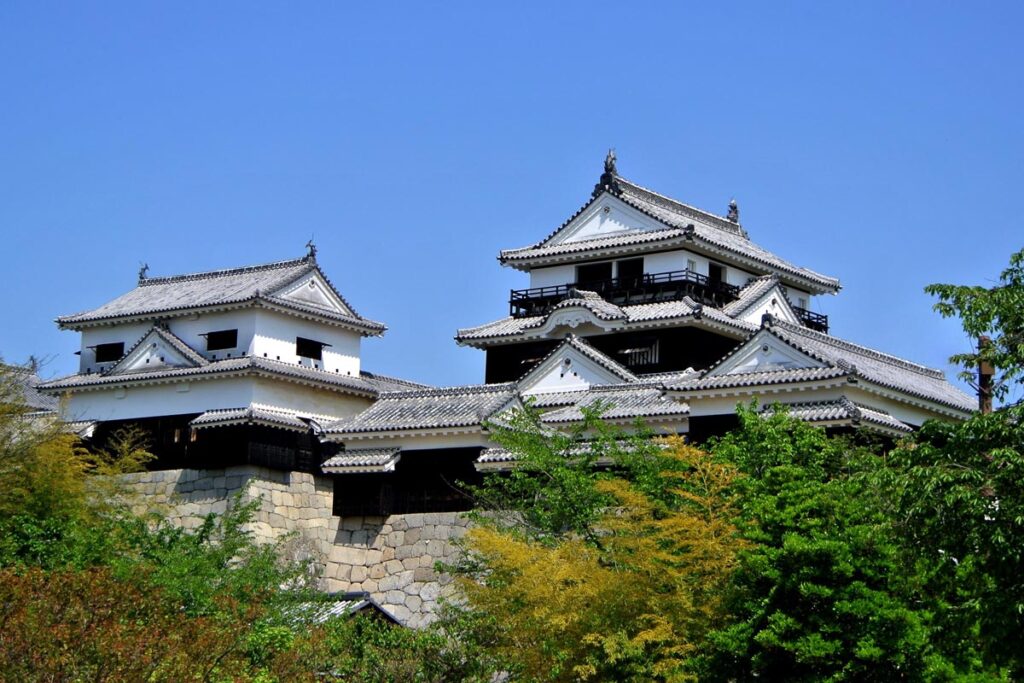
- Okayama Castle and Korakuen Garden: One of Japan’s three most famous landscape gardens, Korakuen offers classical ponds, lawns, and views of the black-walled Okayama Castle.
- Kurashiki Bikan Historical Quarter: Accessible by train from Okayama, this preserved canal district with white-walled storehouses, bridges, and small museums is ideal for an afternoon stroll.
- Kibi Plain cycling route: The rural area between Kibitsu and Soja is dotted with shrines, temples, and farm fields. Renting a bicycle and following the signposted Kibi Plain route offers a relaxing taste of the Japanese countryside.
By tying Kibitsu Shrine into a broader Okayama itinerary, you can experience both historic architecture and the landscape that shaped its legends.
Is Kibitsu Shrine Worth It for First-Time Visitors to Japan?
If your schedule is extremely tight and focused only on Tokyo and Kyoto, you may hesitate to add another city. However, for travelers who have at least one extra day and an interest in quieter, less commercialized cultural sites, Kibitsu Shrine is a rewarding choice.
Here, you can walk through a corridor that seems to stretch into eternity, stand before a rare and dignified shrine hall, and touch the living roots of one of Japan’s most beloved folktales. It offers a more intimate connection with Japanese spirituality and everyday worship than many of the country’s better-known attractions.
For first-time visitors ready to look a little beyond the obvious, Kibitsu Shrine in Okayama is an inviting doorway into the deeper layers of Japan’s culture, legends, and landscapes.

Access Map
Recommended spots in Okayama
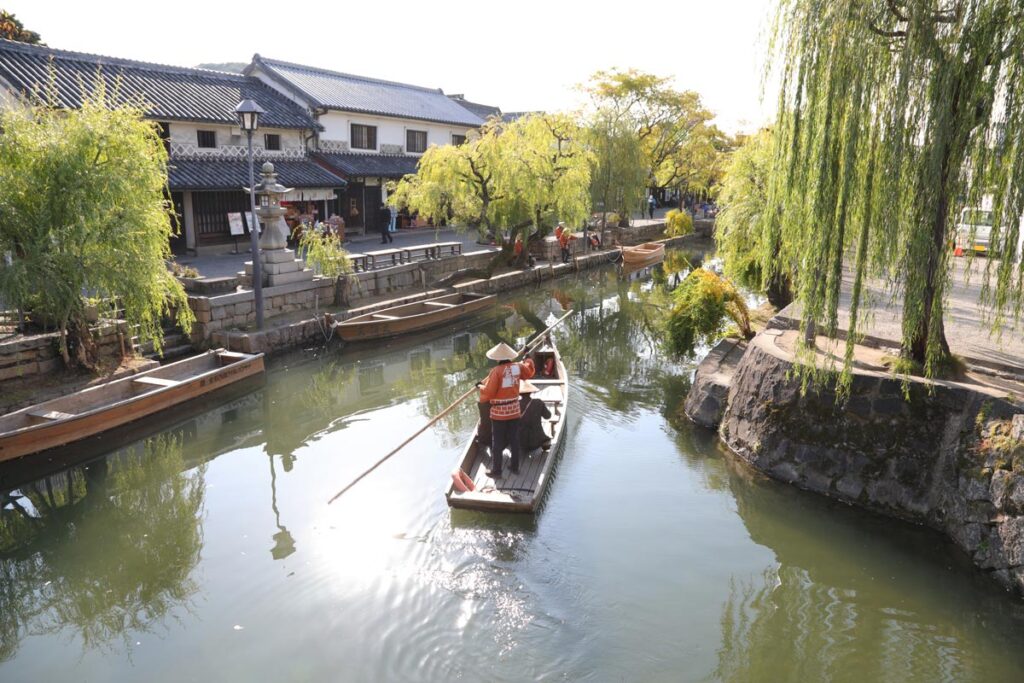
Kurashiki Bikan Historical Quarter
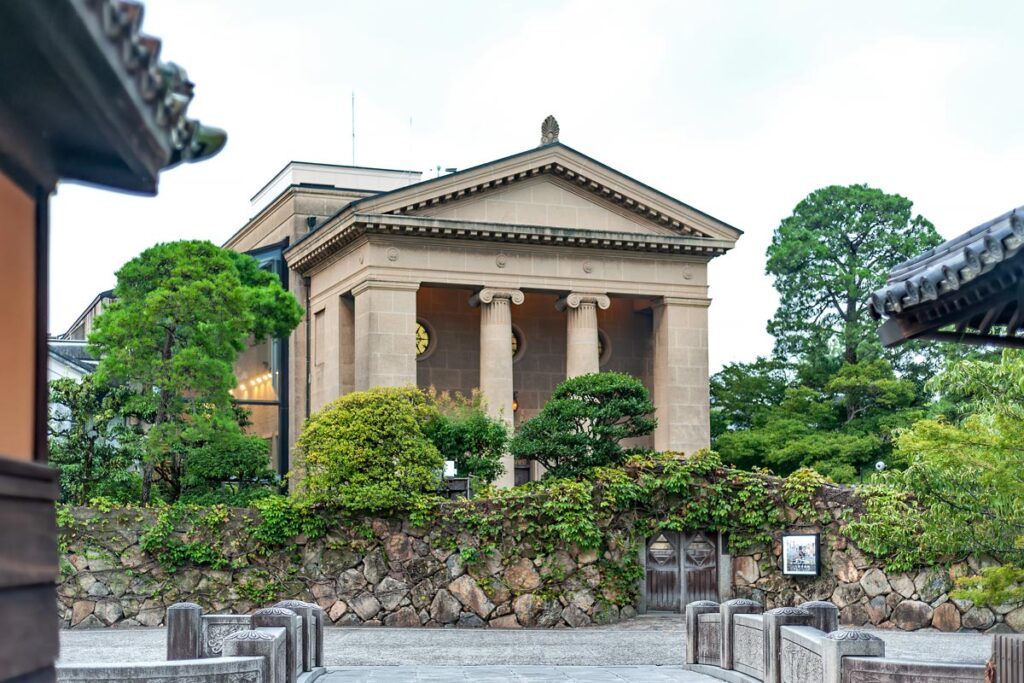
Ohara Museum of Art
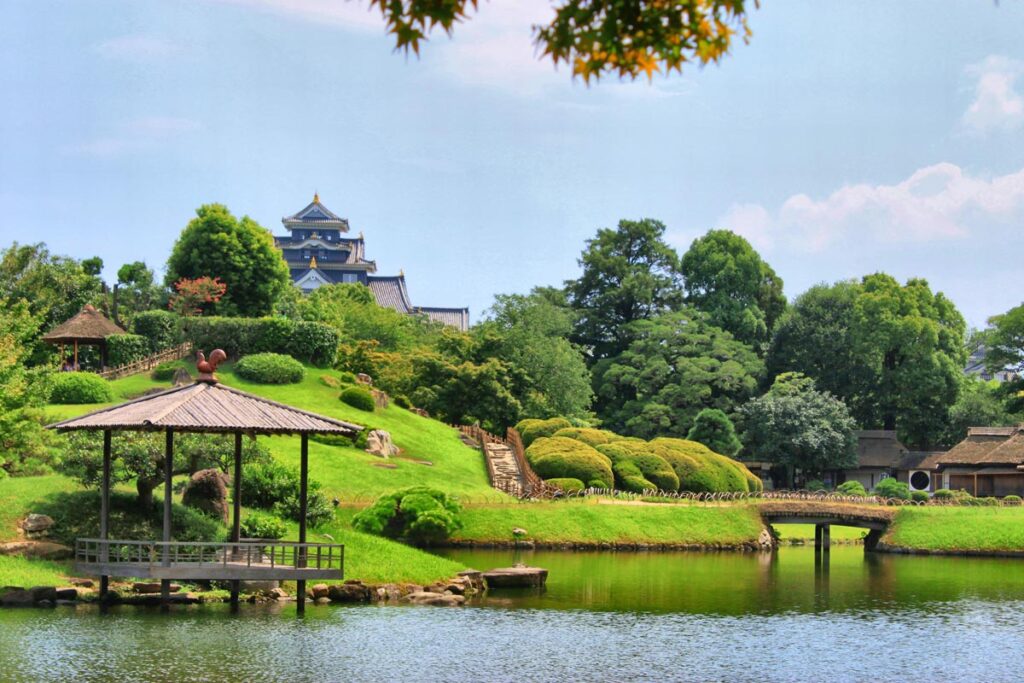
Korakuen Garden
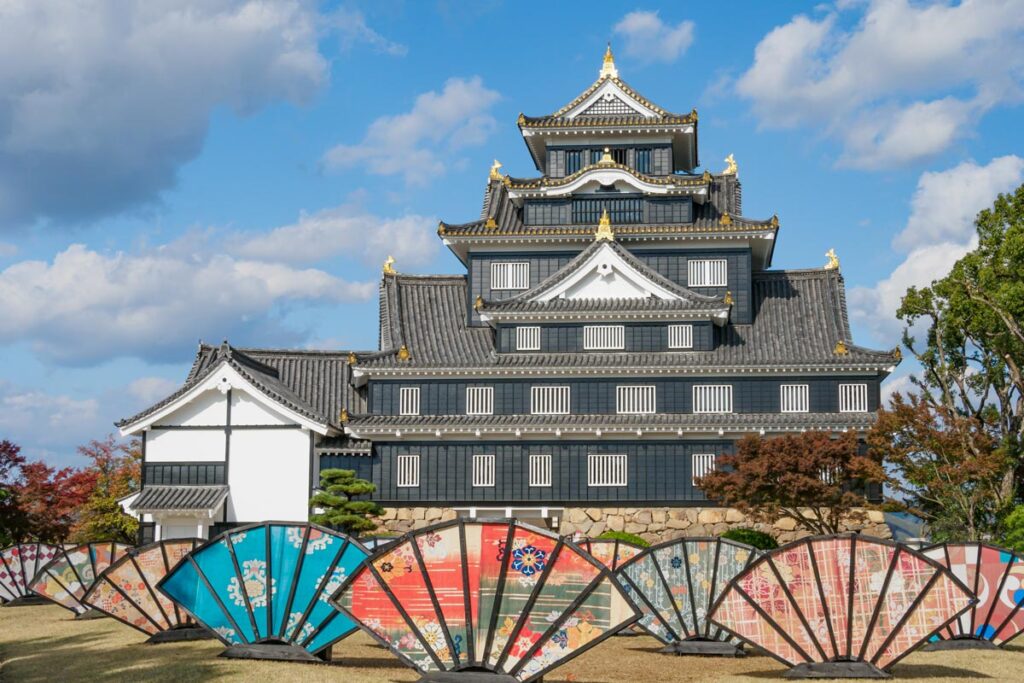
Okayama Castle