




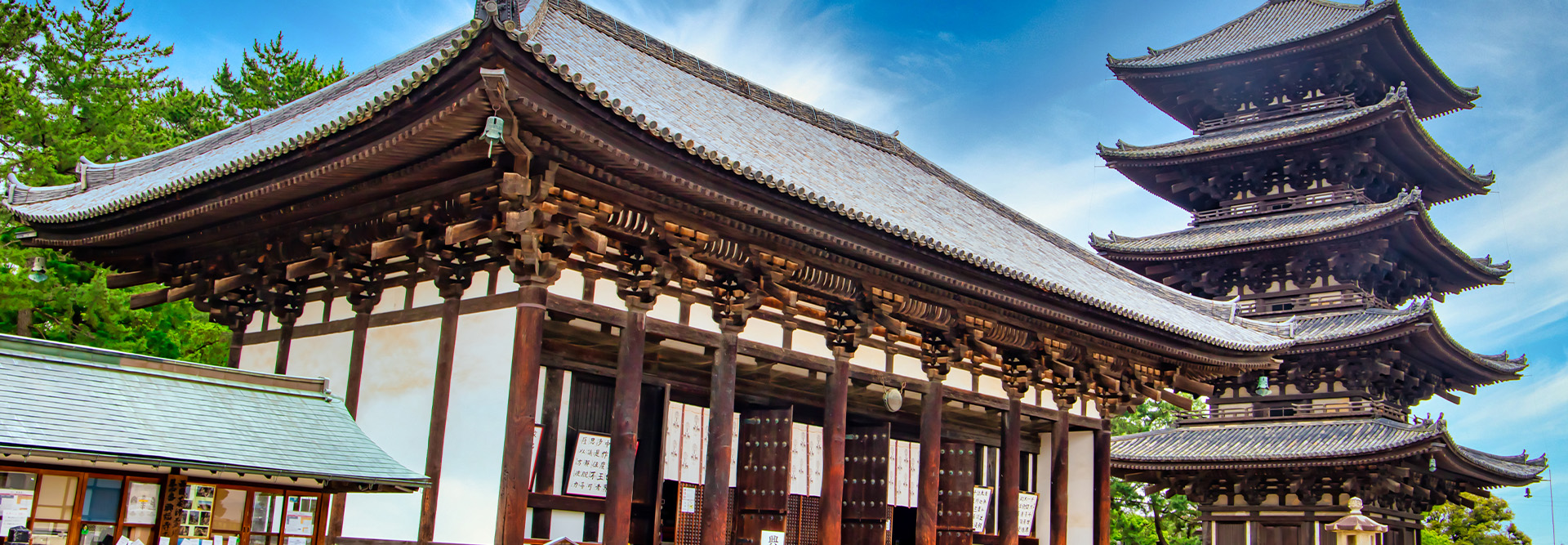
Kofuku-ji Temple
Kofuku-ji Temple: A First-Timer’s Guide to Nara’s Historic Heart
Photos are for illustrative purposes only.
Kofuku-ji Temple is one of Nara’s most important historic sites and a perfect introduction to Japan’s ancient capital. Just a short walk from Nara Station and the famous deer of Nara Park, this Buddhist temple complex combines grand pagodas, peaceful halls, and a remarkable collection of religious art spanning more than 1,300 years.
For first-time visitors to Japan, Kofuku-ji offers a compact, easy-to-explore window into Japanese history, Buddhist culture, and the elegant aesthetic of the Nara period. This guide explains what to see, how to visit, and how to get the most out of your time at this UNESCO World Heritage Site.
Why Kofuku-ji Belongs on Your Japan Itinerary
Founded in the 7th century, Kofuku-ji was once the family temple of the powerful Fujiwara clan, who dominated court politics in Japan for centuries. As the clan rose in influence, so did the temple, eventually becoming one of the “Seven Great Temples of Nara.”
Today, Kofuku-ji stands at the crossroads of modern Nara: on one side is the lively commercial district with shops and cafés, and on the other, the green expanse of Nara Park, where sacred sika deer roam freely. This balance between the sacred and the everyday captures something essential about Japan—spiritual sites that are still woven into ordinary life.
For travelers, Kofuku-ji is especially appealing because:
- It is easily accessible on foot from both Nara Station and Nara Park.
- Many structures can be appreciated from outside, even if you don’t enter paid areas.
- It offers one of the best collections of Buddhist sculpture in Japan.
- It can be comfortably visited in 1–2 hours, fitting perfectly into a Nara day trip.
Orientation: Layout of the Kofuku-ji Complex
Kofuku-ji is not a single building but a wide temple precinct with pagodas, halls, smaller shrines, and a treasured museum. While the original complex was much larger, many key structures remain, and ongoing restoration projects aim to revive its historical appearance.
Most visitors enter from the west side, near Kintetsu Nara Station, and gradually make their way toward Nara Park. As you walk up from the station, you will first notice the soaring five-story pagoda, a landmark visible from afar, and the main cluster of temple buildings around it.
Main Highlights You Shouldn’t Miss
The Five-Story Pagoda: Nara’s Iconic Silhouette
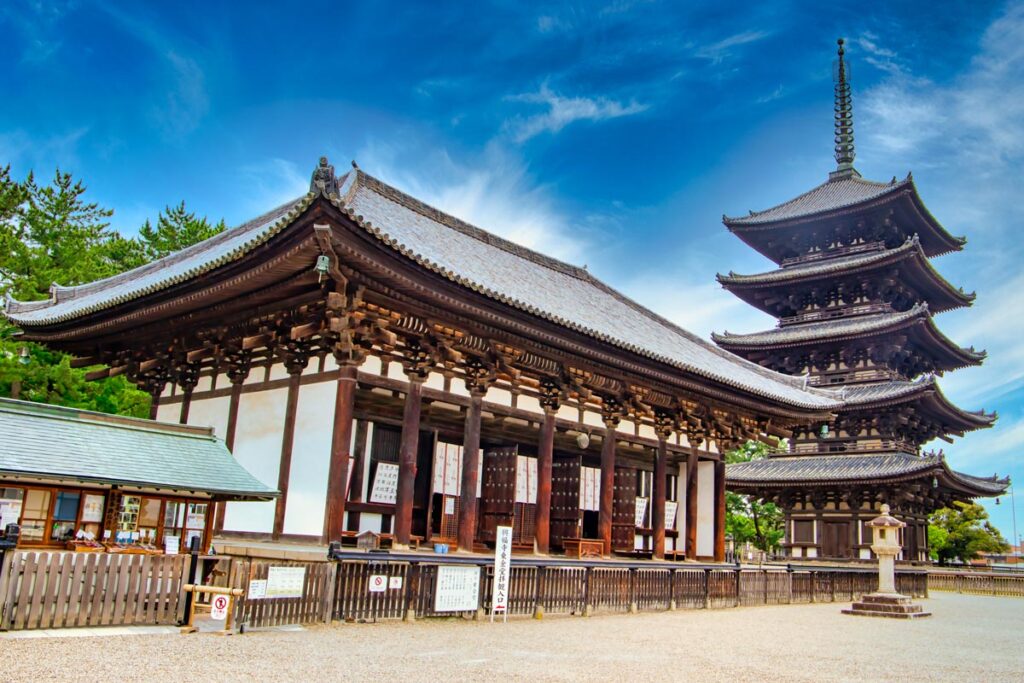
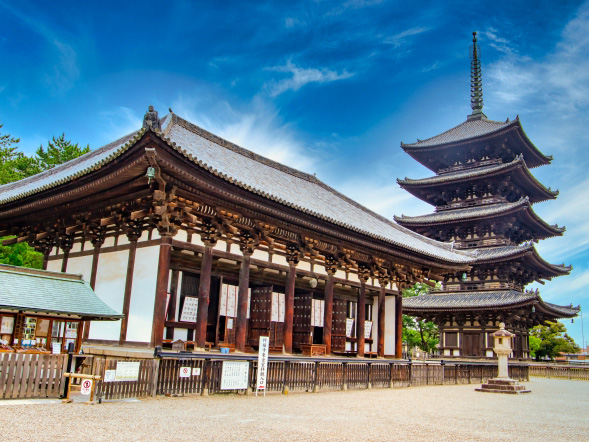
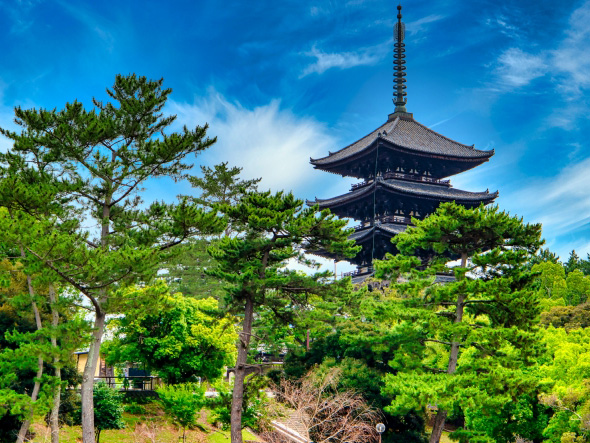
The most striking feature of Kofuku-ji is its five-story pagoda, one of the tallest in Japan. Originally built in the 8th century and reconstructed several times due to fires, it stands as a symbol of Nara and is often reflected beautifully in the nearby Sarusawa Pond at sunset.
Pagodas in Japan are inspired by ancient Indian stupas, gradually transmitted through China and Korea. Each level represents a different element—earth, water, fire, wind, and void—symbolizing the Buddhist view of the universe. While the interior is not usually open to the public, the exterior alone is impressive enough to merit a leisurely walk around its base.
Tip: Visit early in the morning for soft light and fewer crowds, or stay until dusk when the pagoda is sometimes illuminated, creating a serene atmosphere.
The Eastern Golden Hall (Tō-kondō)
Near the five-story pagoda stands the Eastern Golden Hall, the primary worship hall of Kofuku-ji. This hall houses some of the temple’s most important Buddhist images, including a large statue of Yakushi Nyorai, the Buddha of medicine and healing.
Inside, you will find a quiet, dimly lit space that contrasts with the open courtyard outside. Visitors remove their shoes before stepping up, as in most traditional temples. Even if you don’t know Buddhist iconography, it’s worth pausing to observe the subtle expressions and carefully carved details of the statues. These works were created not just as art, but as devotional objects for prayer and ritual practice.
Kofuku-ji National Treasure Hall
For many travelers, the highlight of Kofuku-ji is the National Treasure Hall, a modern museum building that displays masterpieces from the temple’s long history. This is where Kofuku-ji truly comes alive as a window into Japan’s past.
Inside, you can see:
- The statue of Ashura – One of Japan’s most famous Buddhist sculptures, depicting a youthful deity with three faces and six arms. Its expression is both gentle and sorrowful, captivating visitors for centuries.
- Elegant Nara-period Buddhist images – Including bodhisattvas and guardian figures from the 8th century, many designated as National Treasures or Important Cultural Properties.
- Ritual objects and temple treasures – Offering insight into courtly religious life at a time when Nara was Japan’s capital.
Photography is typically prohibited inside, but this encourages visitors to slow down and simply look. Explanations are often available in multiple languages, making it a good introduction to Buddhist art even for beginners.
The Three-Story Pagoda
Further within the grounds lies the more compact three-story pagoda. This structure is older and less towering than its five-story counterpart, but no less graceful. It is set slightly apart, inviting a quieter, more contemplative walk.
The juxtaposition of the two pagodas shows the evolution of temple architecture across eras and reflects the temple’s long, sometimes turbulent history of fires, rebuilding, and restoration.
Smaller Halls and Sub-Temples
Scattered around Kofuku-ji are smaller halls, gates, and sub-temples that are often overlooked. While you may not have time to go into every building, wandering the grounds reveals:
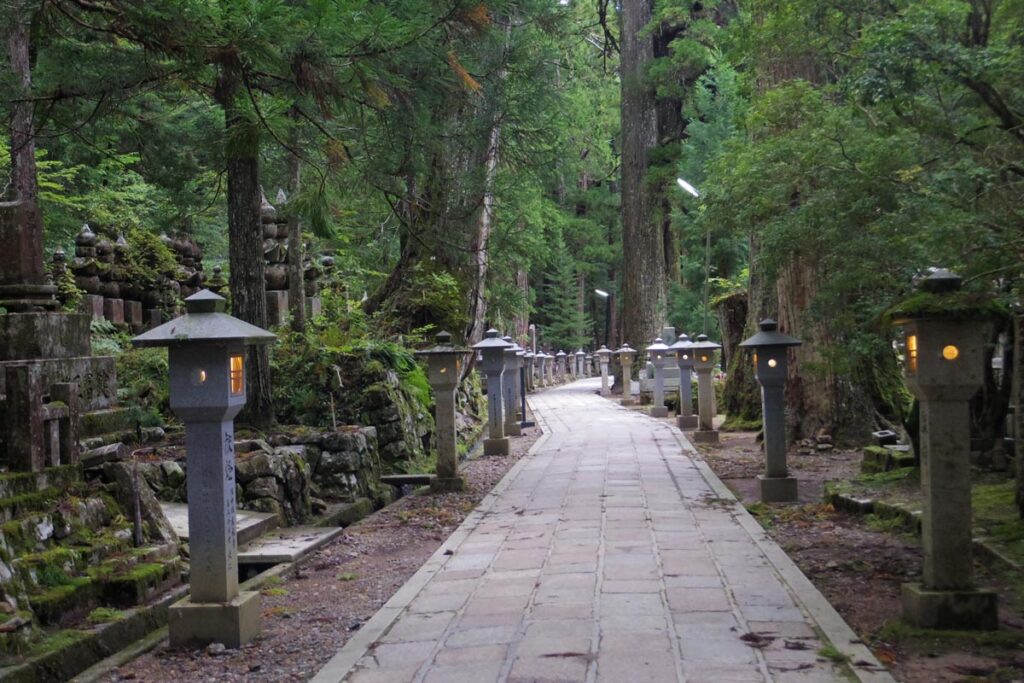
- Quiet corners with stone lanterns that light the paths during festivals.
- Small shrines where locals still come to pray.
- Wooden corridors and stairways that show the aged grain of cypress and cedar.
These areas provide a sense of how large and influential Kofuku-ji once was. You may also notice ongoing restoration work—evidence of Japan’s commitment to preserving its wooden heritage over centuries.
Cultural and Historical Background
Understanding a bit of context will deepen your appreciation of Kofuku-ji. The temple was founded in 669 and relocated to Nara in 710, when the city became Japan’s first permanent capital. As the Fujiwara family’s temple, it served both spiritual and political functions. Supporting a major temple was a way for aristocrats to gain merit in the Buddhist sense, but it also displayed wealth and power.
Over the centuries, fires, conflicts, and shifts in political power led to the loss and reconstruction of many buildings. Some grand halls known from historical records and paintings no longer exist, but archaeological and architectural research guide current efforts to partially recreate the ancient layout.
Kofuku-ji is part of the collective UNESCO World Heritage listing “Historic Monuments of Ancient Nara,” which also includes other temples, shrines, and archaeological sites. Visiting Kofuku-ji gives you a sense of how religion, politics, and art were tightly intertwined in early Japan.
Experiencing Kofuku-ji Respectfully
Kofuku-ji is an active religious site, not just a tourist attraction. Monks still perform rituals, and local people visit to pray. Observing a few basic customs will help you show respect while you explore:
- Move quietly and avoid loud conversations near halls where people are praying.
- Check signage for photography rules; some indoor spaces forbid photos.
- Remove your shoes where instructed and keep them neatly in the provided racks.
- Dress modestly (shoulders and knees covered is appreciated, especially if entering worship halls).
- Do not touch statues or altar objects, even if they seem within reach.
If you wish, you can follow local customs by tossing a coin into an offering box and making a short bow or silent wish. You can also purchase a small charm (omamori) for good luck or health at one of the temple’s offices—these make meaningful, lightweight souvenirs.
Practical Visitor Information
Location and Access
Kofuku-ji sits between Kintetsu Nara Station and Nara Park, making it easy to include in any Nara day trip from Kyoto or Osaka.
- From Kyoto: Take the JR Nara Line (about 45–70 minutes depending on the train). From JR Nara Station, it’s roughly a 20-minute walk or a short bus ride to Kofuku-ji.
- From Osaka: Use the JR Yamatoji Line or Kintetsu Nara Line (about 35–50 minutes). From Kintetsu Nara Station, Kofuku-ji is only about a 5–10 minute walk.
As you exit Kintetsu Nara Station, follow signs toward Nara Park. The pagoda will soon come into view, guiding you toward the main complex.
Opening Hours and Tickets
The temple grounds themselves are generally open and free to enter, allowing you to walk around the pagodas and courtyards at no charge. However, specific buildings and the National Treasure Hall require paid entry, with separate or combined tickets available.
Typical opening hours for the paid areas are roughly from morning to late afternoon, with slight seasonal variations. It is wise to check the latest times locally or via an official information source shortly before your visit. Closing times can be earlier in winter.
If you are keen on Buddhist art, prioritize time for the National Treasure Hall. If your schedule is tight, you can still enjoy the ambiance of the grounds and view the exteriors of the major buildings without entering every hall.
Facilities and Accessibility
The pathways around Kofuku-ji are mostly flat, though some areas have stone steps and uneven surfaces. Wheelchair users and those with mobility challenges may find the open courtyards accessible but may have difficulty with traditional staircases leading into wooden halls.
Public restrooms are available nearby, and the area around Kintetsu Nara Station offers numerous cafés, convenience stores, and restaurants where you can rest before or after your visit.
Seasonal Highlights at Kofuku-ji
Japan’s seasons bring different moods to the temple, and tailoring your expectations to the time of year can enhance your experience.
Spring: Gentle Blossoms and Mild Weather
In spring, cherry blossoms and fresh greenery soften the outlines of the pagodas and halls. While Kofuku-ji is not as overwhelmingly crowded as some famous cherry blossom spots, weekends during peak sakura season can still be busy.
The mild weather makes it a pleasant time to combine Kofuku-ji with walks around Nara Park and nearby temples like Tōdai-ji.
Summer: Lush Greens and Long Days
Summer brings heat and humidity, but also deep green foliage and lively festivals in Nara. Visit Kofuku-ji early in the morning or later in the afternoon to avoid the midday sun. Carry water, sunscreen, and a hat, as shade can be limited in some courtyards.
Autumn: Clear Skies and Warm Tones
Autumn is one of the most comfortable times to visit, with cool air and clear skies. Maple leaves in and around Nara Park turn crimson and gold, creating beautiful contrast with Kofuku-ji’s dark wooden structures and grey tile roofs.
Winter: Quiet Atmosphere and Crisp Air
Winter sees fewer tourists, and on some mornings you may find the temple grounds quietly dusted with frost or snow. The crisp air and thinner crowds create a contemplative atmosphere that many travelers find especially moving.
Combining Kofuku-ji with a Nara Day Trip
Kofuku-ji fits naturally into a classic Nara day-trip route from Kyoto or Osaka. A simple itinerary might look like this:
- Arrive in Nara by late morning.
- Walk from the station to Kofuku-ji and spend 1–2 hours exploring the pagodas, Eastern Golden Hall, and National Treasure Hall.
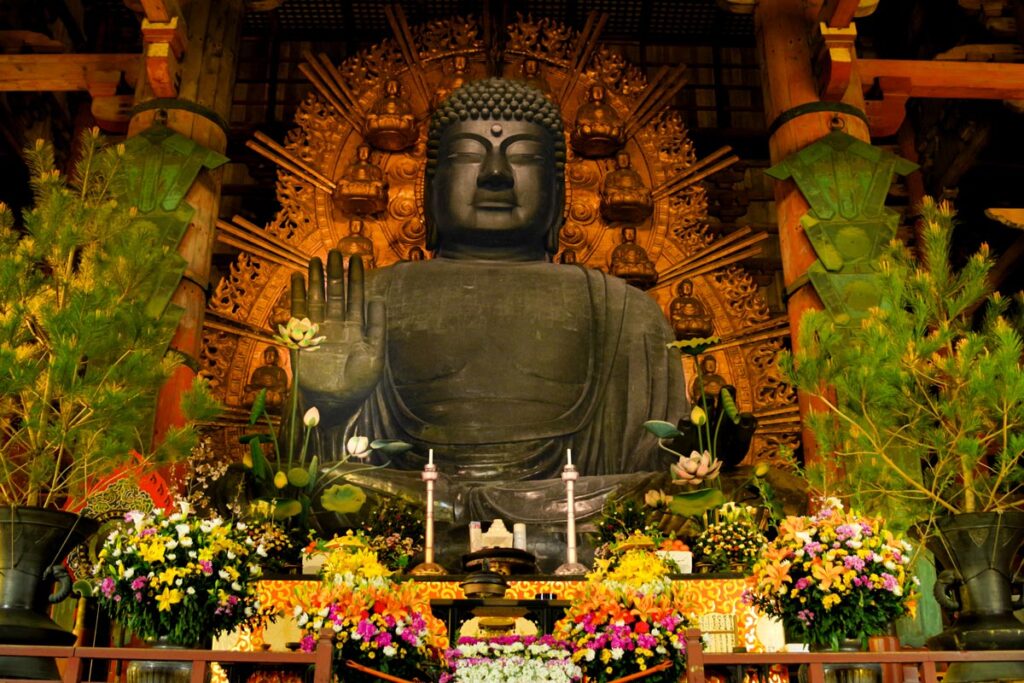
- Continue on to Nara Park to see the deer and visit Tōdai-ji, home of the Great Buddha.
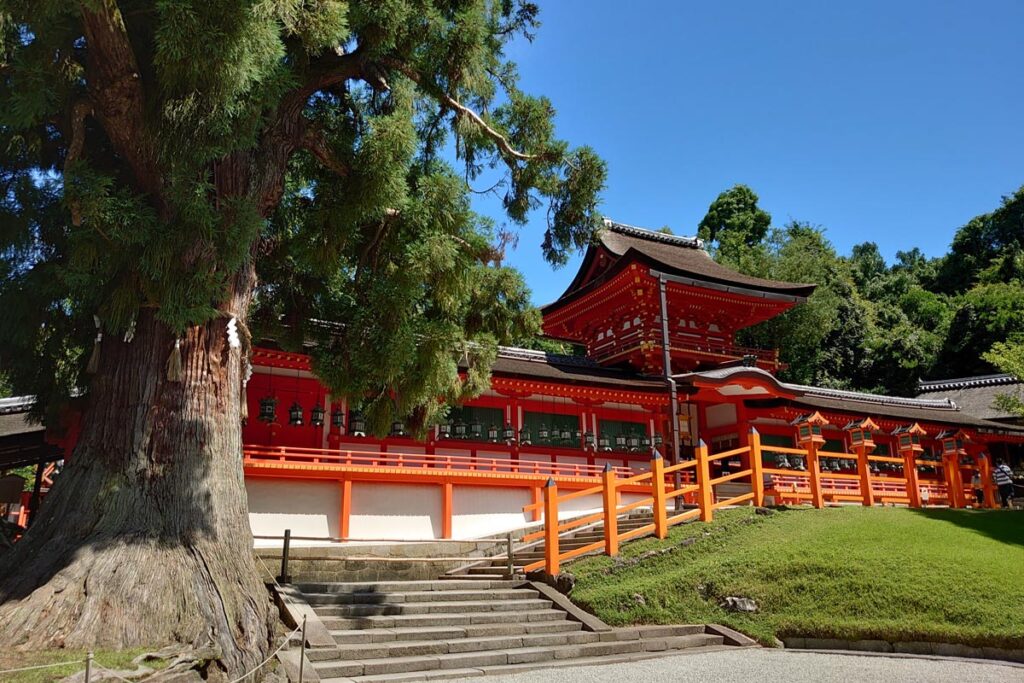
- Stroll through Kasuga Taisha Shrine and its lantern-lined paths.
- Return via the park and Kofuku-ji area in the late afternoon, perhaps pausing by Sarusawa Pond to see the reflection of the pagoda in the water.
This route offers a balanced introduction to both Buddhist temples and Shinto shrines, as well as the unique atmosphere of Nara’s historic parkland.
Final Tips for First-Time Visitors
To make the most of your visit to Kofuku-ji Temple:
- Give yourself at least 60–90 minutes so you are not rushed and can appreciate both the architecture and the art.
- Carry some small coins (¥5 and ¥10) for offerings at temple boxes and for buying omamori charms.
- Read a little about Nara’s history beforehand, or use on-site English panels to understand what you’re seeing.
- Plan for weather: an umbrella in rainy months, a hat in summer, and layers in winter.
Standing in the shadow of the five-story pagoda, surrounded by centuries of devotion and artistry, it’s easy to feel that you’ve stepped into the very heart of historical Japan. Kofuku-ji Temple may not be as globally famous as some Tokyo or Kyoto landmarks, but for travelers who want to understand Japan’s cultural roots, it is one of the most rewarding places to begin.

Access Map
Recommended spots in Nara
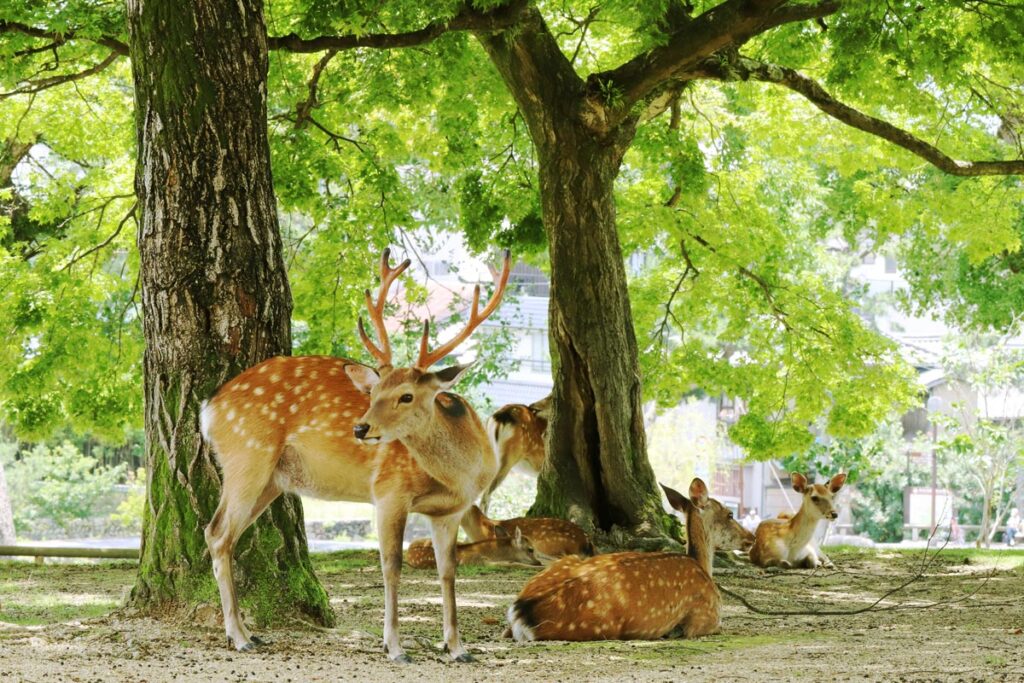
Nara Park
Todai-ji Temple
Kasuga Taisha Shrine