



Mizuki Shigeru Road
Mizuki Shigeru Road: A Yokai Street Adventure in Japan
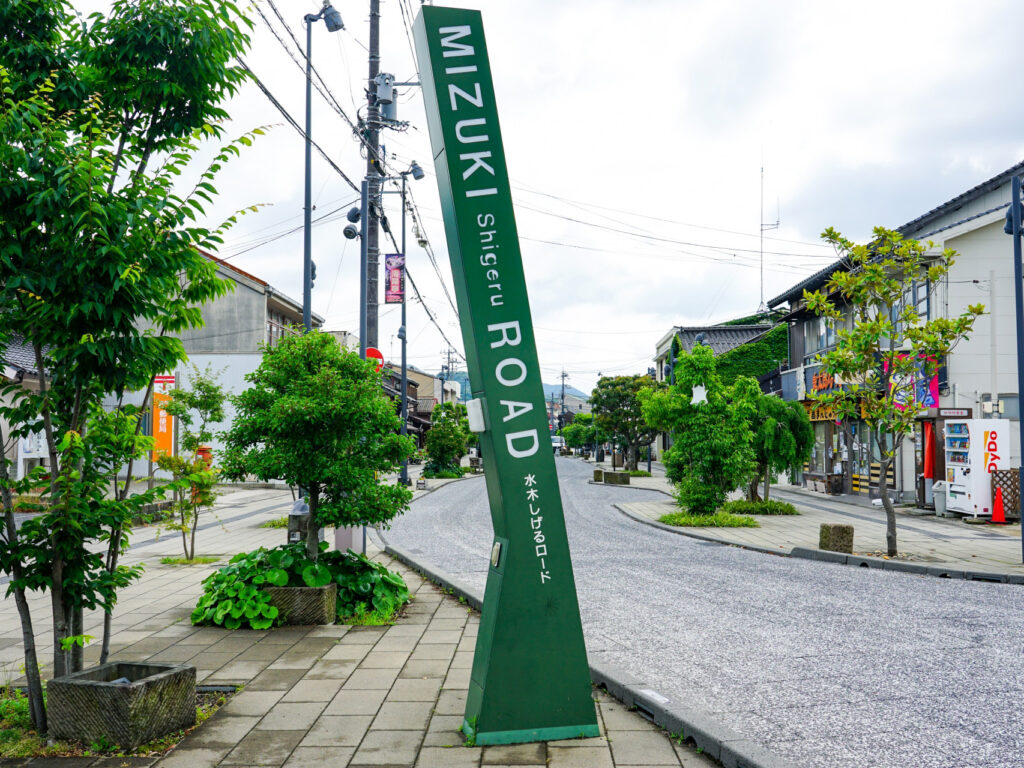
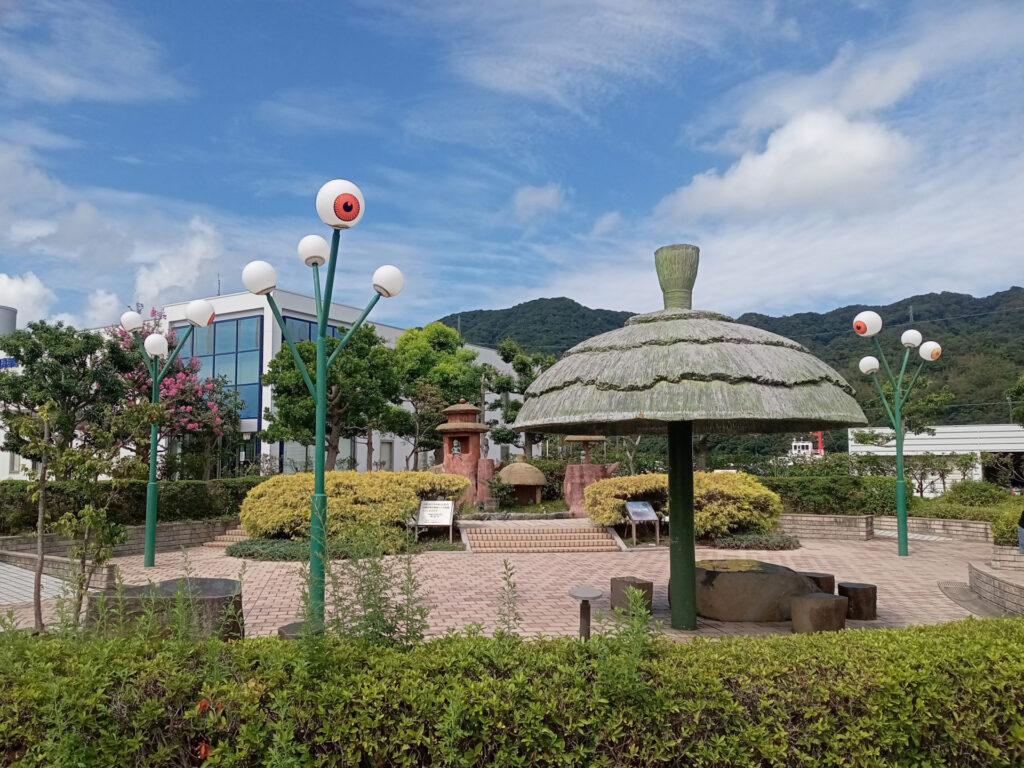
Photos are for illustrative purposes only.
In the quiet port city of Sakaiminato on Japan’s Sea of Japan coast, an ordinary street has been transformed into a living manga world. Mizuki Shigeru Road is a whimsical, slightly spooky, and endlessly photogenic homage to Japan’s most famous yokai (supernatural creatures), created by manga artist Mizuki Shigeru, author of the beloved series GeGeGe no Kitaro.
For first-time visitors to Japan, this is a fun detour from the classic Tokyo–Kyoto route: part open-air art museum, part theme street, and part crash course in Japanese folklore. Families, manga fans, and curious travelers all find something to love here.
Who Was Mizuki Shigeru?
Mizuki Shigeru (1922–2015) was a pioneering Japanese manga artist known for popularizing yokai culture through his hit series GeGeGe no Kitaro. Born in Sakaiminato, he grew up listening to local ghost stories and folk tales. These stories became the foundation of his life’s work, blending humor, horror, and social commentary.
Unlike many manga set in glittering cities, Mizuki’s worlds are full of wooden houses, rural landscapes, and creatures lurking in the shadows—mirror images of wartime and post-war Japan. He also spent time stationed in Papua New Guinea during World War II, an experience that shaped his views on life, death, and the supernatural. His works helped revive interest in yokai among modern Japanese readers and influenced generations of artists and filmmakers.
What Is Mizuki Shigeru Road?
Mizuki Shigeru Road is a roughly 800-meter stretch from JR Sakaiminato Station to the Mizuki Shigeru Museum. Along this road you’ll find:
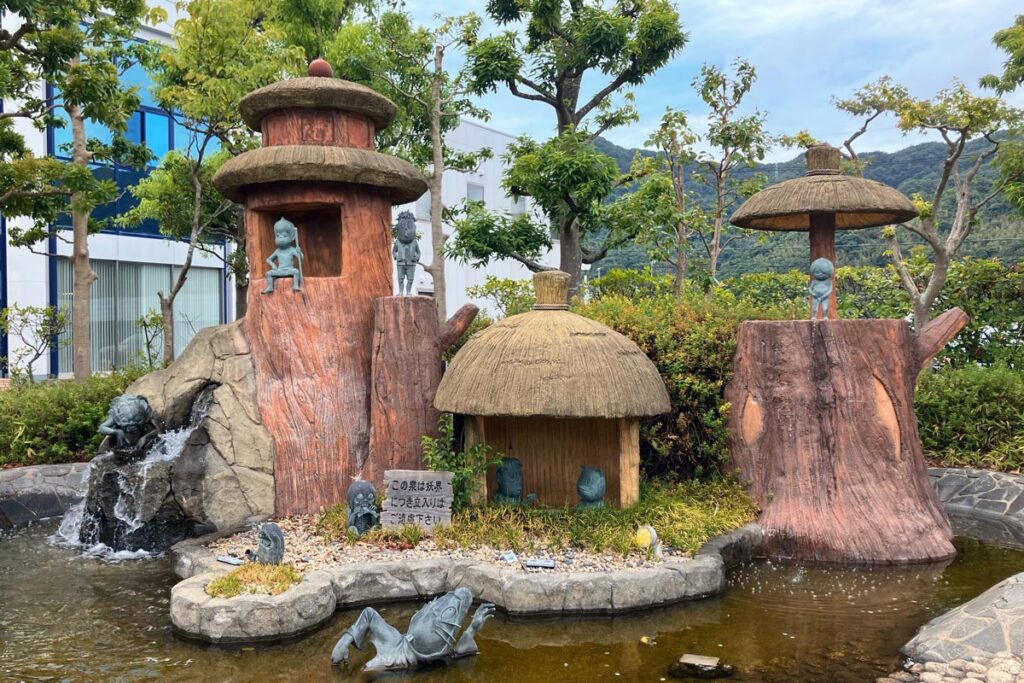
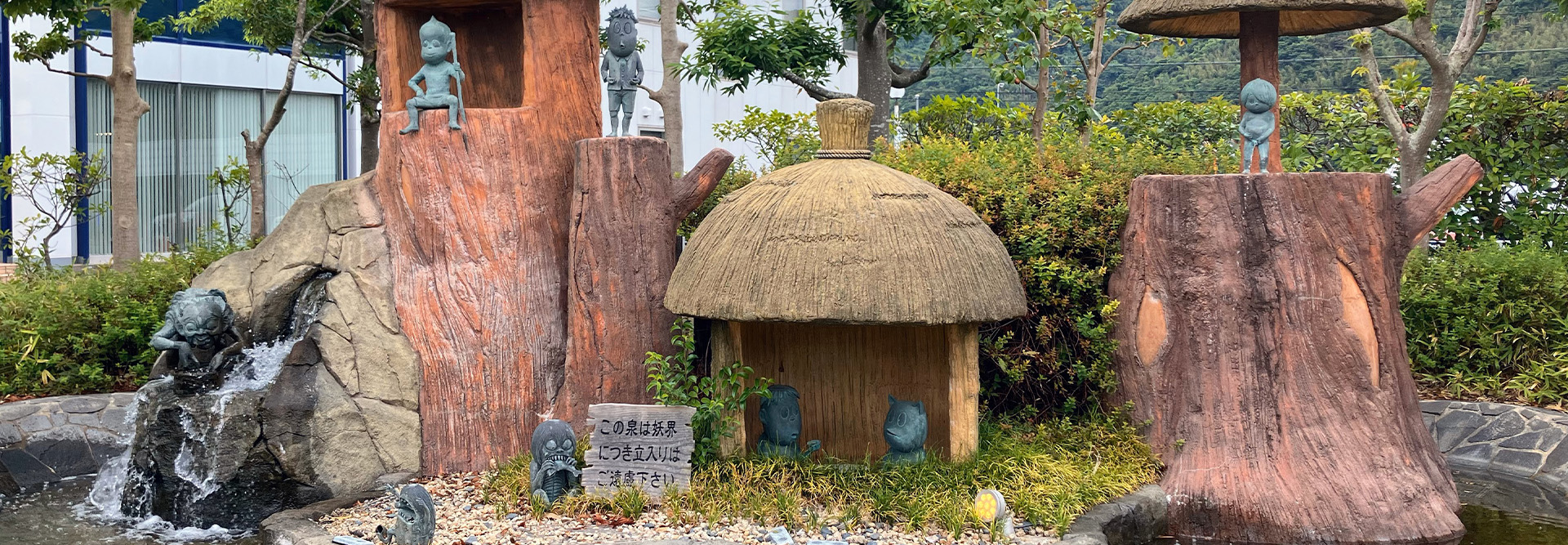
- More than 150 bronze statues of yokai characters
- Themed streetlights, manhole covers, and benches
- Cafés and shops selling yokai snacks and souvenirs
- Street art, murals, and character photo spots
It’s free to walk and explore, and the atmosphere changes with the time of day: family-friendly by daylight and gently eerie after dark when the lantern-style streetlights glow and shadows deepen.
Meet the Yokai: Creatures of Japanese Folklore
Yokai are supernatural beings from Japanese folklore: mischievous, spooky, and sometimes helpful. They range from shape-shifting animals and restless spirits to animated household objects. Mizuki Shigeru took these traditional creatures and reintroduced them to modern audiences with unique personalities.
On Mizuki Shigeru Road, you’ll meet:
- GeGeGe no Kitaro — The boy hero born in a graveyard, with a distinctive striped vest. He fights to keep peace between humans and yokai.
- Medama-Oyaji — Kitaro’s father, reborn as a tiny eyeball with a body. Often seen relaxing in a teacup or bathtub; a fan favorite for photos.
- Nezumi Otoko (Rat Man) — A half-human, half-yokai trickster, always scheming and often in trouble.
- Neko Musume (Cat Girl) — A girl who transforms into a cat-like yokai when angry.
- Traditional yokai — Creatures inspired by centuries-old legends, such as umbrella spirits, river demons, and wall ghosts.
Each bronze statue is labeled, often with a short description in Japanese and sometimes English. You don’t need to know the manga to enjoy them; half the fun is discovering your favorites as you go.
Highlights Along Mizuki Shigeru Road
JR Sakaiminato Station: Your Yokai Arrival
The journey begins as soon as you step off the train at JR Sakaiminato Station. The station itself is decorated with GeGeGe no Kitaro characters, from wall art to signboards. The station square often features large character statues and a tourist information center where you can pick up maps and pamphlets.
Look out for:
- A free map of the road, marking statue locations and key spots
- Information on special events or seasonal illuminations
- Lockers if you want to store luggage before exploring
The Bronze Yokai Statues
The bronze statues are the soul of Mizuki Shigeru Road. They line both sides of the street, often placed at corners and intersections, and range in size from palm-sized figures on pedestals to near life-sized characters.
Tips for enjoying the statues:
- Walk slowly and look down as well as ahead; some statues are tucked near the ground or on low stands.
- Visit early morning for fewer crowds and easy photos.
- Try to find your birth-year yokai if a guideboard suggests one; it’s a fun game for families.
Mizuki Shigeru Museum
At the far end of the street stands the Mizuki Shigeru Museum, a must-visit for anyone curious about the man behind the yokai. The museum offers:
- Original manga drawings and storyboards
- Dioramas and life-sized scenes from GeGeGe no Kitaro
- Exhibits on traditional yokai folklore and their historical roots
- Details about Mizuki’s life, including his wartime experiences
Even if you aren’t fluent in Japanese, the visuals are rich and engaging. Some exhibits include basic English explanations, and the artwork speaks for itself.
Yokai Shrines and Lucky Spots
Along the road, keep an eye out for small shrines or altar-like spaces dedicated to yokai. These playful “shrines” reflect the Japanese habit of blending the sacred and the whimsical. You may see ema (wooden wish plaques) or small offerings left by fans.
There are also “lucky spots” where you can rub a statue or touch a particular place for good fortune, health, or exam success. Check nearby signs for details and join in the local rituals.
Street Art, Murals, and Nighttime Atmosphere
Beyond statues, the road is packed with visual details: character murals on walls, themed streetlights shaped like yokai, and playful manhole covers underfoot. As night falls, the lighting becomes part of the experience, casting long shadows and highlighting the more ghostly statues.
Visiting at dusk or early evening offers a different mood than daytime: still safe and family-friendly, but with a slightly spooky edge that fits the theme perfectly.
Food and Shopping on Mizuki Shigeru Road
Yokai-Themed Snacks
Travel in Japan is as much about food as it is about sights, and Mizuki Shigeru Road delivers with a playful twist. Look for:
- Yokai manju — Steamed buns or small cakes stamped with character faces.
- Ice cream and soft-serve — In local flavors like matcha, pear (a Tottori specialty), or black sesame, sometimes decorated with eyeball-shaped candies.
- Yokai curry — Some cafés serve curry rice with character-shaped rice mounds or themed plates.
Menus may be mostly in Japanese, but picture displays make ordering easy. Point-and-order works fine, and staff are used to international visitors.
Souvenir Shops
The street is lined with shops selling all things yokai. Popular items include:
- Character goods: keychains, plush toys, stationery, and phone straps
- Manga books and art collections — even if you can’t read Japanese, the artwork is beautiful
- Snacks and sweets in themed packaging, ideal as gifts
- T-shirts, towels, and household items with subtle (or not-so-subtle) yokai designs
Prices are generally reasonable, and many shops accept cash only, so keep some yen on hand. Tax-free shopping may be available at larger stores if you show your passport and meet the spending minimum.
Cultural Tips: Understanding Yokai and Local Life
For Japanese visitors, Mizuki Shigeru Road is more than a tourist attraction; it’s a nostalgic return to childhood stories. Understanding a few cultural points can deepen your experience:
- Yokai are not just monsters. They can be tricksters, protectors, or symbols of natural forces. Many reflect fears and hopes from earlier times, like unexplained illnesses or strange noises at night.
- Humor balances horror. Mizuki’s work is often funny as well as eerie, reflecting the Japanese tendency to treat even scary things with a touch of playfulness.
- Regional pride. Sakaiminato embraces its connection to Mizuki Shigeru, using his characters to revitalize the town. By visiting, you’re also supporting a local community outside the usual big-city circuit.
As you walk, you’ll notice that Mizuki Shigeru Road is woven into everyday life: schoolchildren pass by the statues on their way home, local residents shop at the same stores tourists do, and delivery trucks share the street with camera-toting visitors. Be mindful that this is also a neighborhood, and keep voices and behavior respectful.
Practical Information for First-Time Visitors
How to Get to Mizuki Shigeru Road
Mizuki Shigeru Road is in Sakaiminato, Tottori Prefecture, on Japan’s western coast. It’s most easily visited as a side trip from major cities like Osaka or Hiroshima.
From Osaka or Kyoto:
- Take a JR limited express train (for example, via Yonago) towards the San’in region.
- From Yonago Station, transfer to the JR Sakai Line to JR Sakaiminato Station.
From Hiroshima:
- Travel via Okayama and then towards Yonago by limited express train.
- Transfer to the JR Sakai Line for Sakaiminato.
The JR Sakai Line itself is part of the fun: many trains are decorated with GeGeGe no Kitaro characters, turning the ride into a mini theme experience. Japan Rail Pass holders can usually use these trains at no extra cost, but always confirm current rules.
Best Time to Visit
Mizuki Shigeru Road is open year-round, and each season offers a slightly different charm:
- Spring (March–May): Pleasant temperatures and, in some years, nearby cherry blossoms. Great walking weather.
- Summer (June–August): Hot and humid but atmospherically fitting for ghost stories. Obon season (mid-August) often brings special events and a festive mood.
- Autumn (September–November): Mild weather and clear skies, ideal for photos.
- Winter (December–February): Can be cold, with possible snow that adds a mysterious air to the statues. Dress warmly.
Most shops open by late morning and close by early evening. Arriving around 10:00–11:00 gives you time to stroll, visit the museum, and enjoy a leisurely meal.
How Much Time Do You Need?
Plan around 2–4 hours to enjoy the road and museum at a relaxed pace:
- 1–2 hours to walk the street, browse shops, and take photos
- 1–1.5 hours for the Mizuki Shigeru Museum
- Extra time for lunch or a café break
It can be done as a half-day trip combined with nearby attractions on the San’in coast.
Accessibility and Facilities
The road itself is relatively flat and easy to walk, making it accessible for most visitors. Sidewalks are generally wide, though it can get busy during weekends and holidays. Public restrooms are available along the route, and convenience stores or small supermarkets provide drinks and snacks.
As in the rest of Japan, tap water is safe to drink, and vending machines are common. Smoking is usually restricted to designated areas; follow local signs.
Language and Signage
Most signs along Mizuki Shigeru Road are in Japanese, but key information is often accompanied by simple English. Staff at the tourist information center are used to assisting overseas visitors and may provide English-language brochures. A translation app can help with menu items or small details.
Tips for Enjoying Your Visit
- Start from the station and walk toward the museum. This follows the natural flow of the street and builds anticipation.
- Visit once in daylight and once after dark if you stay overnight in the area; the mood changes dramatically.
- Try a yokai stamp rally if available. Some seasons offer stamp books where you collect rubber stamps at various points along the road.
- Respect the statues. Gentle posing is fine, but avoid climbing on them or putting heavy objects on delicate details.
- Look beyond the characters. Take time to notice the everyday life of Sakaiminato: fishing boats in the distance, local houses, and neighborhood shrines.
Why Mizuki Shigeru Road Belongs on Your Japan Itinerary
Mizuki Shigeru Road offers something rare: a destination that is deeply local yet instantly approachable for international visitors. You don’t need to be a manga expert or a folklore scholar to enjoy it. The street invites you to slow down, smile at strange little creatures, and glimpse a side of Japan shaped by ghost stories rather than neon lights.
For first-time travelers, it’s a chance to step off the usual tracks and discover how imagination and tradition blend in everyday Japanese towns. Whether you come for the photos, the history, or simply for a walk with friendly monsters, Mizuki Shigeru Road leaves you with memories that are charmingly, uniquely, and unmistakably Japan.

Access Map
Recommended spots in Tottori
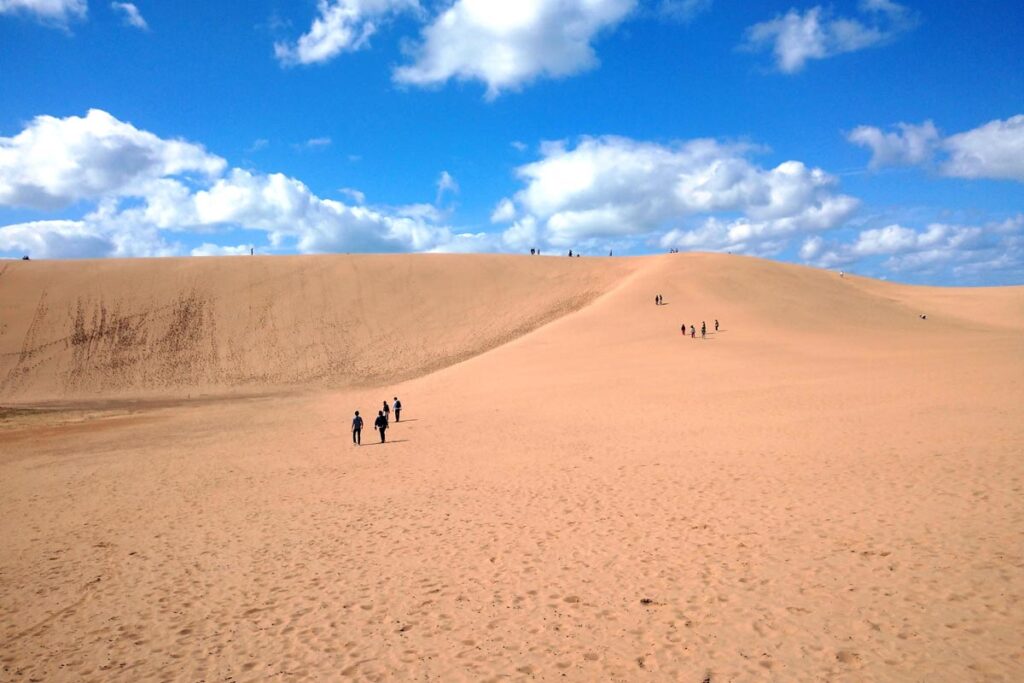
Tottori Sand Dunes / Sand Museum