



Nara - Nara Park
Nara Park Travel Guide: Deer, Temples and Timeless Japan
Photos are for illustrative purposes only.
Nara Park is one of Japan’s most charming and atmospheric destinations, combining open parkland, freely roaming deer, and some of the country’s most important historic temples. For first-time visitors to Japan, a day in Nara Park offers a gentle, relaxing contrast to the bustle of Tokyo, Kyoto, and Osaka, while still delivering iconic sights, deep cultural heritage, and very photogenic moments.
Why Visit Nara Park?
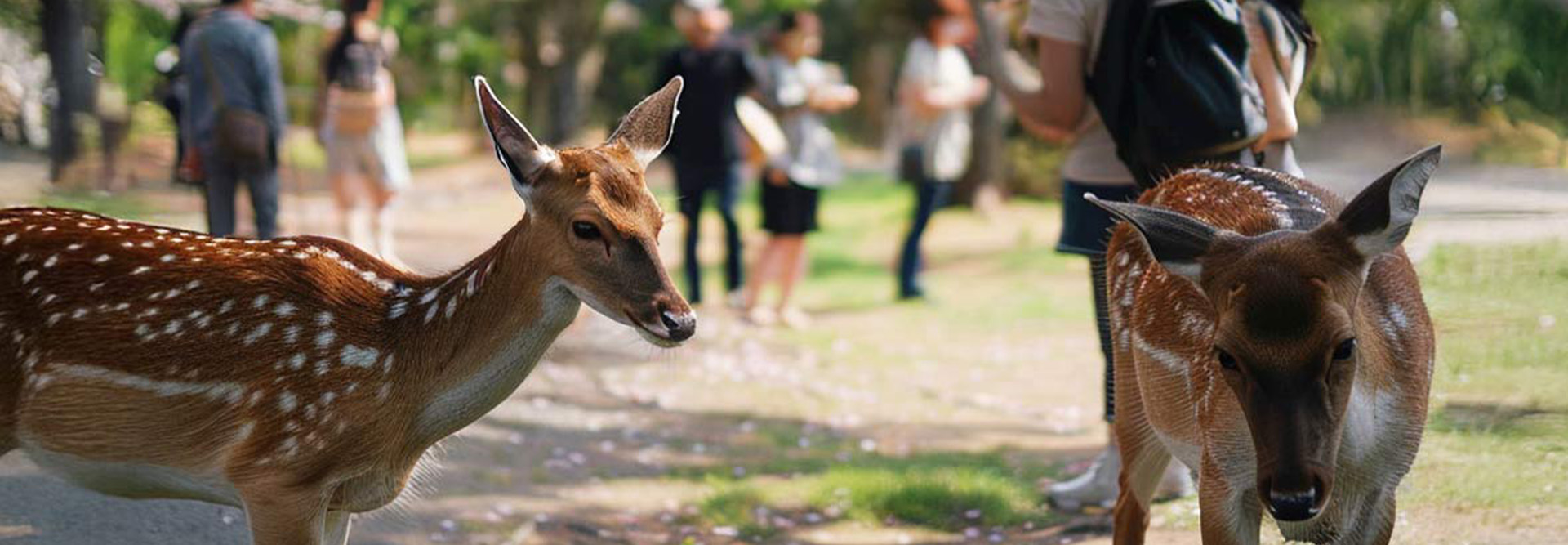
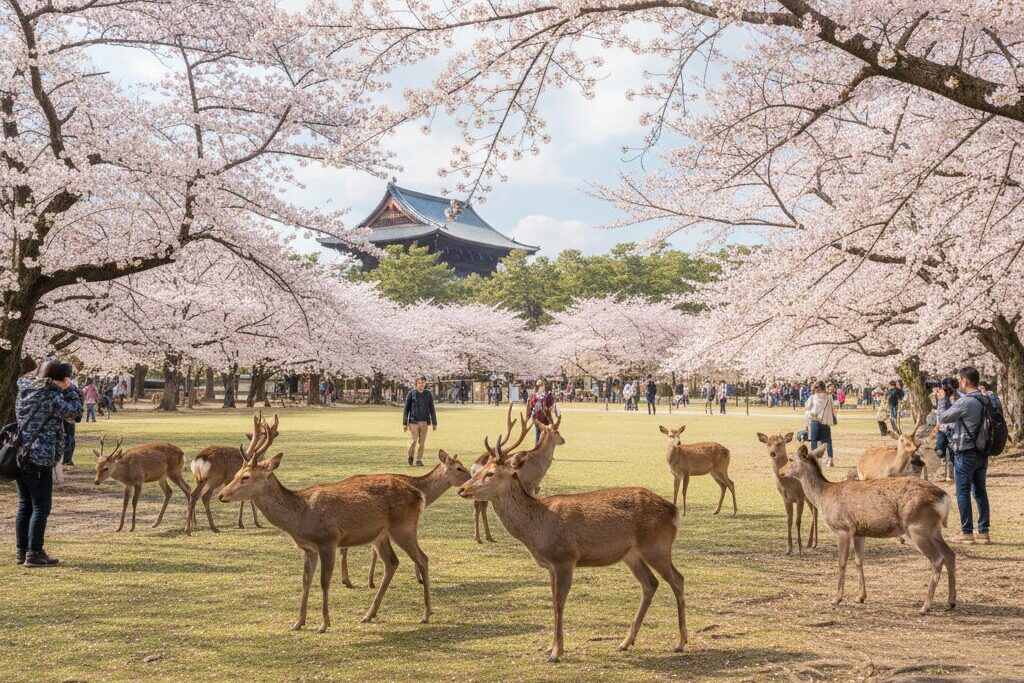
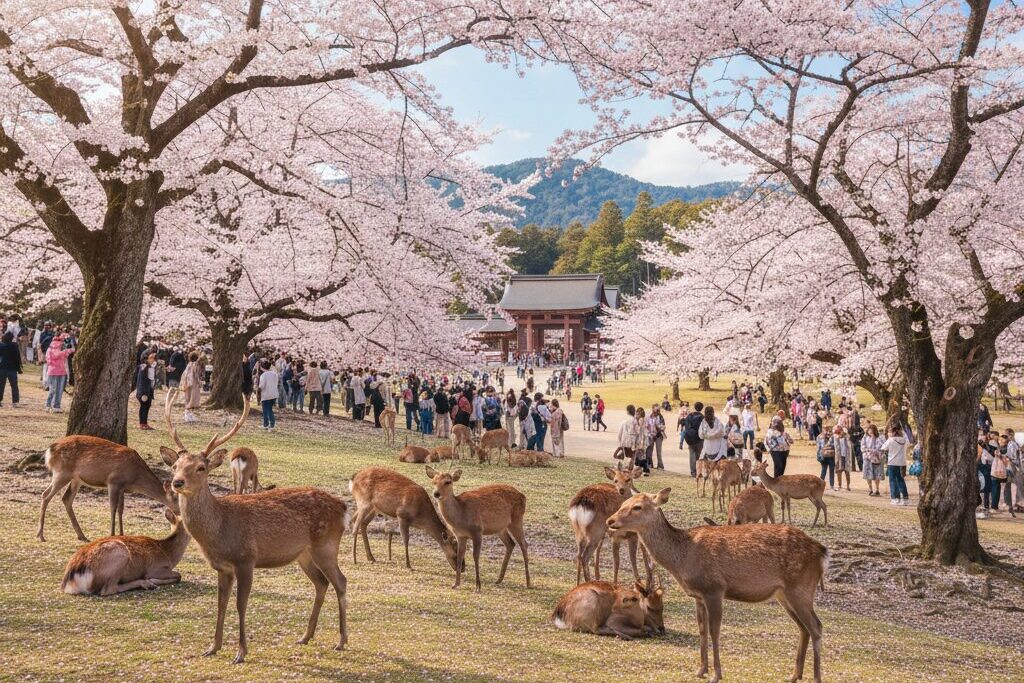
Located in the ancient capital of Nara, Nara Park is a vast green area stretching from the city center to the forested foothills of Mount Wakakusa. The park is famous for its approximately 1,000–1,300 semi-wild deer, considered messengers of the gods in local Shinto belief. You can walk, picnic, and sightsee among them as they stroll between historic shrines, temple halls, and tranquil ponds.
Within and around Nara Park you’ll find UNESCO World Heritage sites, including the iconic Tōdai-ji Temple with its Great Buddha, the lantern-lined paths of Kasuga Taisha Shrine, and the atmospheric ruins of Kōfuku-ji. All of these can be reached on foot, making Nara Park an ideal, compact introduction to traditional Japan.
How to Get to Nara Park
From Kyoto
By JR Train: Take the JR Nara Line from JR Kyoto Station to JR Nara Station. The fastest rapid trains take about 45–50 minutes. From JR Nara Station, you can walk to the edge of Nara Park in around 20–25 minutes or take a short local bus or taxi.
By Kintetsu Railway: From Kyoto Station or Kintetsu Kyoto Station, the Kintetsu Limited Express or express trains take around 35–45 minutes to Kintetsu Nara Station. This station is closer to the park; it’s about a 5–10 minute walk to the western edges of Nara Park.
From Osaka
By JR Train: From JR Osaka Station, take the Yamatoji Line to JR Nara Station. The fastest services take about 50–60 minutes.
By Kintetsu Railway: From Osaka-Namba or Osaka-Uehommachi stations, Kintetsu trains reach Kintetsu Nara Station in about 35–45 minutes, making this one of the most convenient routes for day trippers.
From Tokyo
Most travelers come via Kyoto or Osaka. Take the Tokaidō-Sanyō Shinkansen from Tokyo to Kyoto or Shin-Osaka (about 2.5–3 hours), then transfer to JR or Kintetsu lines as above. As a day trip, Nara is ambitious from Tokyo but very comfortable as an overnight stop or side trip while staying in Kyoto or Osaka.
Orientation: Layout of Nara Park
Nara Park is essentially a long green corridor stretching east from central Nara into low wooded hills. The main sites are connected by well-marked walking paths. You don’t need a car; everything is easily walkable if you pace yourself.
- Western area: Around Kintetsu Nara Station with Kōfuku-ji Temple, Sarusawa Pond, shops, and restaurants.
- Central park area: Wide lawns, tree-lined paths, most of the deer, and the approach to Tōdai-ji Temple.
- Eastern wooded slopes: Kasuga Taisha Shrine, Mount Wakakusa, and quieter walking trails.
Visitor information centers near the stations often provide free maps in English; these are useful for planning a relaxed route through the park.
Meeting the Deer of Nara Park
The deer are the park’s most famous residents. In local Shinto tradition, deer were thought to be sacred messengers of the gods, especially connected to Kasuga Taisha Shrine. Today they are protected as a natural monument and are an inseparable part of Nara’s landscape.
Buying and Offering Deer Crackers
You’ll see vendors throughout the park selling bundles of special deer crackers (called shika-senbei) for a small fee. These crackers are made for the deer and are the only food you should feed them. Human snacks like bread, cookies, or fruit can be harmful to their health and are prohibited.
A fun local custom is the “bowing deer.” Some deer have learned to slightly bow their heads in anticipation of receiving a cracker. You might notice them bowing one, two, or even three times before you feed them. This charming behavior makes for excellent photos, but remember that it’s learned, not trained—these are still wild animals.
Safety Tips Around the Deer
- Do not tease the deer by showing food and then hiding it; this can make them agitated.
- Keep food, maps, and plastic bags secure; some deer will nibble at anything resembling food.
- Move away calmly if a deer pushes or tugs at your clothes; don’t hit or shout at them.
- Watch young children closely and avoid feeding deer directly from small hands.
Throughout the park, signs in multiple languages remind visitors of basic etiquette. Observe and give the animals respect, and you can enjoy a memorable, gentle encounter.
Must-See Sights in and Around Nara Park
Tōdai-ji Temple and the Great Buddha
Tōdai-ji is the spiritual and architectural centerpiece of Nara Park. Founded in the 8th century when Nara was Japan’s capital, it once oversaw all provincial temples across the country. The main hall, the Daibutsu-den, is one of the world’s largest wooden buildings and houses an enormous bronze statue of the Buddha Vairocana, known as the Great Buddha of Nara.
As you walk the wide path toward Tōdai-ji, deer roam casually on the grassy sides, while souvenir shops and food stalls line the approach. The large wooden Nandai-mon gate, with fierce guardian statues inside, marks the formal entrance.
Inside the Daibutsu-den, the scale of the statue is overwhelming: the seated Buddha is about 15 meters tall. Smaller statues, wooden columns, and offerings create a solemn atmosphere that contrasts with the lively park outside. Take time to walk around the hall and notice the detailed craftsmanship and the historical displays that explain Tōdai-ji’s role in Japan’s early Buddhism.
Kasuga Taisha Shrine
On the eastern side of Nara Park, set among tall cedars, Kasuga Taisha is Nara’s most important Shinto shrine. The approach is one of the most atmospheric walks in the park: a forest path lined with hundreds of moss-covered stone lanterns, some centuries old. On festival days and special evenings, many of these lanterns are lit, creating an otherworldly glow.
Within the shrine grounds, painted vermilion buildings, bronze lanterns, and hanging bells create striking color contrasts against the green forest. Kasuga Taisha is dedicated to deities associated with protection, prosperity, and the safety of the nation, reflecting Nara’s ancient status as a political and spiritual center.
Visitors can explore the outer shrine areas freely; some inner sections require a small additional fee. Even if you are not familiar with Shinto practices, watching worshippers bow, clap, and offer coins at the shrine gives a meaningful glimpse into Japan’s living traditions.
Kōfuku-ji Temple and Sarusawa Pond
Close to Kintetsu Nara Station and the western end of Nara Park, Kōfuku-ji was once the powerful family temple of the influential Fujiwara clan. Its five-story pagoda has become one of Nara’s symbols, often reflected in the waters of nearby Sarusawa Pond.
While much of the original complex was lost over centuries, several halls and the pagoda remain, and ongoing reconstruction aims to restore more of its historic appearance. A stroll around the grounds at sunset, when the pagoda is softly lit and the park quiets down, is especially beautiful.
Nara National Museum
In the central part of Nara Park, the Nara National Museum focuses on Buddhist art and sculpture. For visitors seeking deeper cultural context, the museum’s collection of statues, scrolls, and ritual objects offers a clear timeline of how Buddhism shaped Japan’s early history.
Explanations in English are available for many exhibits. The museum is particularly worthwhile if you visit during one of its special exhibitions, which often feature treasures from temples not normally open to the public.
Mount Wakakusa and Panoramic Views
Behind Kasuga Taisha rises the gentle slope of Mount Wakakusa. A short hike up the hillside rewards you with sweeping views over Nara Park, the city, and distant mountain ranges. The lower viewpoint is accessible in around 20–30 minutes on foot, and the trail is suitable for most travelers with ordinary fitness.
In late January, the mountain hosts the Wakakusa Yamayaki festival, when dry grass on the hillside is set alight in a dramatic spectacle, followed by fireworks. Outside that event, Mount Wakakusa is a peaceful place to escape the crowds and enjoy a picnic or quiet rest.
Experiencing Nara Park Through the Seasons
Nara Park is a year-round destination, and each season gives the landscape a different character.
- Spring (March–May): Cherry blossoms bloom around ponds, along paths, and near temple grounds. Mild temperatures and soft pink scenery make spring one of the most popular times to visit. Expect crowds on weekends and during peak blossom weeks.
- Summer (June–August): The park turns lush and deeply green. Humidity can be high, so plan for frequent breaks in shaded areas and bring water. Early mornings and late afternoons are cooler and quieter.
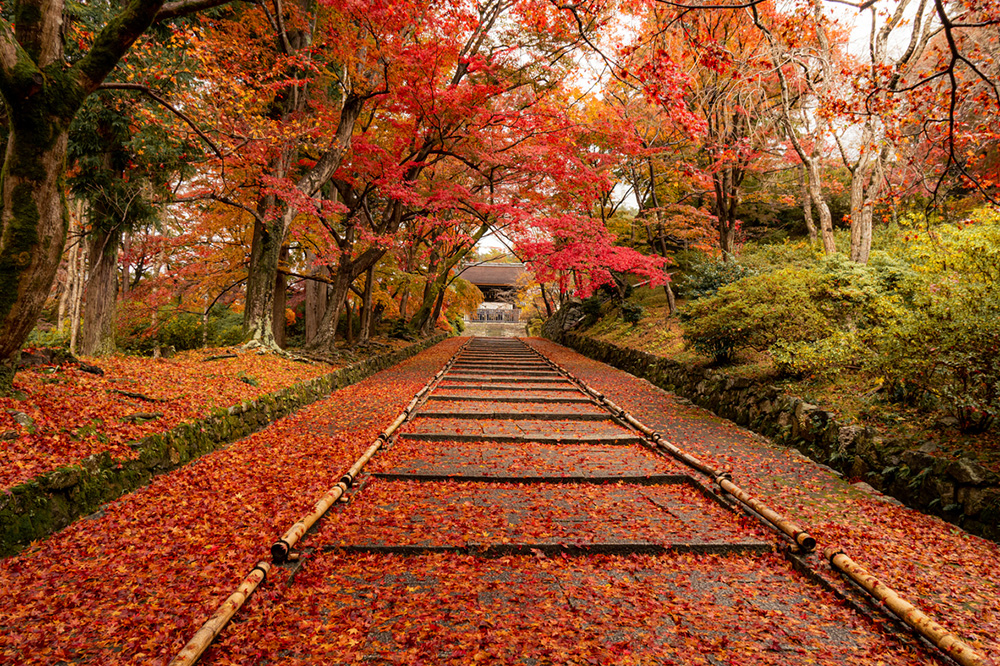
- Autumn (October–November): Maple and ginkgo trees paint the park in red, orange, and gold. This is another peak travel season, with particularly beautiful foliage near temples and on the lower slopes of Mount Wakakusa.
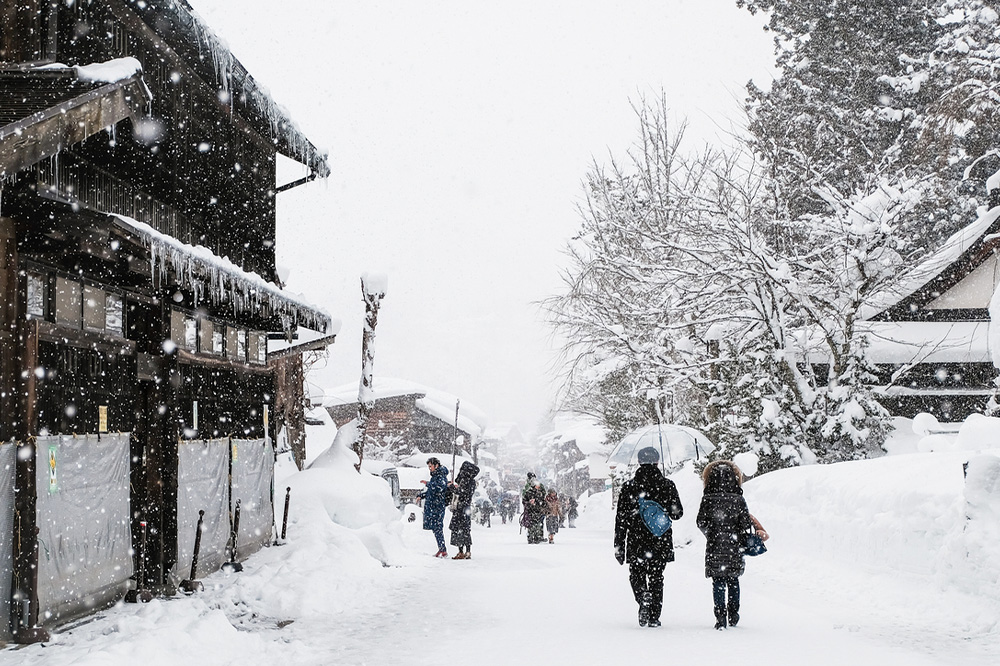
- Winter (December–February): Visitor numbers drop and the park becomes calm and contemplative. Occasional light snowfall transforms the temples and lantern-lined paths into a serene winter landscape. Dress warmly; temperatures can be noticeably colder than in coastal cities.
Practical Tips for Visiting Nara Park
Entrance Fees and Opening Hours
Nara Park itself is free to enter and open day and night. However, major temples and museums within the park charge individual entrance fees. For example, Tōdai-ji’s Daibutsu-den, Kasuga Taisha’s inner areas, and the Nara National Museum each have their own admission prices and opening times, generally from morning until late afternoon.
Check the latest information on official websites or at local tourist information centers, as hours can vary with seasons and special events.
Food, Rest, and Facilities
Along the approaches to major temples and around the western side of the park you’ll find casual restaurants, cafés, and street-food stalls. Typical offerings include noodles, rice bowls, mochi sweets, and seasonal snacks. Many places have picture menus, and staff in this tourist-focused area are accustomed to visitors who do not speak Japanese.
Public restrooms are available at several points throughout the park. Vending machines selling drinks are common near main paths, but less frequent in the eastern wooded sections, so bring a bottle of water, especially in summer.
Walking and Mobility
The central parts of Nara Park are mostly flat and easy to walk, though some paths are unpaved. Comfortable shoes are recommended. For travelers with limited mobility, the main temple approaches are accessible by taxi, and buses connect the station area with the key attractions. Some surfaces may be uneven around ancient buildings, so allow extra time.
Cultural Etiquette Around Temples and Shrines
Nara Park hosts both Buddhist temples and Shinto shrines, and simple etiquette helps you show respect:
- At Shinto shrines (like Kasuga Taisha): At the purification basin, rinse your left hand, then right hand, and optionally your mouth (spitting water beside the basin, not back into it). At the main offering hall, toss a coin, bow twice, clap twice, then bow once more.
- At Buddhist temples (like Tōdai-ji): A quiet, reflective attitude is appreciated. Photography may be restricted in some indoor areas; watch for signs and follow staff instructions.
- General behavior: Speak softly inside halls, don’t sit on steps marked as off-limits, and avoid eating while walking in sacred areas.
Suggested One-Day Itinerary in Nara Park
For a first-time visitor arriving from Kyoto or Osaka, this simple loop covers the park’s highlights at a relaxed pace:
- Arrive at Kintetsu Nara Station mid-morning and walk toward Nara Park.
- Visit Kōfuku-ji Temple and take in the five-story pagoda.
- Stroll to Sarusawa Pond for views and photos.
- Enter the central park, meet the deer, and buy deer crackers if you want to feed them.
- Continue to Tōdai-ji Temple and visit the Great Buddha hall.
- Walk through the park’s eastern side toward Kasuga Taisha Shrine, enjoying the lantern-lined approach.
- If time and energy allow, hike partway up Mount Wakakusa for city views.
- Return to the station area in the late afternoon for dinner before heading back to Kyoto or Osaka.
This route keeps walking distances manageable while allowing time for rest, photos, and quiet moments in the temples and forests.
Making the Most of Your Nara Park Visit
Nara Park is more than a place to see deer and take photos; it is a living landscape that reflects Japan’s early history, religious traditions, and enduring love of nature. By slowing your pace, exploring side paths, and spending time both at famous monuments and in quiet corners, you can experience a gentler, timeless side of Japan that lingers long after you leave.
For first-time travelers, a day in Nara Park pairs perfectly with stays in Kyoto or Osaka, offering an easy, rewarding glimpse into the country’s ancient heart.

Access Map
Recommended spots for Cherry Blossoms
Tokyo
- Ueno Park
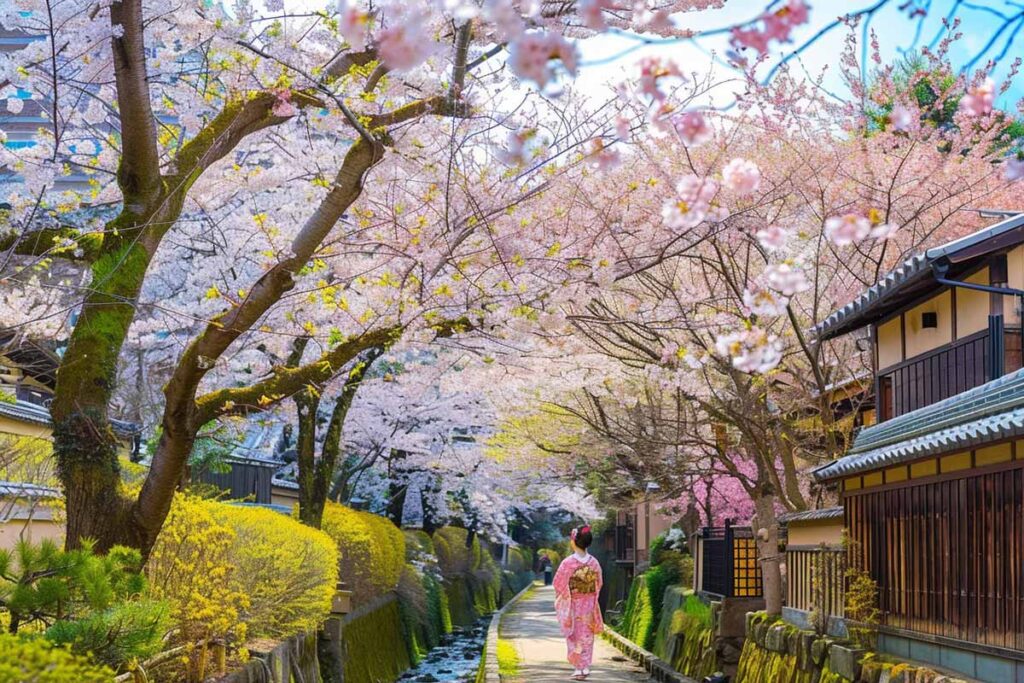
Kyoto
- Philosopher's Path
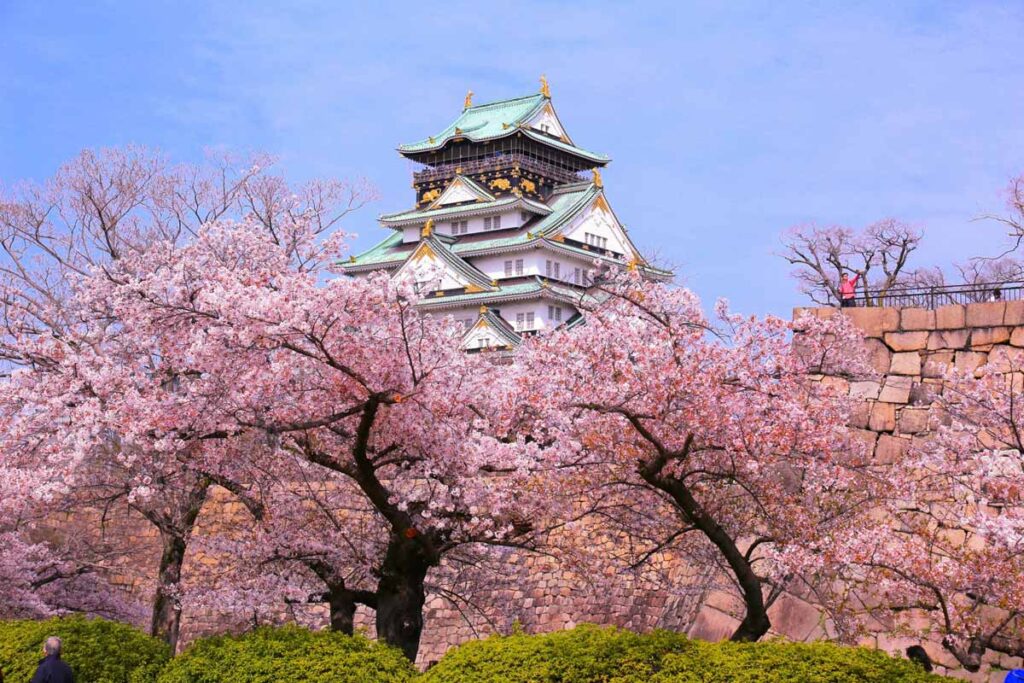
Osaka
- Osaka Castle Park
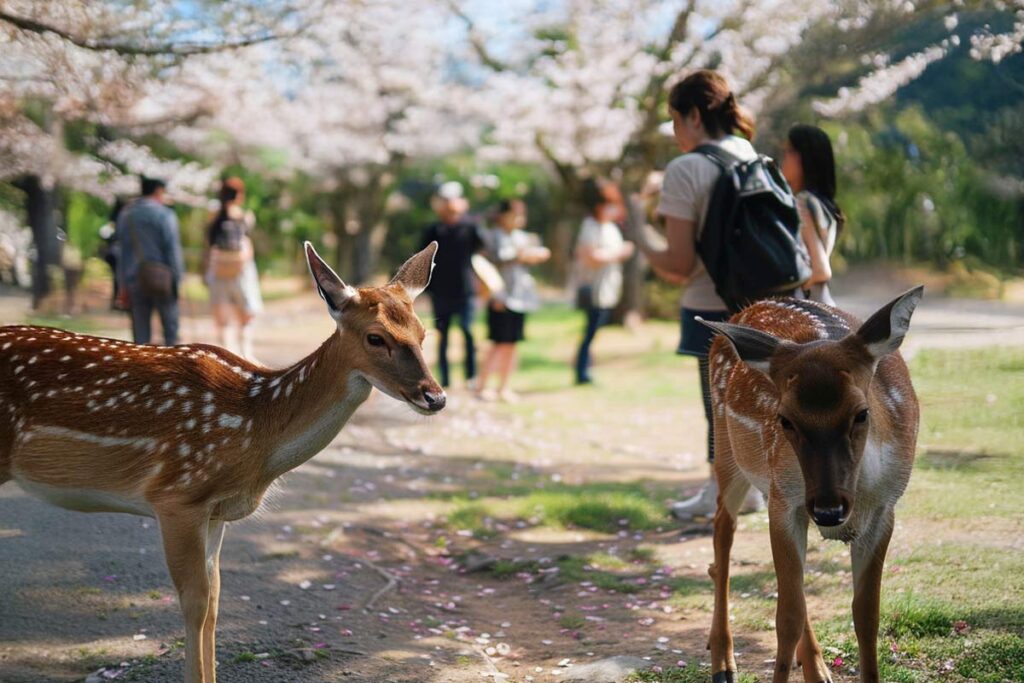
Nara
- Nara Park
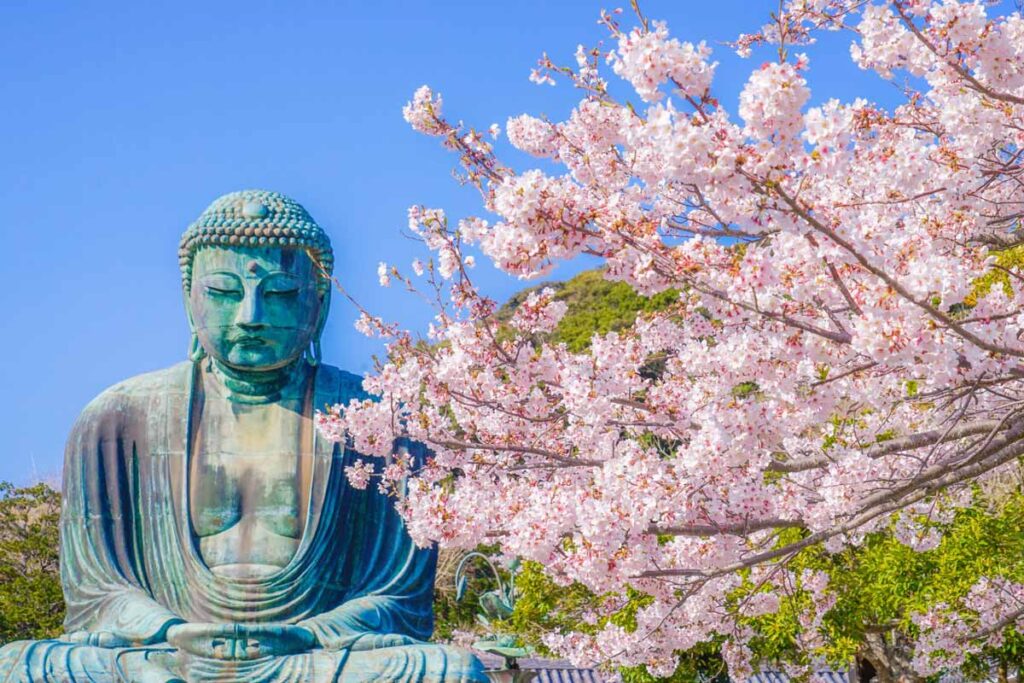
Kanagawa
- Kamakura
Other Seasonal Spot

Summer Festivals
Autumn Leaves