


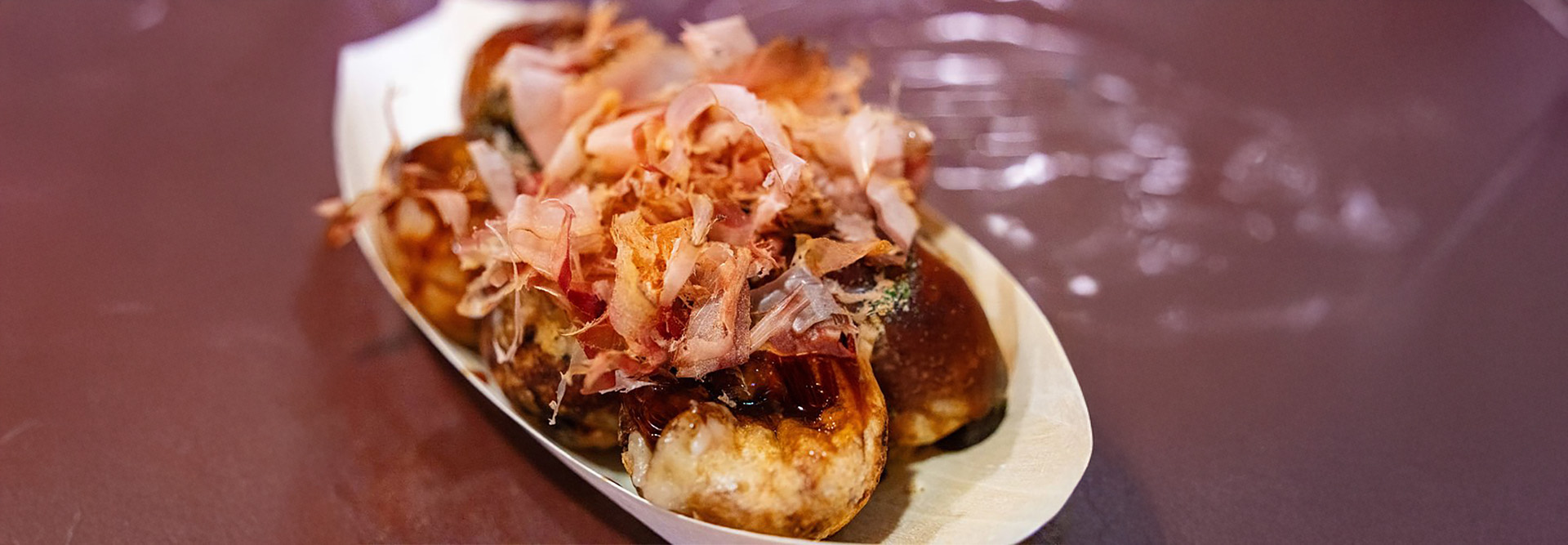
Takoyaki (Osaka)
Takoyaki in Osaka: The Ultimate Guide for First-Time Visitors to Japan
If Tokyo is Japan’s business heart, Osaka is its friendly, hungry soul. And nothing captures that warm, food-obsessed spirit better than takoyaki – bite-sized balls of batter filled with octopus, sizzling on a griddle in the middle of the street. For many international visitors, eating takoyaki in Osaka is as essential as seeing cherry blossoms or visiting a shrine.
This guide explains what takoyaki is, how to eat it like a local, where to find the best stalls, and what first-time travelers to Japan should know before taking their first delicious bite.
What Is Takoyaki?
Takoyaki (たこ焼き) literally means “grilled octopus.” It is a popular Japanese street food made from a savory wheat flour batter cooked in a special half-sphere iron mold. The classic filling is diced octopus, but modern variations add ingredients like cheese, kimchi, or green onion.
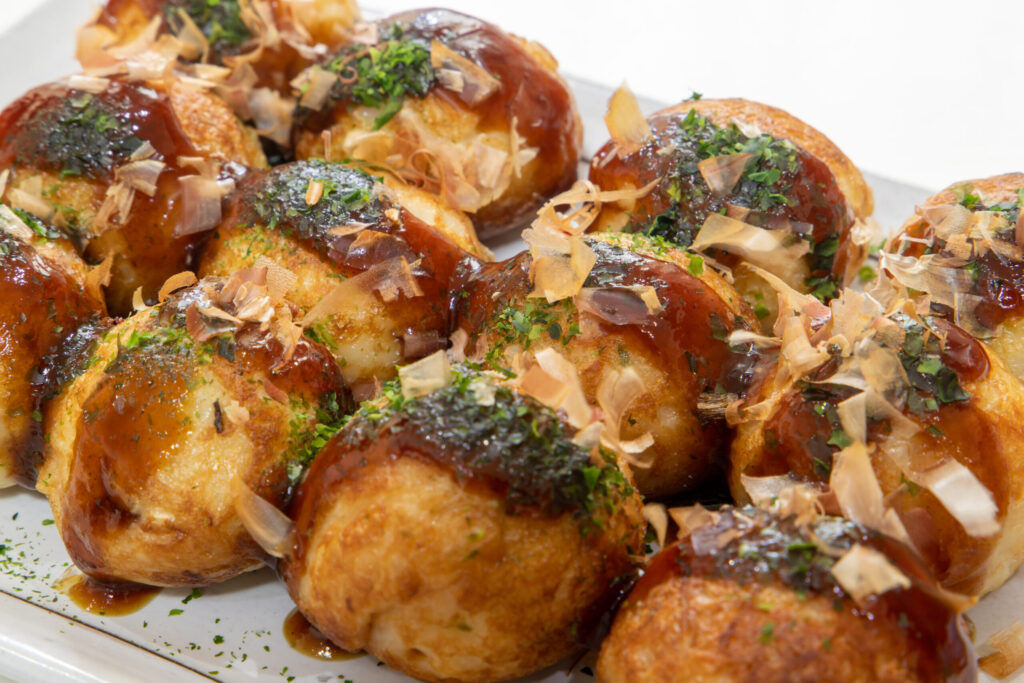
Fresh from the grill, the soft, piping-hot balls are usually topped with:
- Takoyaki sauce – rich and tangy, similar to a sweeter Worcestershire sauce
- Japanese mayonnaise – creamy, slightly sweet, and umami-rich
- Aonori – dried green seaweed flakes
- Katsuobushi – paper-thin smoked bonito (fish) flakes that appear to “dance” in the steam
The end result is a contrast of textures and flavors: crisp and slightly caramelized on the outside, molten and custardy inside, with a tender piece of octopus at the center.
Why Takoyaki Is So Closely Linked to Osaka
Osaka is often called “Japan’s kitchen” (天下の台所, tenka no daidokoro), a historic center of trade and food culture. Takoyaki was born here in the 1930s and quickly became a symbol of the city’s casual, welcoming food scene.
Locals are proud of their takoyaki in the same way Neapolitans are proud of pizza. Many Osakans even have electric takoyaki grills at home and host takoyaki parties. For visitors, tracking down a smoky, bustling street stall or a specialty shop is one of the most authentic ways to experience daily life in Osaka.
Kuidaore: The Spirit Behind Osaka’s Food Culture
You may hear the word kuidaore (食い倒れ), which roughly means “to eat until you drop” or “to spend so much on food you ruin yourself.” It captures Osaka’s joyful attitude toward eating well and often – and takoyaki fits this philosophy perfectly. It’s affordable, fun to share, and delicious at any time of day or night.
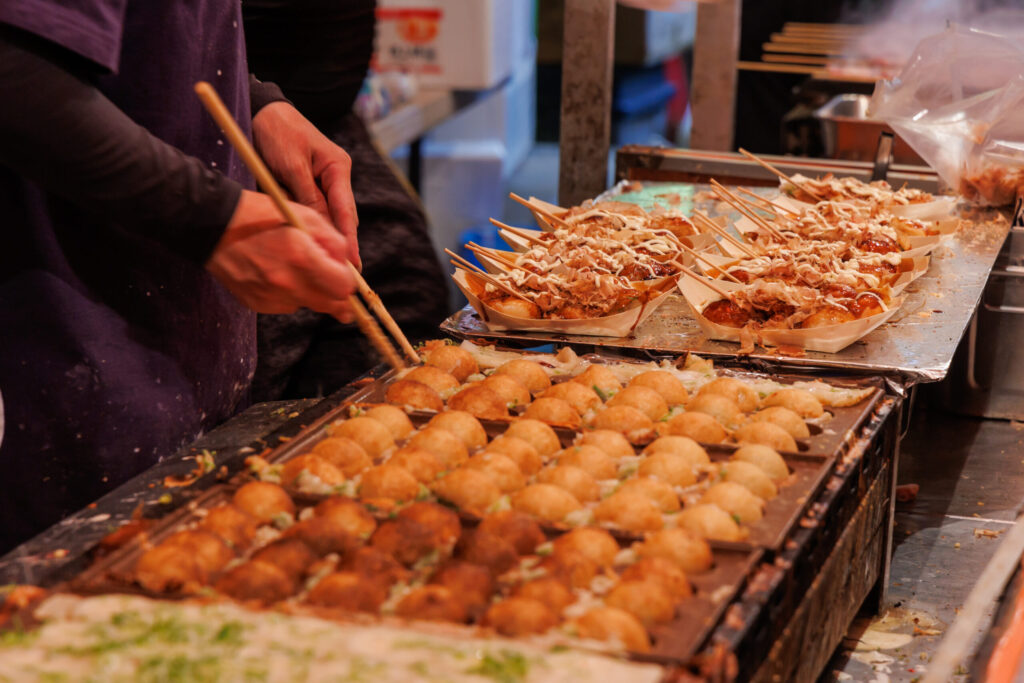
How Takoyaki Is Made: Watching the Show
Part of the joy of eating takoyaki is watching it being prepared. At many stalls, the cooking process is almost theatrical and draws in crowds of hungry onlookers.
Here’s what you’ll usually see:
- The cook pours a loose, savory batter into rows of round molds.
- Chopped octopus, pickled ginger, green onion, and sometimes crunchy tempura bits are added.
- As the batter begins to set, the cook quickly turns each half-formed ball with metal picks or chopsticks, folding in excess batter to create a perfect sphere.
- The balls are repeatedly flipped and rotated until evenly golden-brown.
- They are transferred to a tray or box and topped generously.
The fluid movements and speed of the cook are impressive; it’s a delicious performance that children and adults alike will enjoy.
How to Order Takoyaki in Osaka
Ordering takoyaki is usually simple, even if you do not speak Japanese. Many shops and stalls have photos, plastic food models, or English menus around major tourist areas. Here is a practical step-by-step guide:
1. Choose Your Portion Size
Common portion sizes are:
- 6 pieces (small snack)
- 8–10 pieces (light meal or to share)
- 12 or more pieces (for sharing or bigger appetites)
Prices vary by area, but you can often expect roughly 400–800 yen for a standard serving.
2. Select a Flavor or Toppings
Basic shops may offer only the classic style, but many modern takoyaki places in Osaka provide a variety of toppings and sauces. Common options include:
- Original / Sauce & Mayo – the standard style and safest choice for first-timers
- Salt & Lemon – lighter and less sweet, good if you find the sauce rich
- Cheese – melted cheese on top or inside
- Negi (green onion) – generously topped with sliced green onion
- Ponzu (citrus soy sauce) – tart and refreshing, often combined with green onion
If you’re unsure, point to the picture of the original flavor or say “origina-ru” or “soosu mayo” (sauce and mayonnaise).
3. Ordering in Simple Japanese
You can usually just point and hold up the number of your fingers, but these basic phrases help:
- “Kore, hitotsu kudasai” (これ、ひとつください) – “This one, please (one order).”
- “Roku-ko onegaishimasu” (6個お願いします) – “Six pieces, please.”
- “Soosu to mayo de” (ソースとマヨで) – “With sauce and mayonnaise, please.”
Most staff in busy tourist areas will understand simple English words like “small,” “large,” or “cheese,” especially if you also gesture.
4. Paying and Picking Up
Many takoyaki stalls are cash only, though larger chains may accept IC cards (like Suica) or cashless payments. At some places, you order and pay at a vending machine, then hand the ticket to the staff.
You will be given a paper tray or small box, usually with toothpicks or chopsticks. If you plan to take it away, ask for a lid or bag by saying “omochikaeri” (お持ち帰り, “to go”).
How to Eat Takoyaki Safely (and Politely)
Takoyaki is served extremely hot. Many first-time visitors burn their mouths because they look small and harmless. Don’t be fooled – the inside stays molten for several minutes.
Tips for Eating Takoyaki
- Wait a moment: Let the steam escape before biting in.
- Take a small bite first: Pierce or bite the ball to release steam, then blow on it.
- Use the pick or chopsticks provided: Avoid using your fingers, as the sauce is sticky and hot.
You might see locals eating quickly, but if you are not used to such hot food, it’s perfectly fine to take your time.
Street Etiquette and Where to Stand
In many parts of Japan, eating while walking is considered poor manners. Osaka is slightly more relaxed, but most takoyaki stands still provide a small counter, a few stools, or a designated area nearby.
As a visitor, it’s polite to:
- Eat near the stall or in a designated seating area.
- Avoid dripping sauce or dropping toppings in the street.
- Throw trash in the bin provided by the shop rather than public trash cans, which are scarce in Japan.
Where to Eat Takoyaki in Osaka
Takoyaki can be found all over Osaka, from back streets to department store food halls. These popular areas are ideal for first-time travelers:
Dotonbori: Neon Lights and Endless Food
Dotonbori is Osaka’s most famous entertainment and food district, known for its giant billboards, riverfront walkway, and dense concentration of restaurants and street snacks. It’s one of the easiest places for visitors to sample takoyaki.
In Dotonbori, you’ll find:
- Long lines at famous chains and local favorites
- Stalls with giant octopus signs above the door
- Many variations, making it a fun area for a takoyaki “tasting tour”
Because it’s so busy, expect to eat standing or at small counters. It’s an exciting, if slightly chaotic, introduction to Osaka street food culture.
Shinsekai: Retro Osaka Vibes
Shinsekai, with its nostalgic Showa-era atmosphere and views of Tsutenkaku Tower, offers a more local-feeling environment. Here you can wander small streets lined with casual eateries serving takoyaki alongside other Osaka specialties, like kushikatsu (deep-fried skewers).
Takoyaki here is often cheaper and portions can be generous, with fewer crowds than Dotonbori in the evenings.
Neighborhood Stalls and Festivals
Outside the main tourist districts, you may discover small mom-and-pop takoyaki places near train stations or in residential neighborhoods. These can be some of the most memorable experiences, where you’ll likely be the only tourist and may even end up chatting with the owner or locals.
In summer, matsuri (festivals) across Osaka and the Kansai region set up temporary takoyaki stalls. Eating freshly grilled takoyaki while watching fireworks or traditional dances is a classic Japanese summer memory – and worth seeking out if your visit coincides.
Takoyaki Variations and Similar Dishes
While the traditional octopus-filled version is the standard, Osaka’s creative cooks have experimented widely.
Modern Takoyaki Twists
Some shops in Osaka offer:
- Cheese-filled takoyaki – gooey and popular with younger diners
- Spicy versions – with chili or kimchi for added heat
- Mixed platters – allowing you to sample several flavors in one order
If you are not comfortable with octopus, keep an eye out for stalls that offer alternative fillings such as shrimp, mochi, or even dessert-style takoyaki. However, outside of specialty shops, octopus is still the norm.
Related Kansai Comfort Foods
Osaka is also the birthplace of other beloved flour-based dishes:
- Okonomiyaki – a savory pancake made with cabbage, meat or seafood, and similar sauces
- Modanyaki – okonomiyaki with added noodles
Many restaurants serve both takoyaki and okonomiyaki, making them a convenient choice if you want to try several Osaka specialties in one meal.
Dietary Considerations for International Travelers
Visitors with dietary restrictions should be aware of what typically goes into takoyaki:
- Seafood: The filling is octopus, and the sauce often contains fish-based ingredients.
- Gluten: The batter is wheat-based, and the sauce may contain wheat as well.
- Egg and dairy: Some batters include egg, and mayonnaise contains egg; cheese versions add dairy.
Vegan or vegetarian versions are not yet common, but some modern cafes or specialty shops in larger cities experiment with plant-based recipes. In most traditional Osaka stalls, however, takoyaki will not be vegetarian or vegan.
If you have severe allergies or dietary restrictions, it is wise to bring a card explaining your needs in Japanese and to double-check ingredients before ordering.
When Is the Best Time to Eat Takoyaki?
In Osaka, takoyaki is enjoyed at almost any time of day:
- Midday: As a quick snack between sightseeing stops
- Late afternoon: Popular with students after school
- Evening: With beer or highballs as casual bar food
- Late night: A comforting bite after a night out
For first-time visitors, early evening is ideal: stalls are lively, but not yet at their peak rush, and you can enjoy the city lights with your snack.
Takoyaki as a Gateway to Osaka’s Local Life
Beyond its taste, takoyaki offers an easy, low-pressure way to connect with Japanese culture:
- It is informal and affordable, so you do not need reservations or special clothing.
- It encourages sharing, making it great for couples, friends, or families to sample together.
- It naturally leads to small interactions – a quick thank-you in Japanese, a smile with the cook, or a friendly recommendation from another customer.
Even if you are shy about ordering in a restaurant or unsure about etiquette, a takoyaki stand is a gentle introduction to everyday Japanese hospitality. You can simply point, pay, watch, and enjoy.
Tips for First-Time Visitors Planning to Try Takoyaki
- Carry small change: Many stalls appreciate coins and small bills.
- Expect to stand: Seating is limited; be ready to eat at a counter or high table.
- Start with a small portion: If you’re unsure about octopus or sauces, begin with 6 pieces and order more if you like it.
- Watch for heat: Remember that takoyaki stays hot inside for longer than you think.
- Combine with sightseeing: Plan to try takoyaki when visiting Dotonbori, Namba, Shinsekai, or other central Osaka areas.
For many international travelers, that first bite of takoyaki in Osaka becomes one of the standout memories of their trip to Japan. It is more than just a snack: it is a taste of local pride, a glimpse into daily life, and a delicious symbol of the city’s warm, generous food culture.
Whether you are a foodie on a mission or a curious first-time visitor, make room in your itinerary — and your stomach — for freshly grilled takoyaki in the heart of Osaka.