

The Golden Hall of Chuson-ji Temple
Visiting the Golden Hall of Chuson-ji Temple in Japan
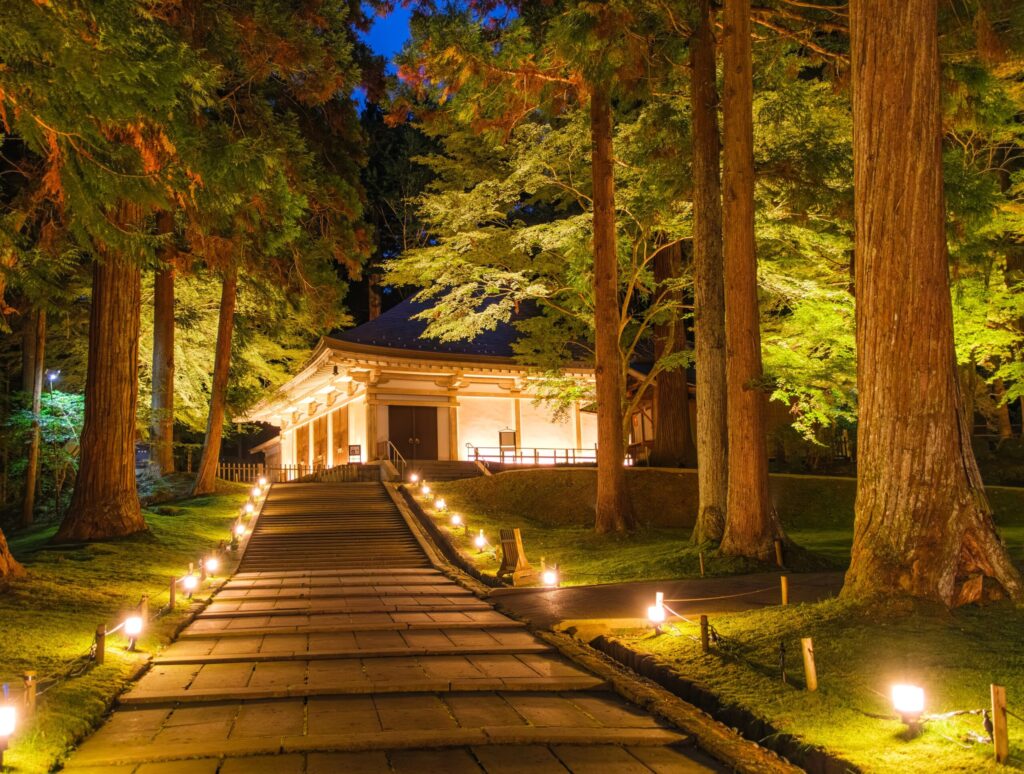
Hidden in the forested hills of northern Japan, the Golden Hall of Chuson-ji Temple is one of the country's most dazzling surprises. Far from the crowds of Tokyo and Kyoto, this golden sanctuary preserves the glittering world of the samurai lords who once ruled Japan's remote northeast. For first-time visitors, it is a rare chance to step directly into a carefully preserved 12th-century masterpiece.
Officially known as Konjikidō, the Golden Hall is the jewel of Chuson-ji, a historic temple complex in Hiraizumi, Iwate Prefecture. Covered inside and out with gold leaf and intricate decoration, it was built to represent the Buddhist Pure Land paradise and to enshrine the remains of the powerful Ōshu Fujiwara clan.
Why the Golden Hall Belongs on Your Japan Itinerary
Many first-time travelers focus on Tokyo, Kyoto, and Osaka, but including Chuson-ji's Golden Hall adds a very different dimension to your trip. This is Japan as it existed long before skyscrapers and bullet trains—when frontier warriors, poets, and monks shaped the country's cultural landscape.
There are three main reasons to come:
- A rare intact treasure: Most of Japan's golden halls were lost to fire, war, and time. Chuson-ji's Golden Hall has survived—preserved for nearly 900 years.
- Pure Land paradise in real life: The building was designed as a three-dimensional mandala, a material recreation of a Buddhist heaven filled with gold, mother-of-pearl, and sacred imagery.
- A UNESCO World Heritage landscape: Chuson-ji is part of the "Hiraizumi – Temples, Gardens and Archaeological Sites Representing the Buddhist Pure Land," recognized globally for its harmony of nature and faith.
A Brief History of Chuson-ji and the Golden Hall
To appreciate the Golden Hall, it helps to know the story behind it. In the late Heian period (794–1185), Japan's northeastern Tōhoku region was a distant frontier. Here, the Ōshu Fujiwara family rose to power, becoming wealthy on gold from local mines and trade with northern peoples.
In the early 12th century, the clan leader Fujiwara no Kiyohira established Chuson-ji Temple as a spiritual center and memorial to the countless lives lost in regional conflicts, including his own family members. He embraced Pure Land Buddhism, which promised rebirth in a western paradise ruled by Amida Buddha to all who recited his name with faith.
Konjikidō, the Golden Hall, was completed in 1124 as the spiritual core of this vision. It enshrined the mummified remains of Kiyohira and his descendants and symbolized their hope for peace in this life and the next. Although many of the original temple buildings were later destroyed in fires, Konjikidō survived, eventually being enclosed in a protective building to shield it from the elements.
Understanding Pure Land Buddhism at Chuson-ji
Pure Land Buddhism is one of the most accessible forms of Buddhism in Japan, and its ideas are woven into every aspect of the Golden Hall. According to this tradition, salvation is possible not through strict monastic practice but through sincere faith in Amida Buddha and reciting his name: "Namu Amida Butsu."
Konjikidō reflects this belief through its overwhelming beauty. The hall is designed to evoke the Pure Land, a realm of infinite light and bliss. When you step inside the outer protective building and gaze upon the shimmering structure, you are meant to feel as if the boundaries between this world and the next have momentarily dissolved.
What to Expect When Visiting the Golden Hall
The Approach: Sando Path and Cedar Forest
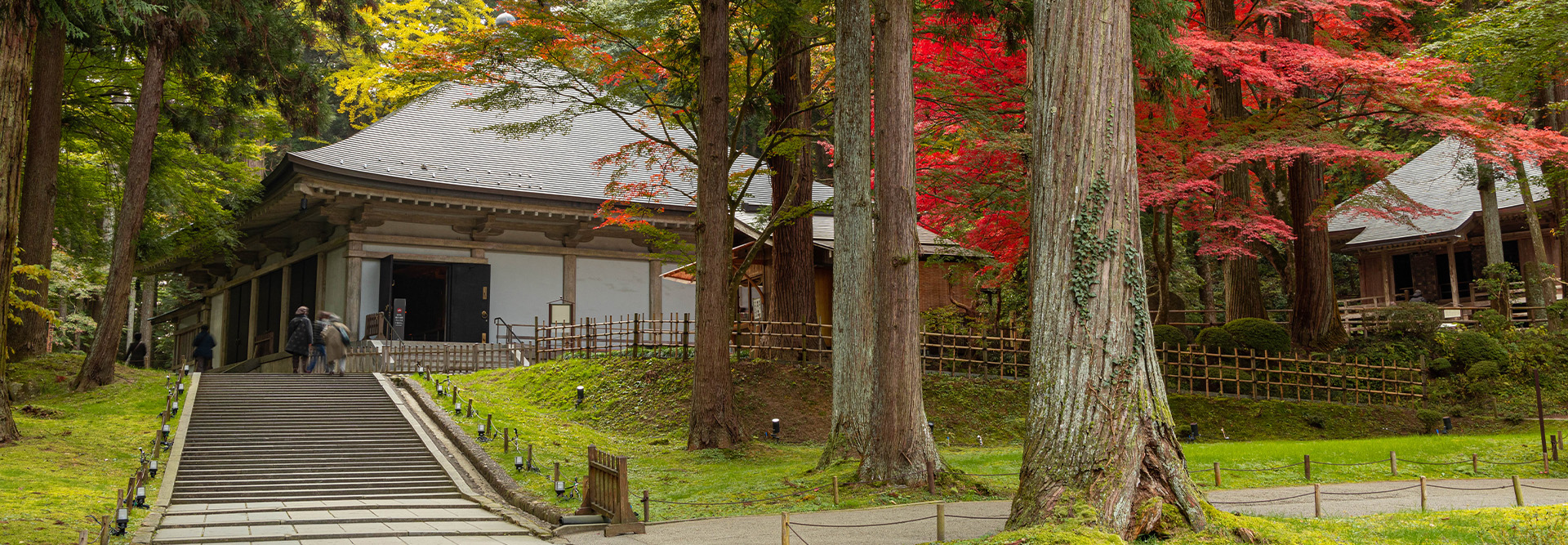
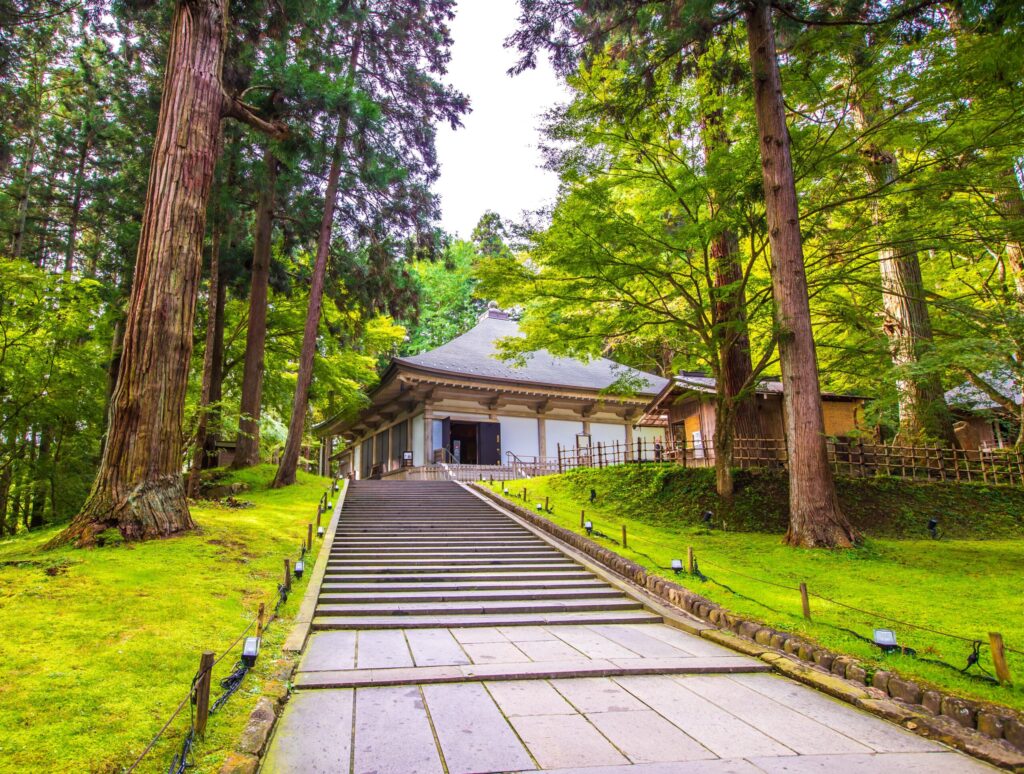
Your visit to Chuson-ji begins at the foot of Tsukimizaka, a paved slope leading up through a grove of tall cedars. This approach road is more than just a path; it is a spiritual transition from the everyday world into sacred space. Stone lanterns line the way, and in autumn, the surrounding maple trees blaze with color.
Walk slowly and take in the atmosphere. In Japan, this approach to a shrine or temple is known as the sandō, and it is traditional to use this time to leave daily concerns behind and prepare your mind for worship or contemplation.
Temple Grounds and Side Halls
At the top of the slope, the grounds open into a peaceful plateau dotted with wooden halls, a main temple building, and small sub-temples. You will find:
- Hondō (Main Hall): The central worship hall where services are held and where visitors can sit quietly, listen to chants, or light incense.
- Bell Tower: A gracefully roofed structure housing the temple bell, traditionally rung to mark the passage of time and to purify space.
- Smaller chapels and memorials: Each with its own statues and offerings, giving insight into local Buddhist practices.
Before reaching the Golden Hall, it is common to pause at the main hall to bow, join your hands together, or simply sit for a moment in silence. You do not need to be Buddhist to do this respectfully.
Entering the Golden Hall Pavilion
The Golden Hall itself is contained within a modern protective building. After purchasing your ticket at the entrance to this pavilion, you will remove your shoes or walk on designated routes and follow the signs and staff directions. Photography is not allowed inside, and this rule is very strictly enforced to protect the artifacts from light damage and to maintain a contemplative atmosphere.
Inside, the lights are kept low to highlight the glow of the golden structure at the center. The original 12th-century hall stands intact, raised on a platform and surrounded by glass barriers. It is small compared to grand temples in Kyoto, but its detail is extraordinary.
Highlights of the Golden Hall Interior
Even though you cannot enter the Golden Hall, you can view it quite closely from multiple angles. As you walk around, look for these elements:
- Gold Leaf Everywhere: The hall's pillars, beams, and inner surfaces are covered in rich gold leaf, symbolizing the radiant light of Buddha's wisdom. The sense of opulence is intentional: paradise is portrayed as dazzlingly beautiful.
- Mother-of-Pearl Inlay: Delicate pieces of gleaming shell have been inlaid to form floral and geometric patterns. This decorative technique, rarely seen on such a scale, adds an iridescent shimmer to the gold background.
- Lacquerwork and Carving: Deep red and black lacquer, together with intricate wooden carvings, frame the sacred images and create visual depth.
- Rows of Buddhist Statues: At the center sits Amida Buddha, flanked by attendant bodhisattvas and surrounded by an array of other figures. Together, they represent a celestial assembly welcoming souls into the Pure Land.
- The Fujiwara Remains: Within the hall, beneath ornate reliquaries, rest the mummified bodies of four generations of Ōshu Fujiwara lords. Their presence makes Konjikidō both a memorial and a political statement of power and piety.
Take your time walking slowly around the perimeter. Although signs are available in English, much of the experience is visual and emotional. Stand quietly for a few moments and let your eyes adjust; hidden patterns and details emerge gradually from the shadows.
Exploring the Chuson-ji Museum
Your entrance ticket to the Golden Hall typically includes access to the adjacent treasure hall or museum. This is well worth visiting. Inside you will find:
- Ancient Sutras: Hand-copied Buddhist scriptures written in elegant calligraphy on decorated paper.
- Ceremonial Objects: Ritual implements, ornaments, and reliquaries that once surrounded the Golden Hall and other temple buildings.
- Armor and Artifacts: Objects related to the samurai culture of the region, providing a tangible link to the world of the Fujiwara lords.
Explanations are often available in multiple languages or through pamphlets. The museum offers context that deepens your understanding of why the Golden Hall was built and how it has been preserved.
Practical Travel Information for First-Time Visitors
Where Is Chuson-ji?
Chuson-ji Temple is located in Hiraizumi, a small town in Iwate Prefecture in the Tōhoku region of northern Honshu (Japan's main island). Despite its rural feel, it is relatively easy to reach by train.
How to Get There
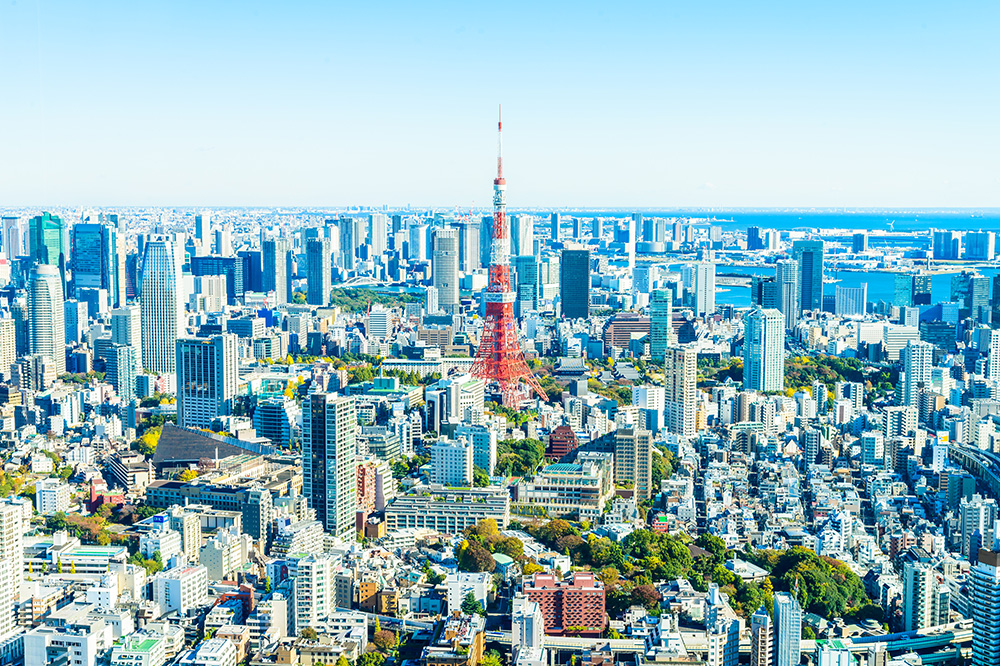
- From Tokyo: Take the Tohoku Shinkansen (bullet train) from Tokyo or Ueno Station to Ichinoseki Station. The journey usually takes around 2–2.5 hours. From Ichinoseki, transfer to a local train on the Tohoku Main Line to Hiraizumi Station (about 8–10 minutes) or take a bus or taxi directly to Chuson-ji.
- From Sendai: Ride the Tohoku Shinkansen or local lines to Ichinoseki, then continue as above. Total travel time is typically about 1–1.5 hours.
- From Hiraizumi Station: Chuson-ji is about 25–30 minutes on foot, slightly uphill, or just a short bus or taxi ride away.
Opening Hours and Tickets
Opening hours can vary slightly by season, but the temple grounds usually open from morning until late afternoon. The Golden Hall pavilion and museum have set hours within that window. Expect an admission fee for the Golden Hall and treasure hall area; the main temple grounds may be free to enter.
As schedules and fees can change, check local tourism information or confirm at Hiraizumi Station's information desk when you arrive. Many staff members are used to assisting international visitors and often have English leaflets.
Best Time to Visit
- Spring (April–May): Pleasant temperatures and cherry blossoms in the surrounding area, though timing varies by year.
- Autumn (late October–early November): A particularly beautiful season when maples along the approach path turn vivid red and gold.
- Winter (December–February): Snow transforms the temple into a tranquil monochrome landscape with the Golden Hall as a hidden jewel, but paths can be icy and cold.
- Summer (June–August): Lush greenery and fewer crowds than in big cities, though it can be warm and humid.
Etiquette and Cultural Tips
Visiting Chuson-ji and the Golden Hall is not just sightseeing; it is entering an active religious site and national treasure. A few simple behaviors will show respect and help you feel more comfortable:
- Dress modestly: Shoulders and knees covered is ideal, especially if you plan to sit inside the main hall. Comfortable walking shoes are recommended.
- Keep your voice low: Many visitors come to pray or meditate. Whisper if you need to speak.
- No photography inside the Golden Hall: Respect the rules and enjoy the moment with your eyes rather than your camera.
- Follow local worship customs if you wish: At incense burners or offering boxes, you may bow lightly, offer a coin, or bring your hands together for a brief prayer. There is no obligation, and quiet observation is perfectly acceptable.
- Handling shoes: In areas where you must remove shoes, place them neatly where indicated. Slip-on shoes make this easier.
Combining Chuson-ji with Other Sights in Hiraizumi
Hiraizumi is compact enough to explore in a day, but rich enough to reward an overnight stay. Consider pairing your visit to Chuson-ji with:
- Mōtsū-ji Temple: Another Pure Land site centered around a sweeping garden and pond that recreate the Buddhist vision of paradise in landscape form.
- Rural Walks and Lookouts: Gentle trails and viewpoints offer perspectives on the river plains and mountains that once marked the borders of the Fujiwara realm.
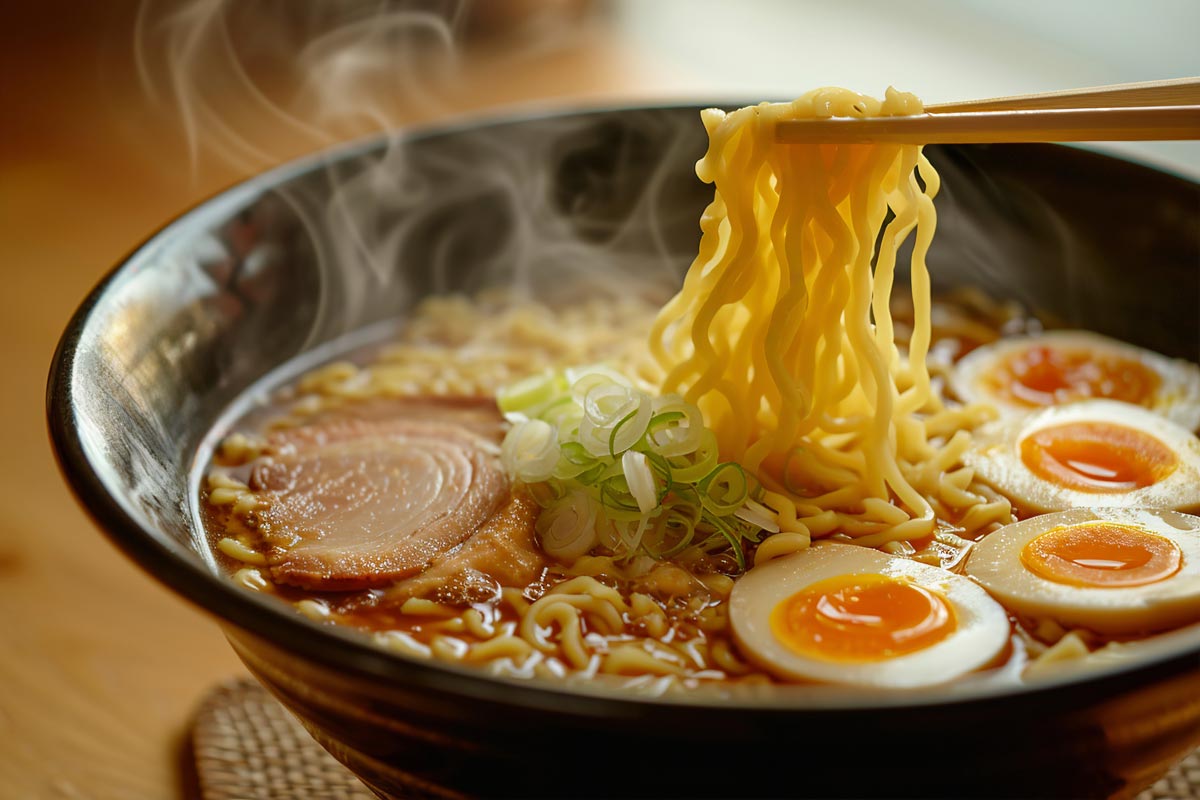
- Local Cuisine: After your temple visit, try regional specialties at family-run restaurants, such as noodle dishes or seasonal mountain vegetables.
Tips for First-Time Travelers to Rural Japan
Visiting a place like Hiraizumi can feel different from Japan's big cities, but that is part of its charm. A few points help the trip go smoothly:
- Language: English may be limited, but signs at major attractions are often bilingual. Polite gestures, a phrasebook app, and patience go a long way.
- Cash: Some smaller shops and buses may not accept credit cards. Carry a reasonable amount of yen, available from ATMs at major stations or convenience stores.
- Timing: Rural buses may run infrequently, especially outside peak seasons. Check return times when you arrive to avoid long waits.
- Weather Preparedness: Bring a light jacket or umbrella, as conditions can change quickly, particularly in spring and autumn.
Why the Golden Hall Leaves a Lasting Impression
Many travelers come to Japan expecting neon lights and high technology, and they certainly find them. But it is often the quiet places like the Golden Hall of Chuson-ji Temple that linger in memory the longest. Here, on a wooded hilltop in Tōhoku, you can stand before a nearly 900-year-old golden sanctuary, handcrafted to express faith, grief, and the longing for peace.
For first-time visitors willing to go a little off the main tourist trail, Chuson-ji offers both beauty and depth: a chance to encounter Japan's spiritual heritage, admire extraordinary craftsmanship, and experience the stillness of a Pure Land vision brought to life in gold and light.
Whether you visit on a day trip from Tokyo or as part of a longer journey through northern Japan, the Golden Hall is a reminder that some of the country's brightest treasures are found far from the busiest streets.

Access Map
Top destinations in Hokkaido & Tohoku
Hokkaido
Aomori
Fukushima